
The Defining Directions Shaping Interiors
Interior design in 2026 reflects a clear shift toward warmth, emotion, and intentionality. Across contemporary interiors, design is moving away from rigid minimalism and toward spaces that feel richer, more tactile, and more human. Rather than focusing on a single aesthetic, the interior design trends of 2026 are defined by broader movements shaping how color, materials, form, and space are experienced.
Warm, Earth-Led Color Palettes
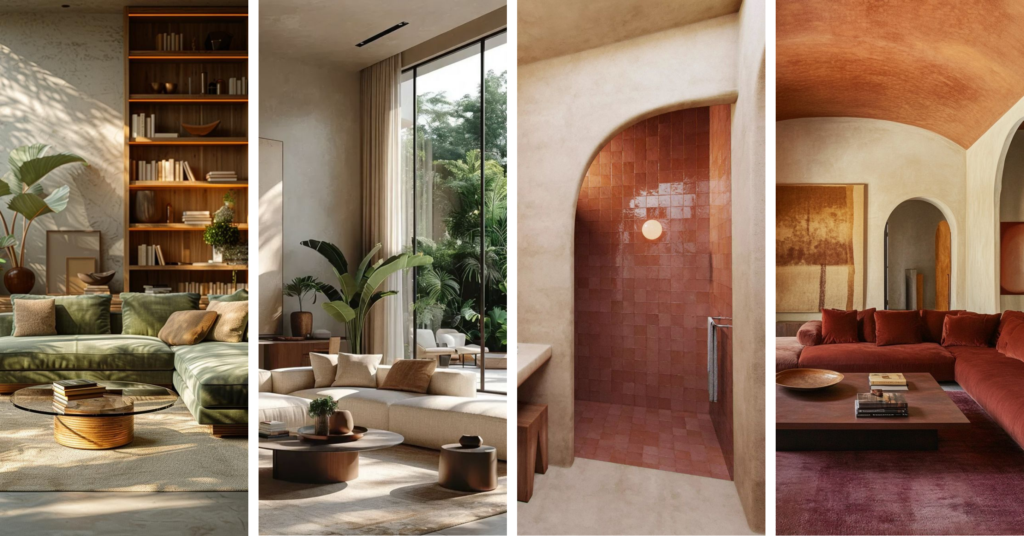
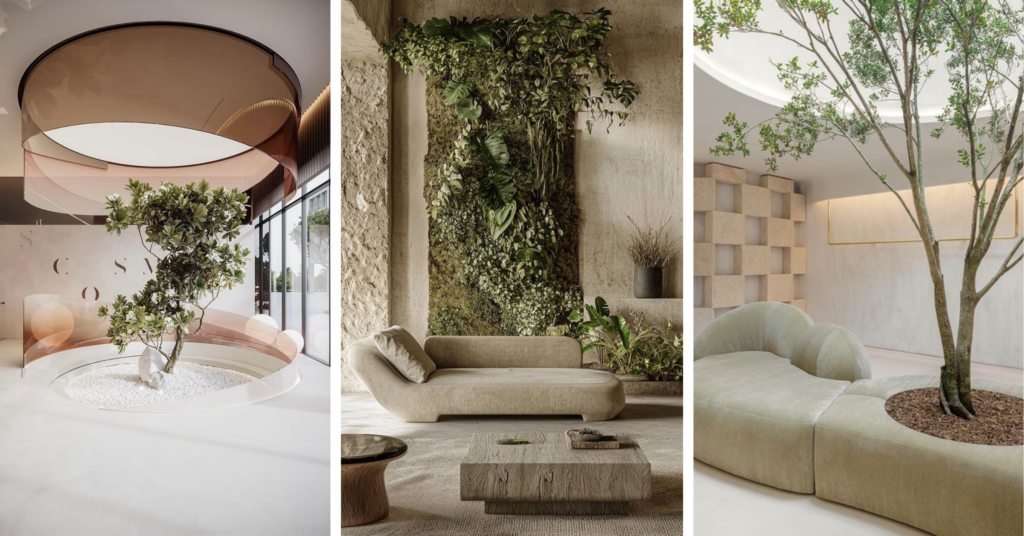
One of the most dominant interior design trends of 2026 is the move toward warm, earth-inspired color palettes. Cool greys and stark whites are giving way to tones that feel grounding and timeless. Clay, sand, caramel, deep browns, and softened terracotta are increasingly used across walls, ceilings, and built-in elements, while olive and forest greens continue to anchor interiors in nature. Color is no longer reserved for accents. Designers are embracing immersive applications, with color drenching emerging as a defining technique for creating cohesive, emotionally grounded environments.
Curves and Soft Architectural Forms
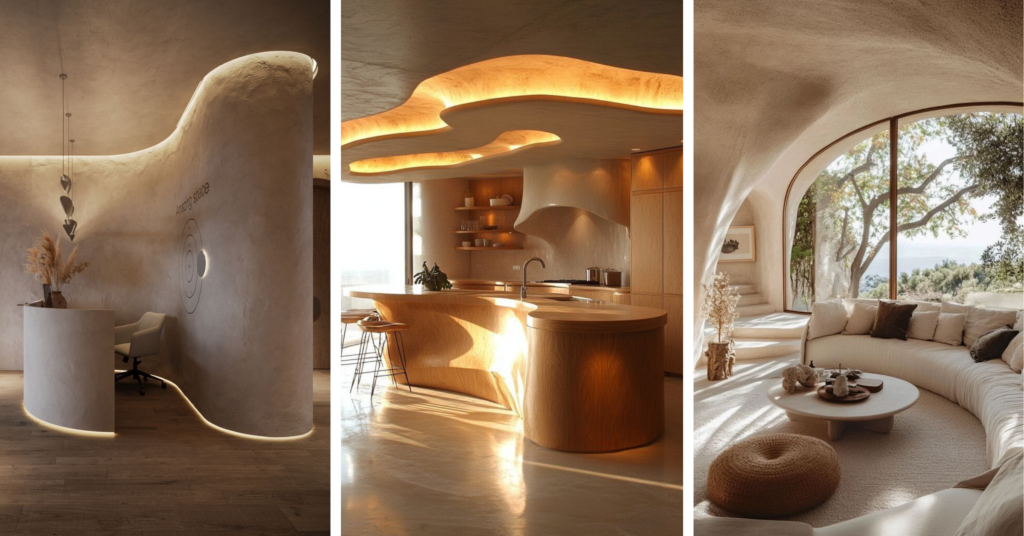
Curved forms are shaping the visual language of interior design in 2026. Rigid lines and sharp geometry are being replaced by softer, more fluid shapes that introduce movement and visual ease. Rounded seating, curved counters, sculptural furniture, and arched architectural details contribute to interiors that feel more welcoming and intuitive. These organic forms are no longer decorative details but structural choices that influence how spaces flow and how they are experienced.
Elevated Natural Materials
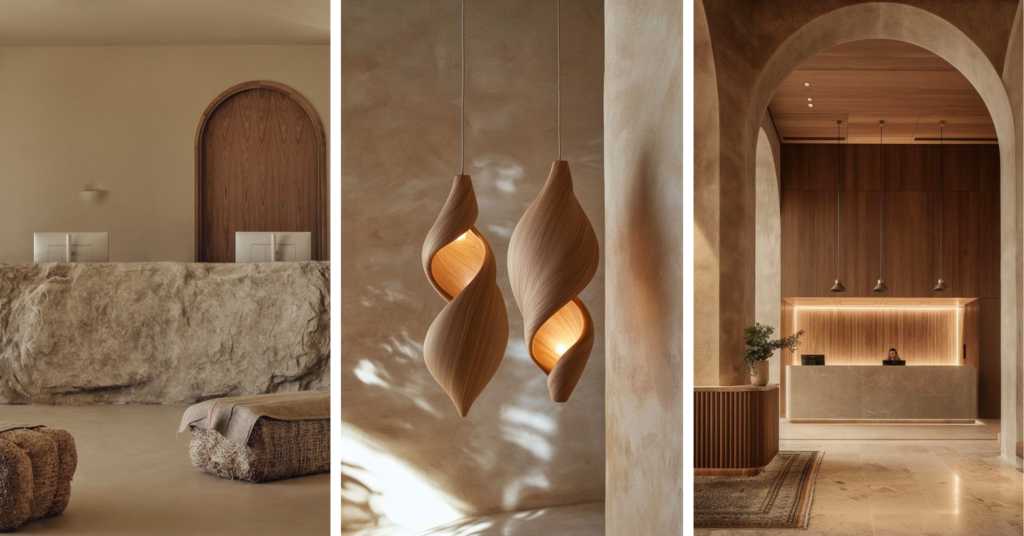
Natural materials remain central to interior design, but in 2026 they are approached with greater refinement. Stone with expressive veining, solid wood in mixed tones, plastered surfaces, and tactile finishes are used to add depth and character rather than perfection. Materials are selected for their ability to age beautifully, reinforcing a sense of authenticity and longevity while creating spaces that feel grounded and timeless.
Texture as the New Luxury
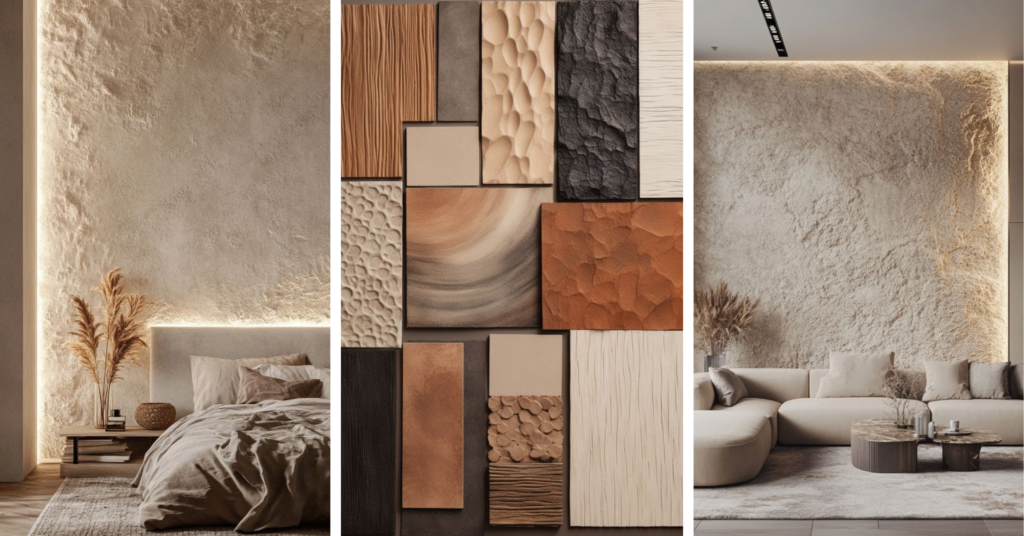
Luxury in interior design trends for 2026 is defined less by ornamentation and more by texture. Layered materials across walls, furniture, and textiles create visual richness without excess. Tactile surfaces add warmth and dimension, allowing interiors to feel immersive and comfortable. This emphasis on texture moves design away from polished minimalism toward spaces that feel lived-in and emotionally engaging.
Sustainability as a Design Standard
Sustainability is no longer positioned as a niche approach within interior design. In 2026, it is a baseline expectation. Designers are prioritizing longevity, responsible sourcing, and mindful material selection. Vintage and reclaimed elements are increasingly integrated into contemporary interiors, adding character while reducing reliance on mass production. The focus has shifted toward fewer, higher-quality pieces that stand the test of time.
Layered, Lived-In Interiors
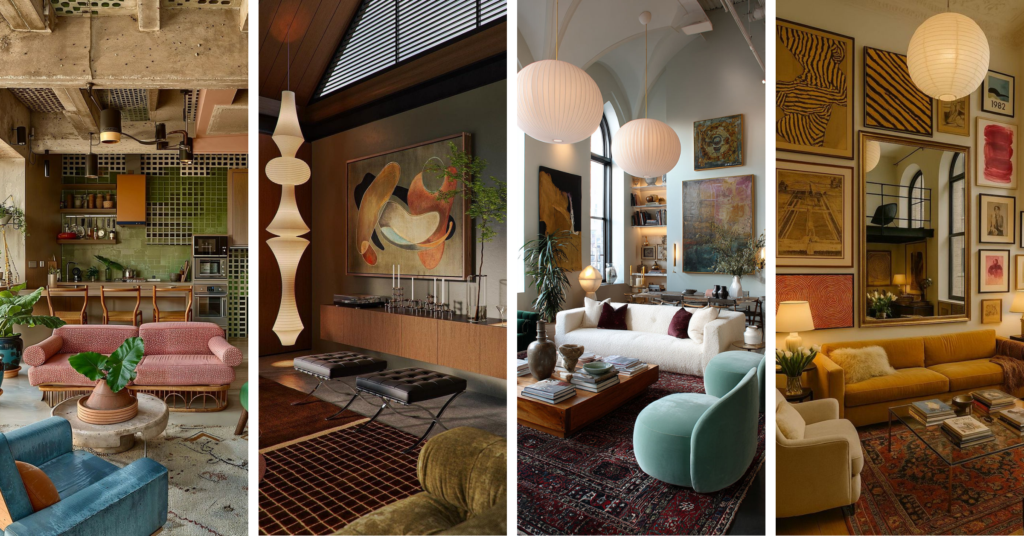
Another defining interior design trend of 2026 is the move toward layered, personal spaces. Perfectly coordinated interiors are being replaced by environments that feel collected and authentic. Mixing eras, styles, and materials creates visual depth and narrative. Objects, art, and furniture are chosen for meaning rather than trend alignment, resulting in interiors that feel intentional and expressive.
Sculptural Lighting as a Design Element
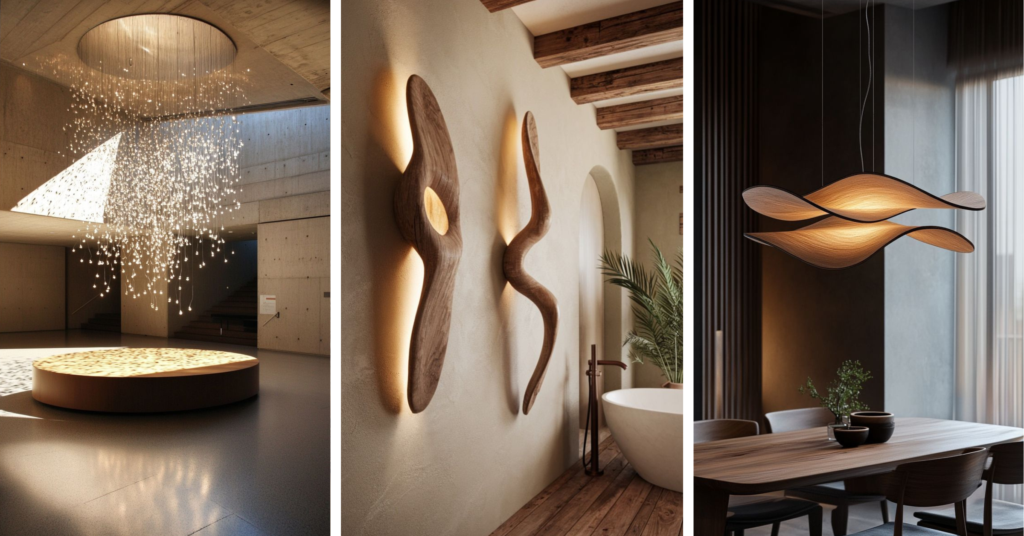
Lighting has taken on a more expressive role in interior design in 2026. Sculptural pendants, statement wall lights, and architectural lighting features act as focal points while shaping atmosphere. Lighting is no longer purely functional; it defines zones, enhances mood, and contributes to the identity of a space.
Interior Design in 2026: A Shift Toward Intentional Experience
The interior design trends of 2026 point toward a more thoughtful and emotionally driven approach to space. Warm color palettes, curved forms, tactile materials, and layered interiors come together to create environments that feel grounded, expressive, and human. Rather than prioritizing perfection or uniformity, 2026 interior design embraces comfort, authenticity, and experience. Great design this year isn’t defined by where it exists, but by how it feels.