
Most fitness spaces are designed to push you. The Revive Club was designed to welcome you.
Most gyms give you the same feeling the moment you walk in. Mirrors everywhere. Performance anxiety. A silent competition between people who all pretend not to be watching each other. The unspoken message is that the space was built for someone more disciplined and more committed than you are right now.
Intentionally or not, most gym interior design reminds you of what you aren’t yet.
The Revive Club, a fitness and sports club in Biel, Beirut, started from a different question. Not “how do we make people perform?” but “how do we make people want to come back?”
That question changes how a space gets designed.
The Brief: A Feeling, Not a Floor Plan
The client is Wael Arakji, one of Lebanon’s most celebrated basketball players, and someone who understands what it means to be passionate about movement. The brief wasn’t a room schedule or a square-metre breakdown. It was a feeling.
He wanted a place where people show up as themselves. Where they train, enjoy and breathe, without pressure to perform, without the anxiety of being judged, and without the space telling them they’re not enough yet.
A brief like that makes you build an atmosphere before you build a building.
Why Most Gym Design Gets It Wrong
Most fitness spaces are designed around one idea: that the space should motivate you through pressure. Dark mirrors. Aggressive typography. Performance metrics on every screen.
That approach assumes the user needs to be pushed, and it treats the space as a machine for output. For most people, what it produces is avoidance.
We designed The Revive Club from the opposite assumption. People already want to move, and they already have things they love doing. The space’s job isn’t to pressure them into it. Its job is to make showing up feel good enough that nothing gets in the way.
A Fitness Club That Doesn’t Look Like a Gym
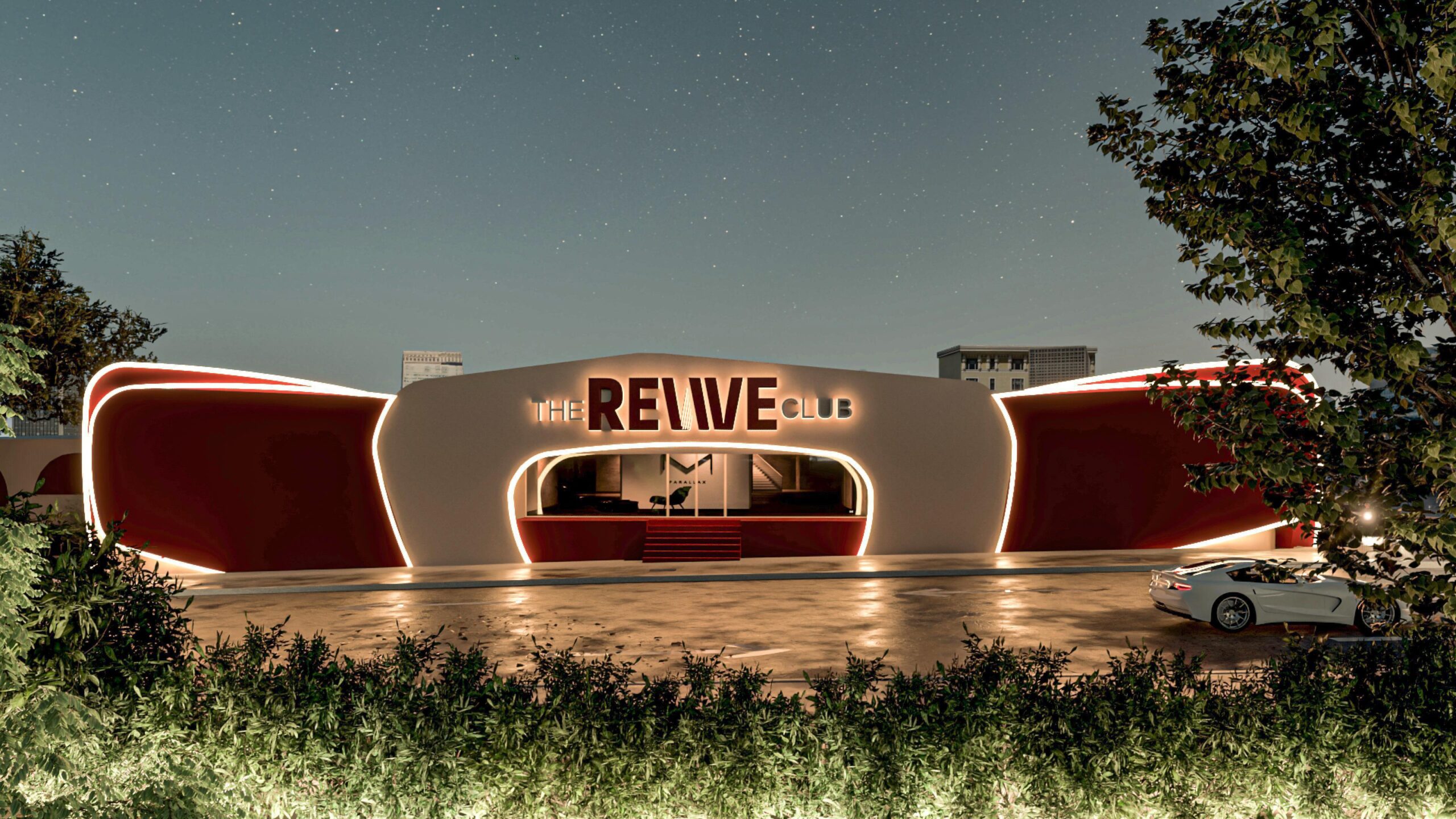
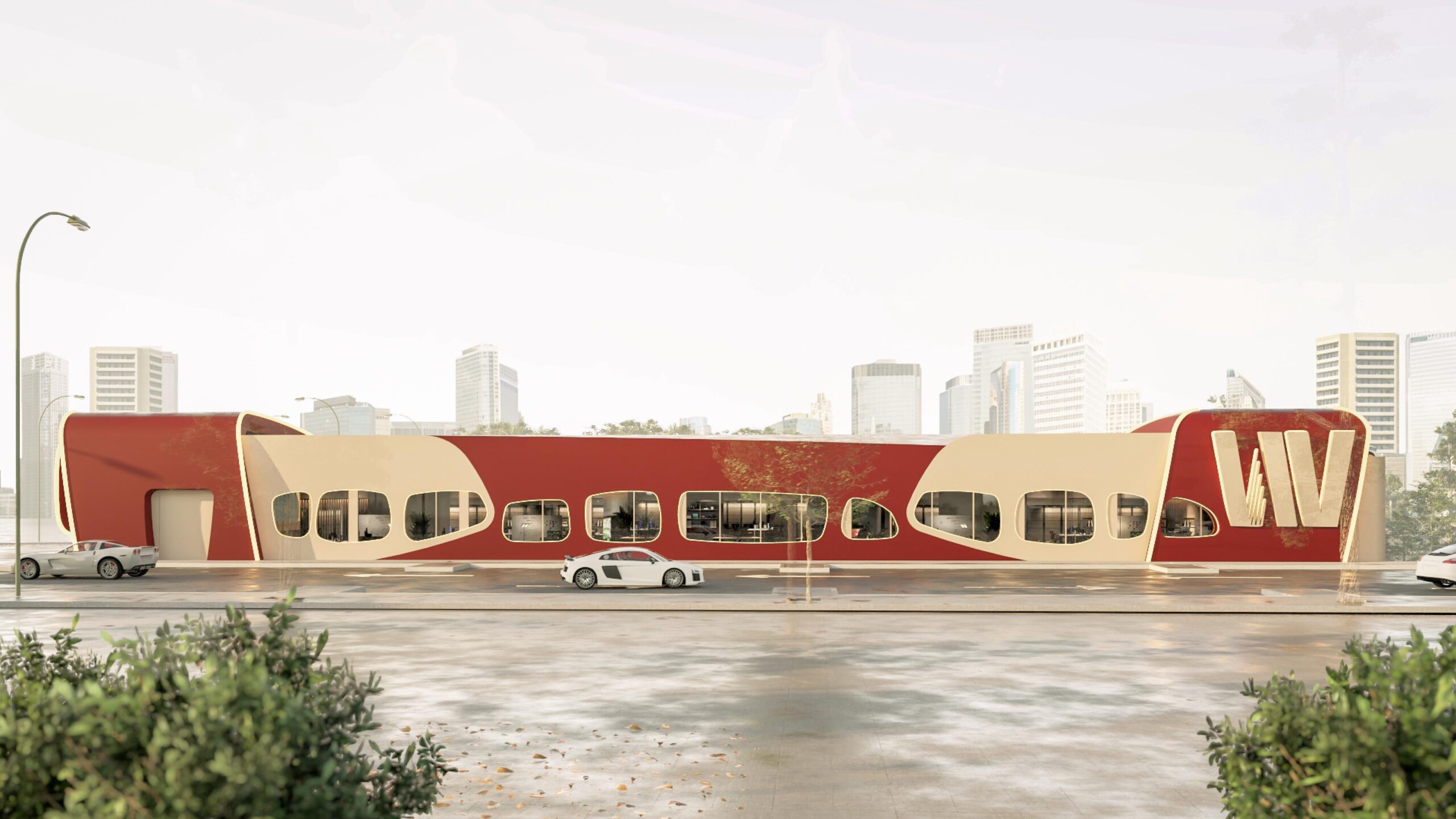
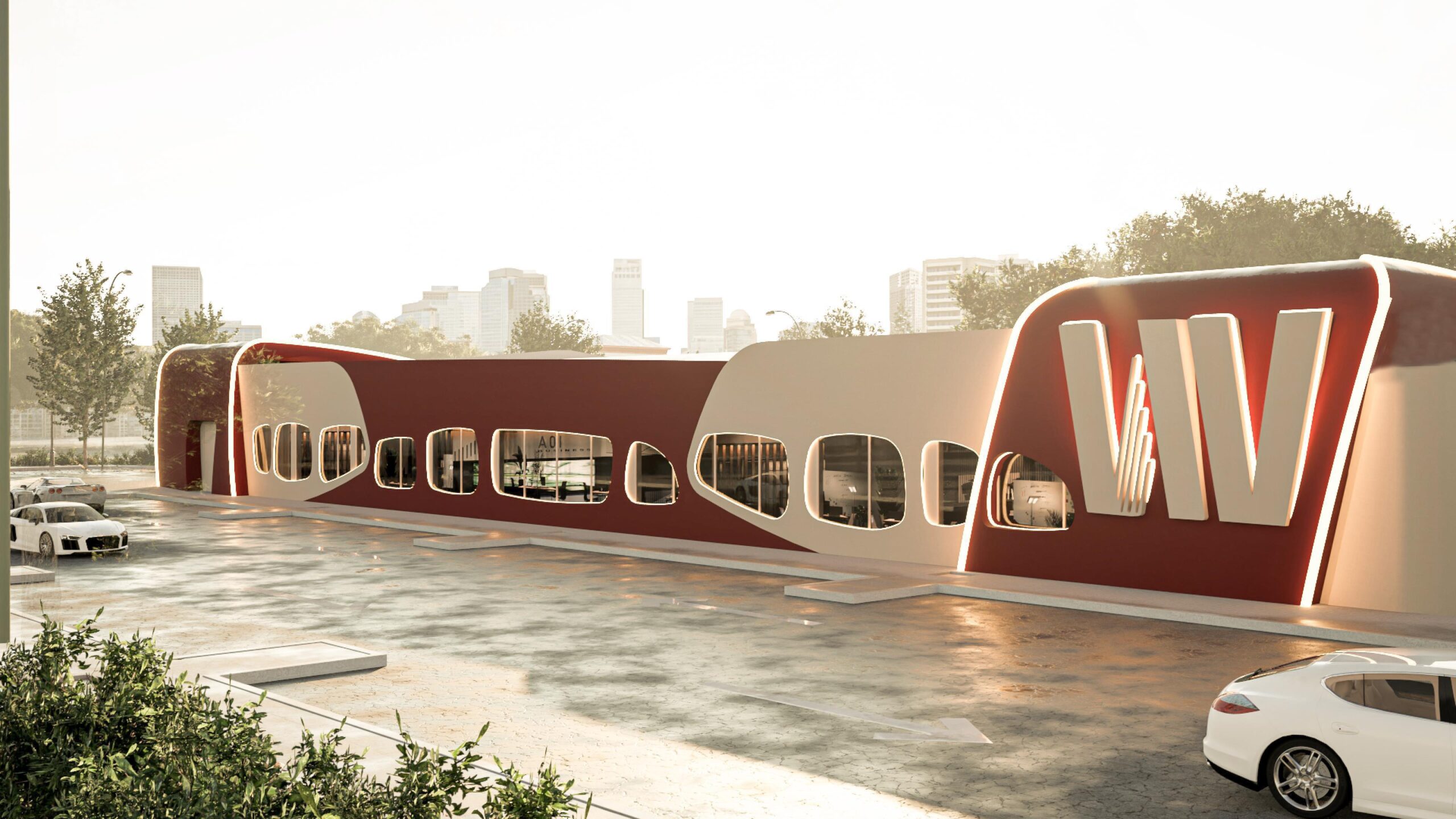
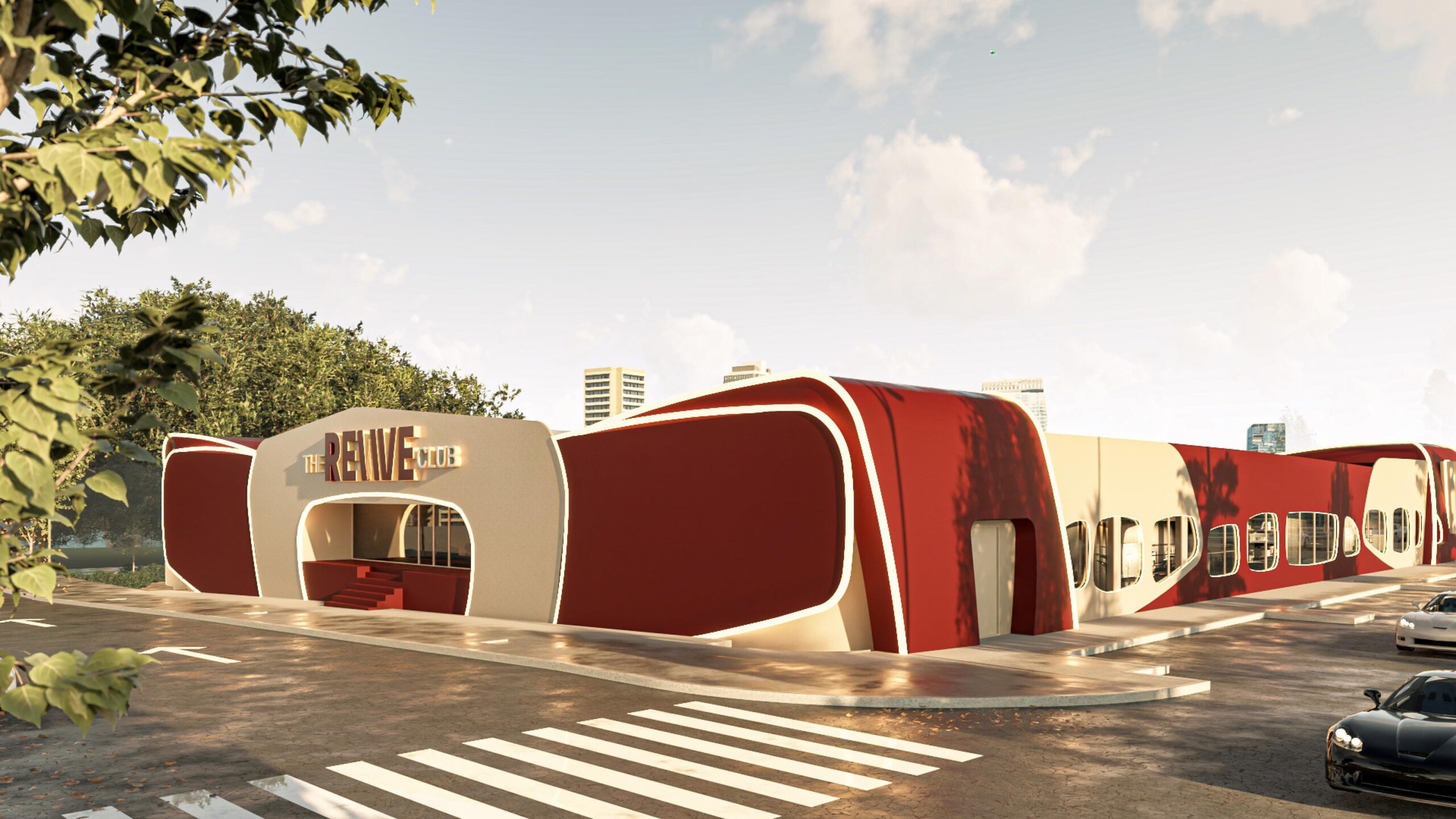
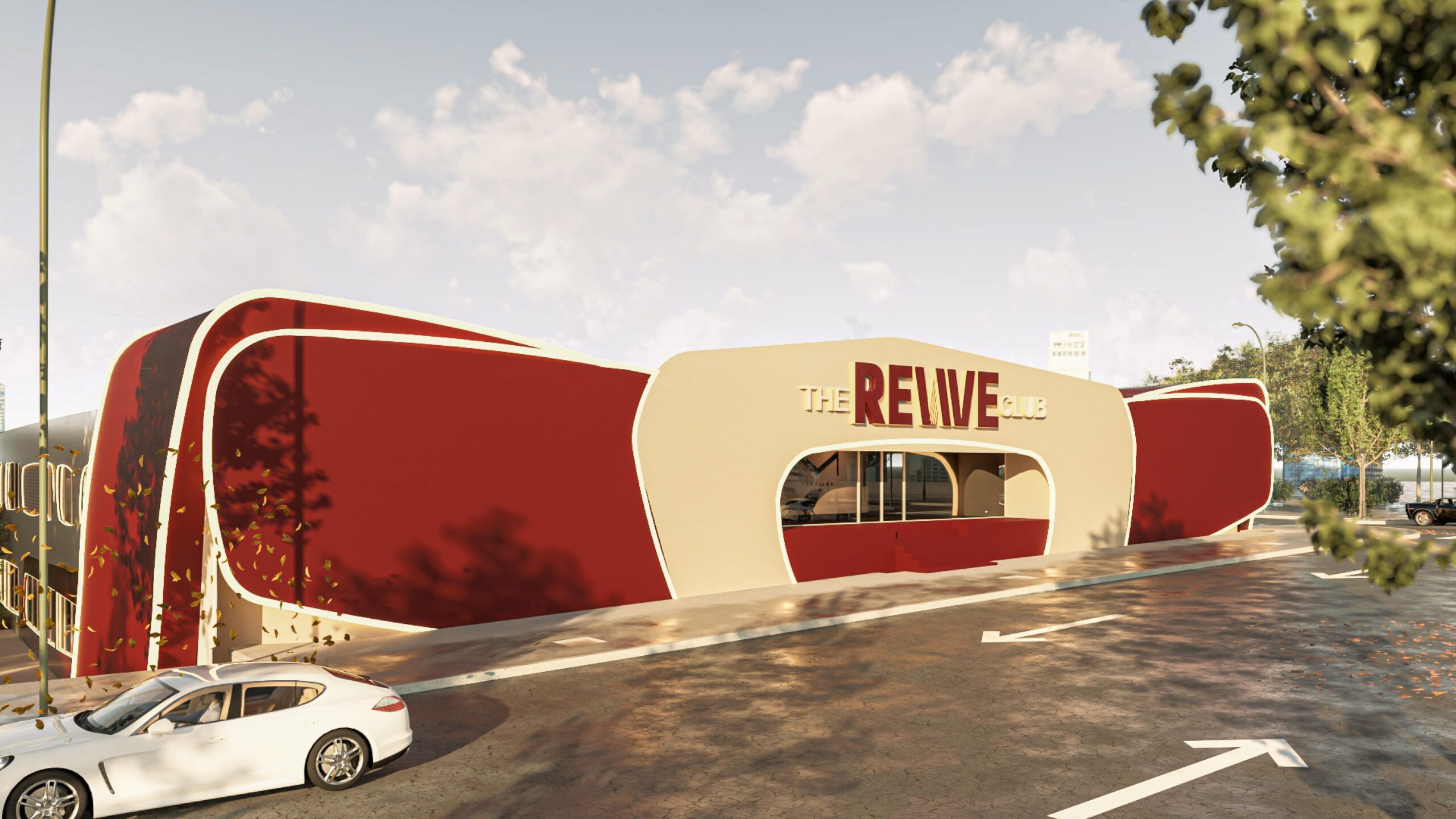
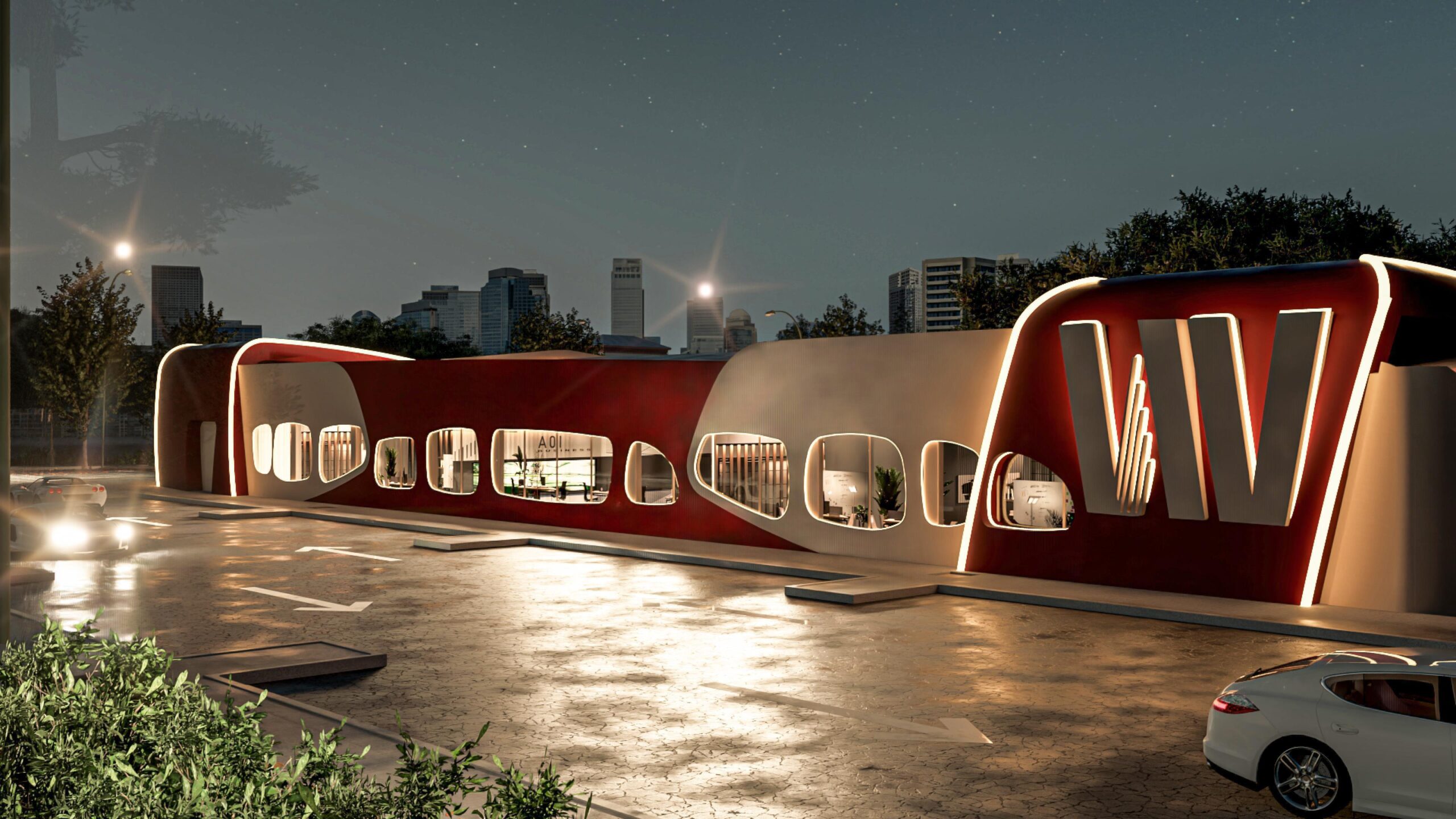
The exterior states this position before anyone steps inside.
The façade pairs warm sand tones with deep burgundy volumes, and its sweeping curves and organic openings read closer to a cultural destination than a fitness centre. There are no hard edges, no aggressive geometry and no attempt to look athletic. The building sits on its Biel site with a quietness that signals something worth your time is happening inside.
This is deliberate. A gym that looks like every other gym attracts people who already go to gyms. The Revive Club was designed for people who haven’t found their place yet.
The Training Floor
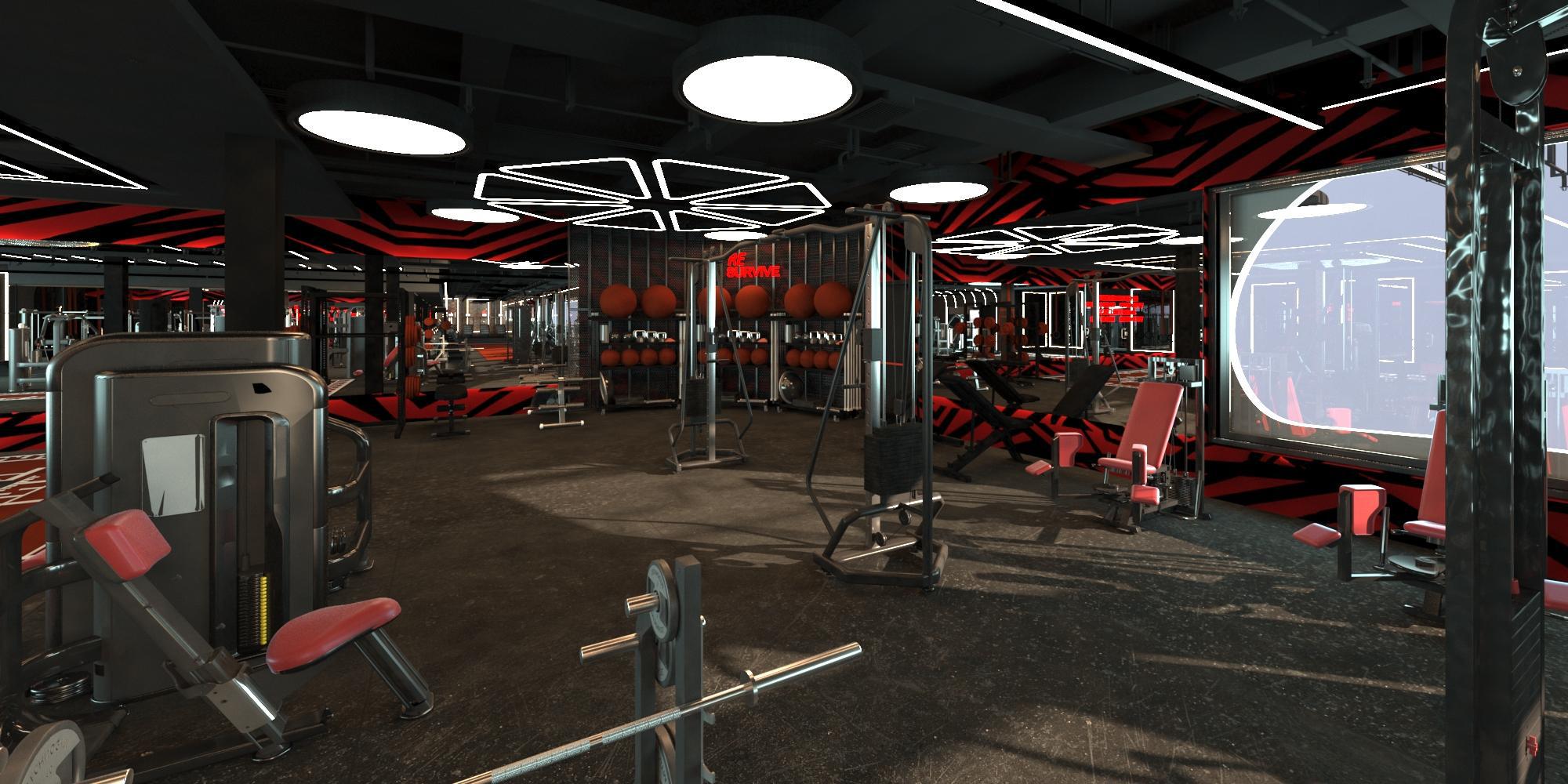
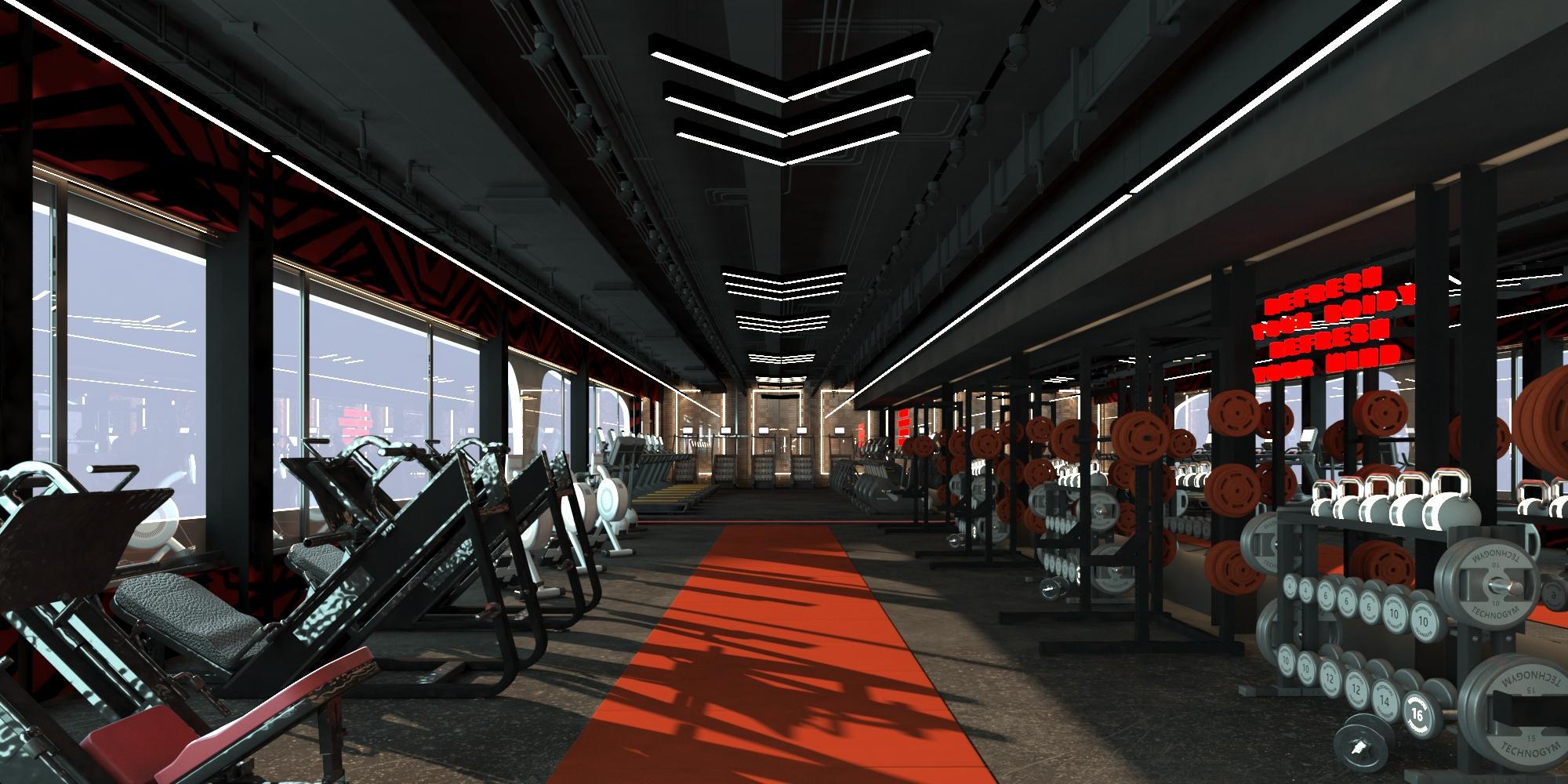
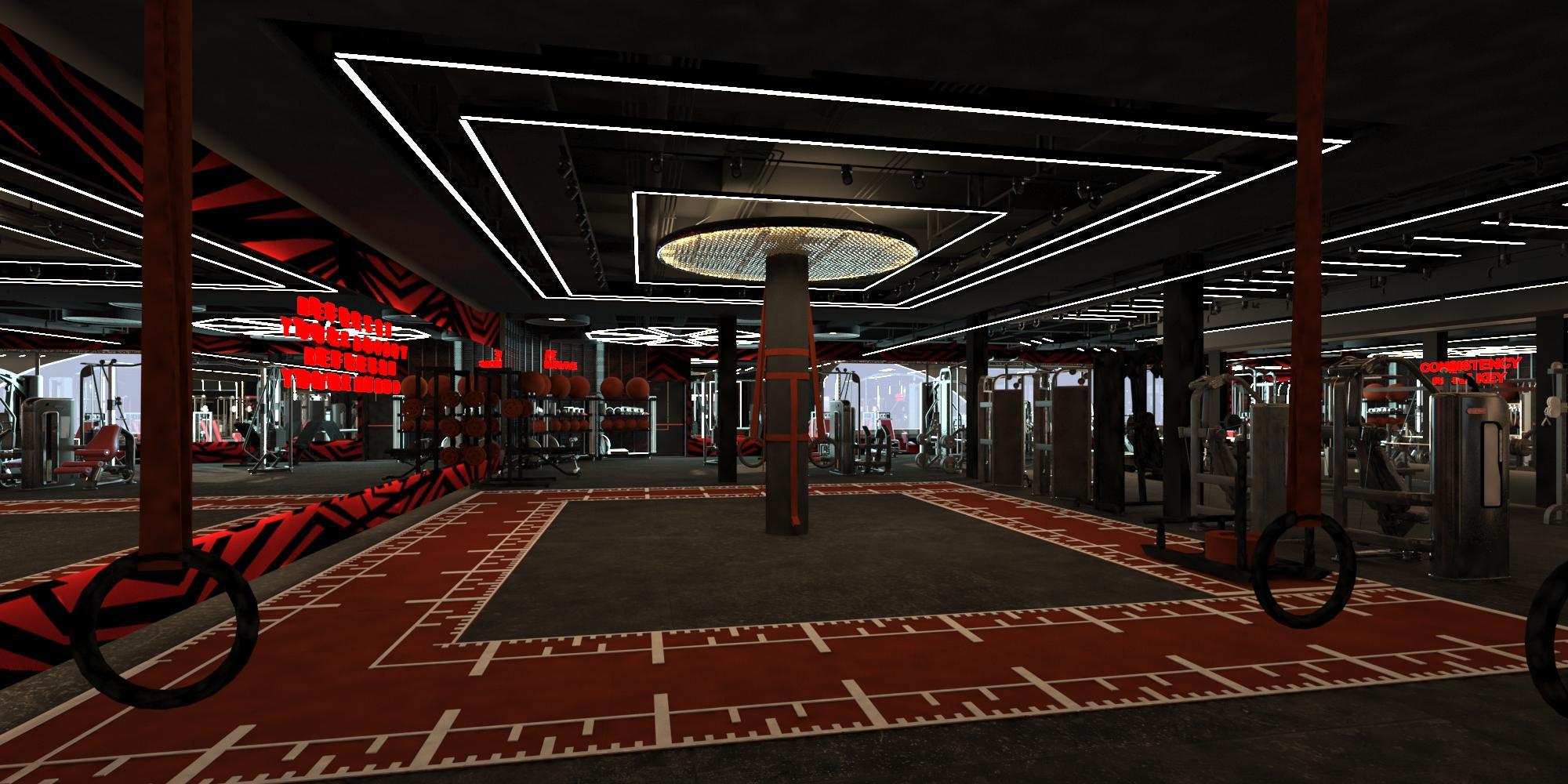
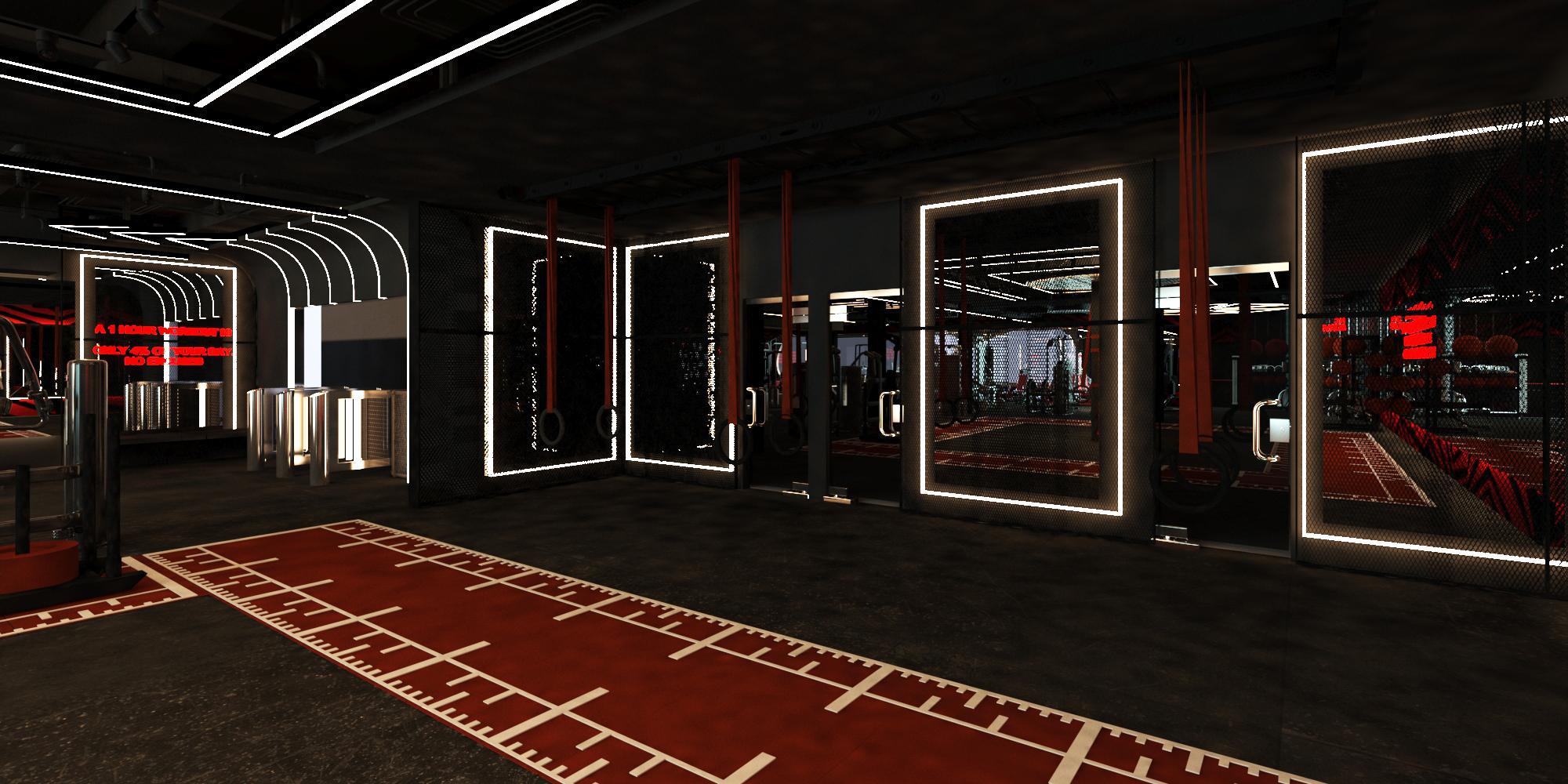
The main training area is a serious space. It’s dark and high-ceilinged, lit by sharp, angular light lines that trace the geometry above. A red runway runs the full length of the floor, “Refresh Your Body. Refresh Your Mind.” glows in red neon on the wall, and the mirrors multiply the energy.
But the floor isn’t designed to intimidate. It’s designed to give people room: room to move between zones without feeling watched, and room to find the corner that belongs to them.
The Cycling Studio
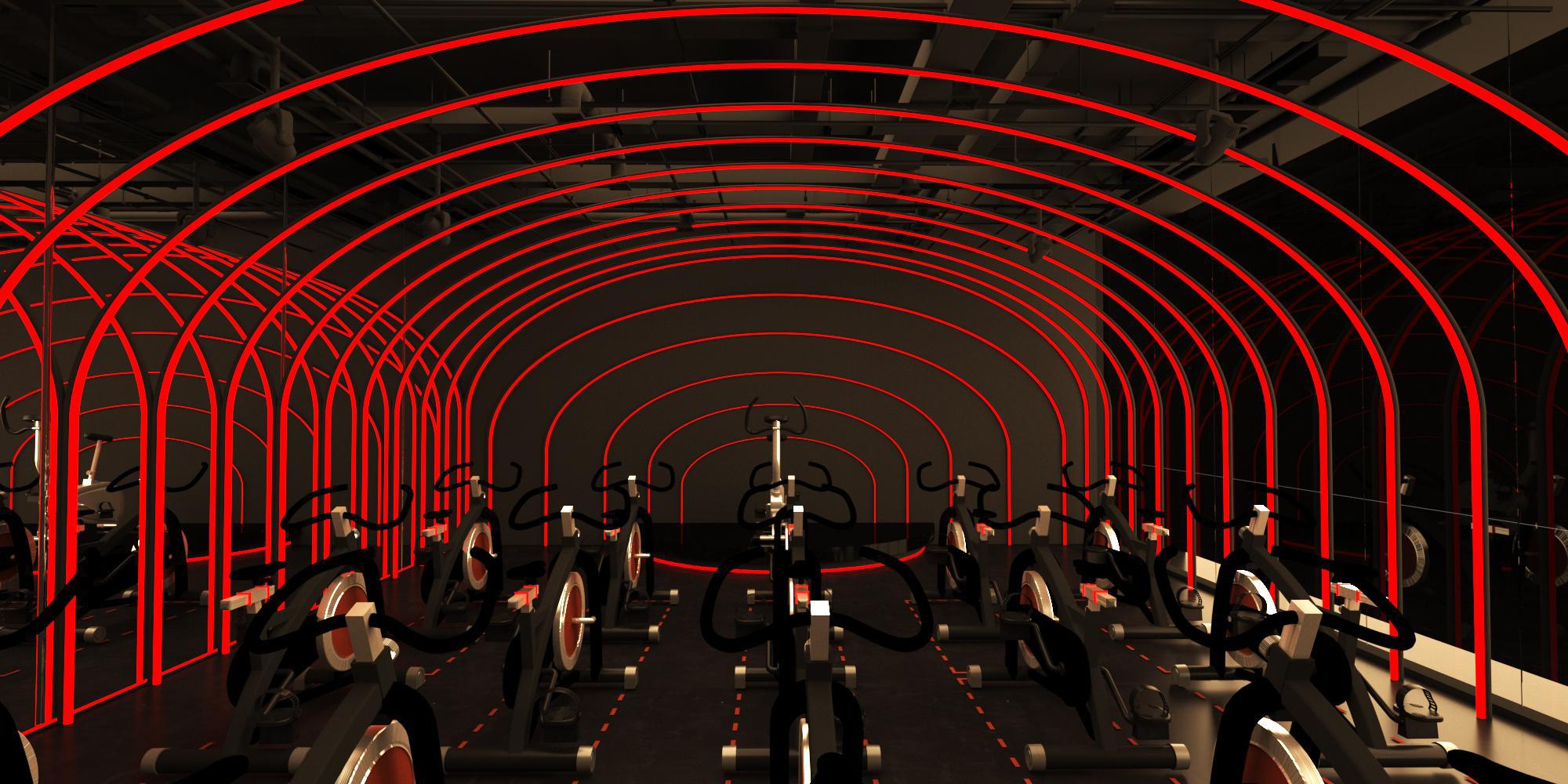
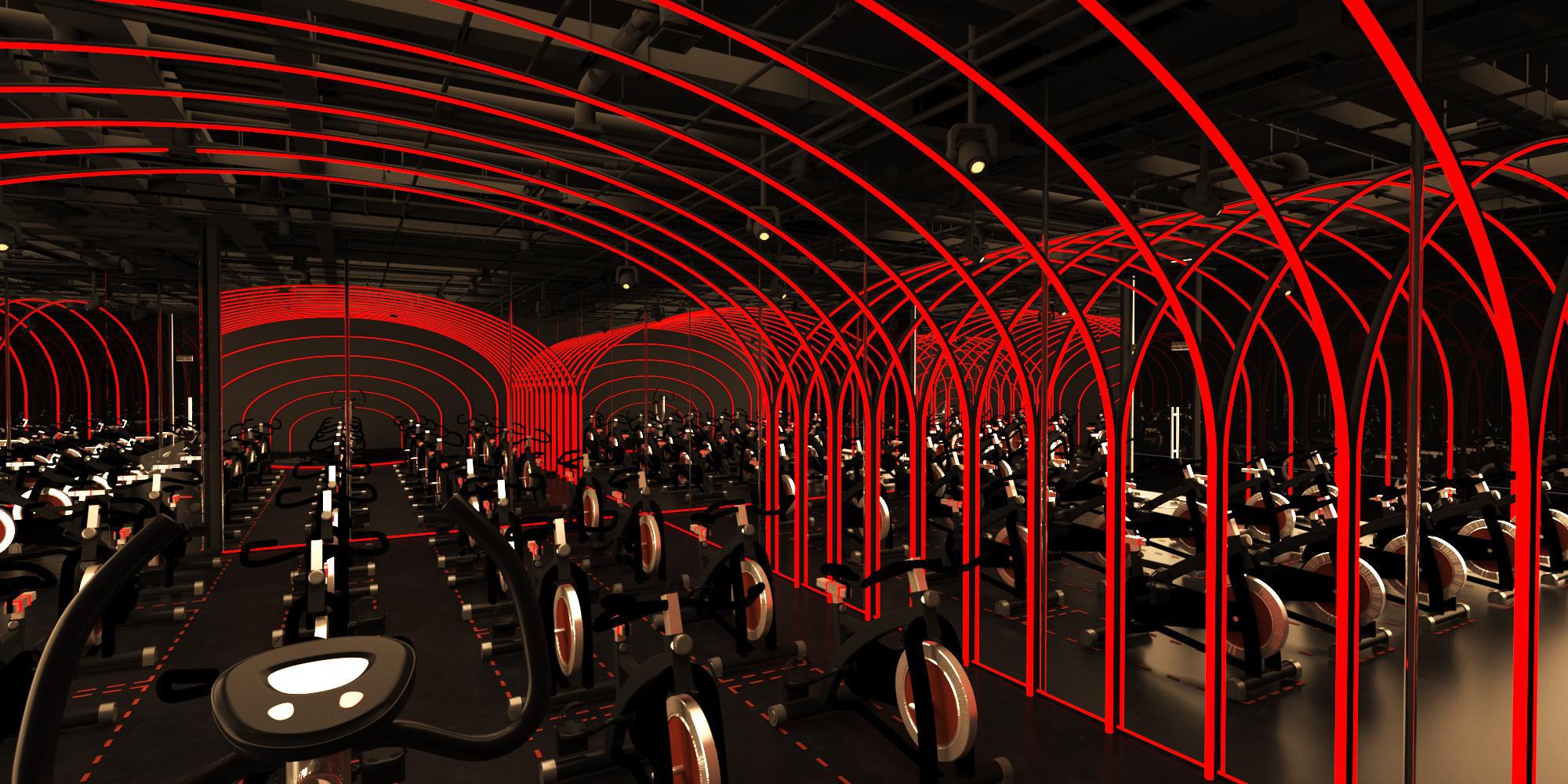
The cycling studio is the most theatrical space in the building.
Red neon arches repeat from floor to ceiling and multiply in the mirrors on both sides until the room feels endless. With the lights down and the music on, the room doesn’t ask you to push harder. It makes pushing harder feel inevitable.
The Indoor Basketball Court
This is where the brief gets most personal.
The indoor basketball court isn’t an amenity added to a gym. It’s a full arena: a hardwood floor, official Spalding backboards, shot clocks, spectator seating and a suspended LED jumbotron above centre court. The walls above the seating hold a gallery of basketball photography, each image framed in the organic cutout language that runs through the whole building.
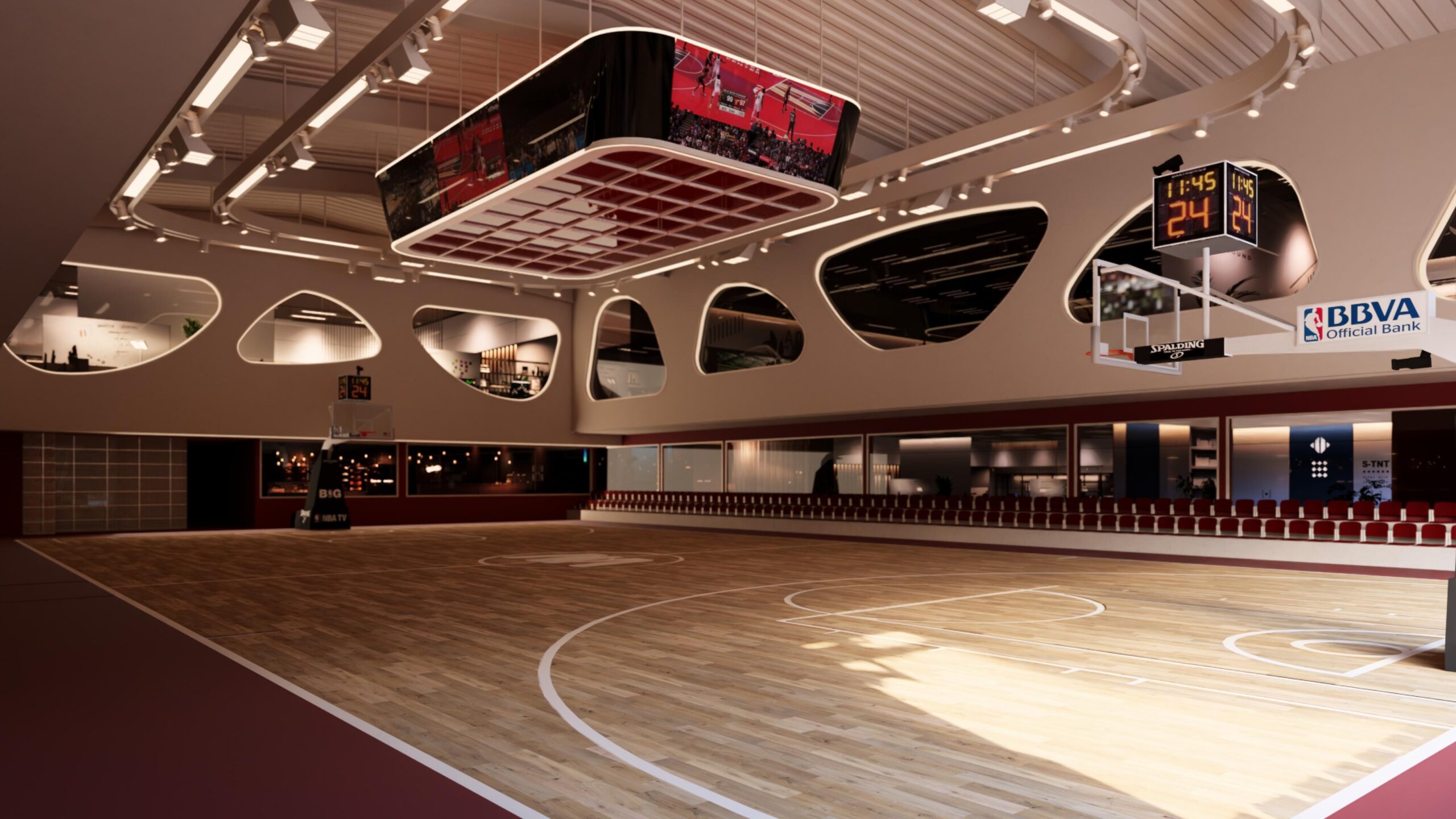
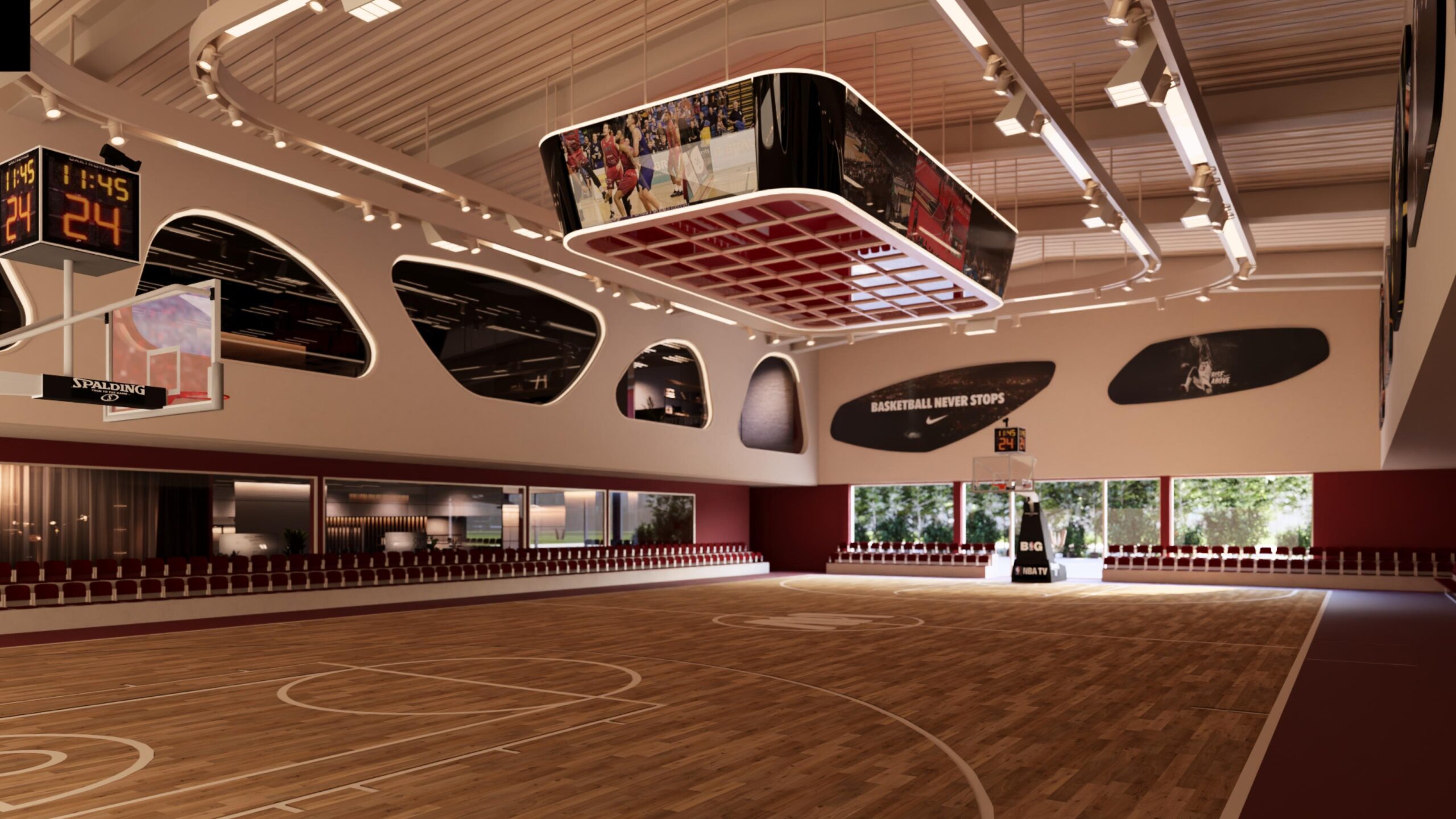
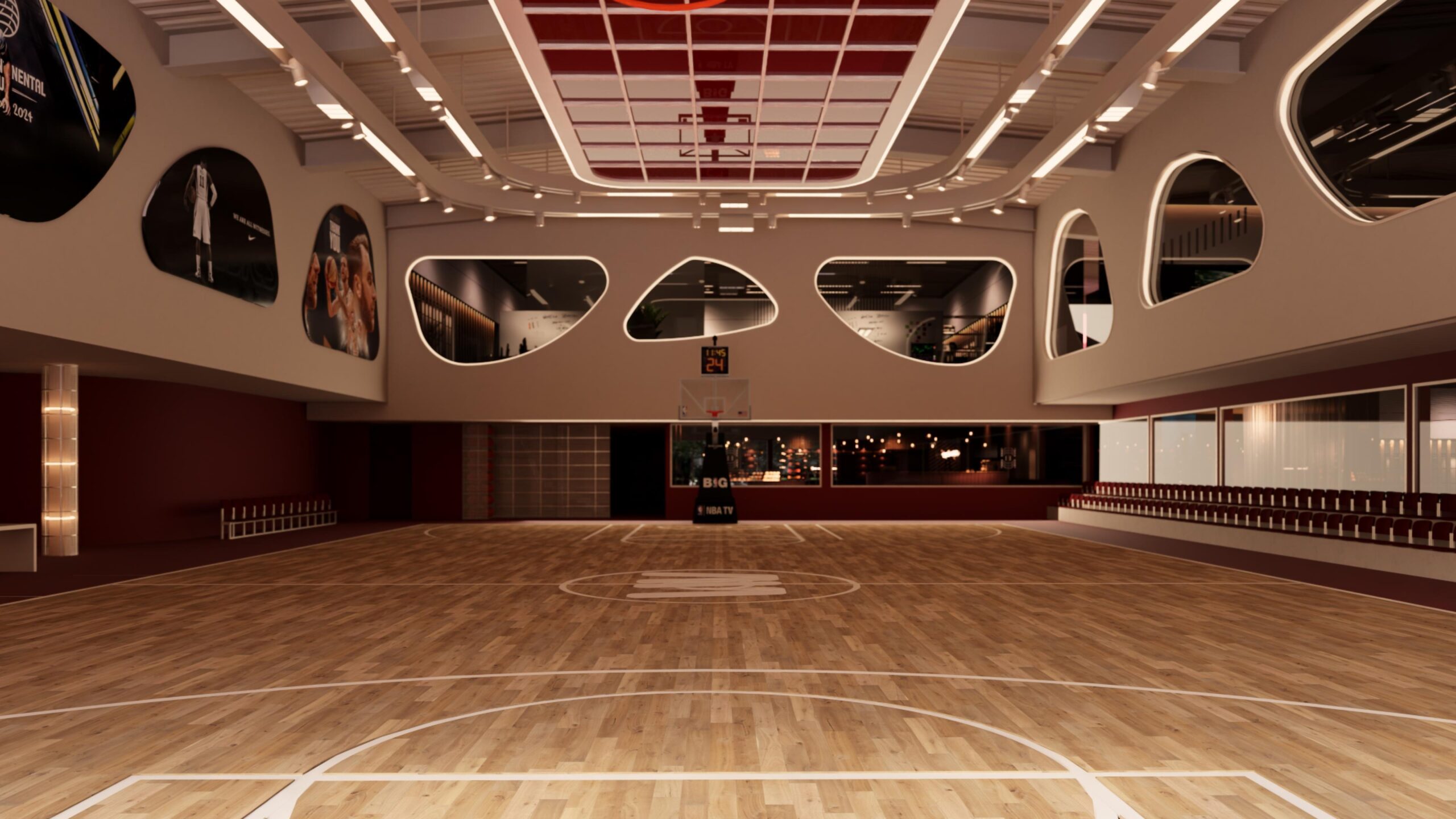
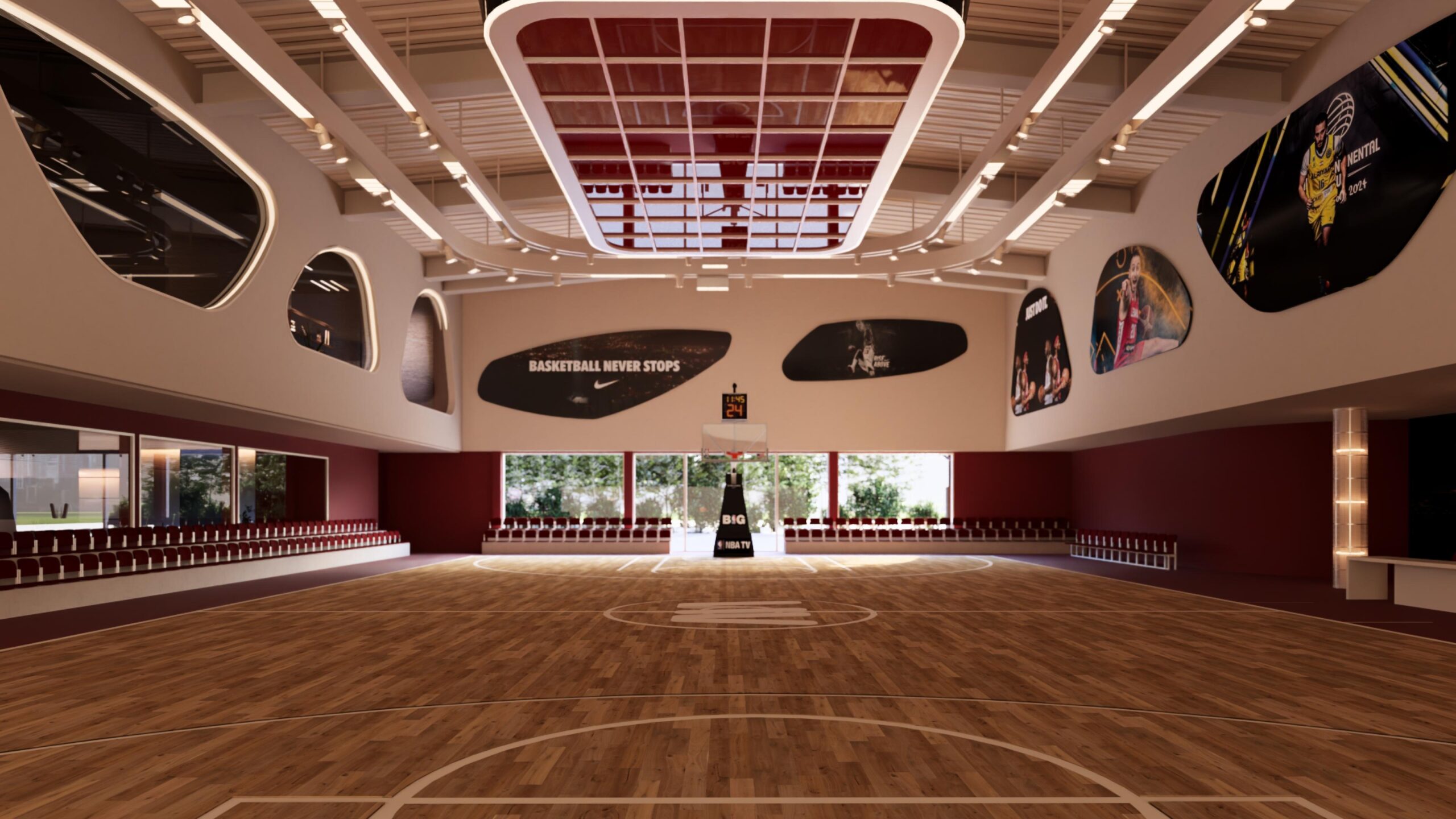
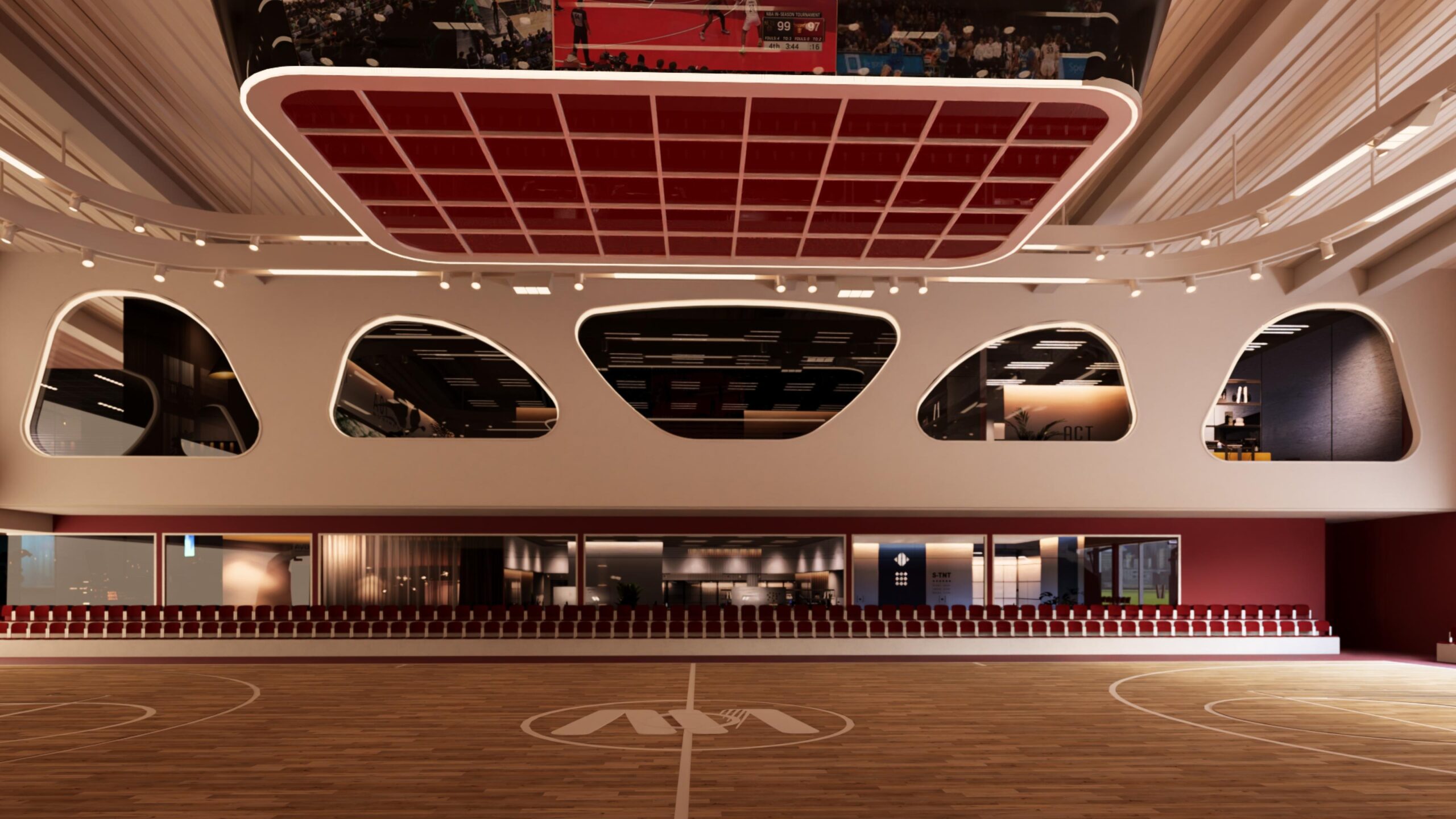
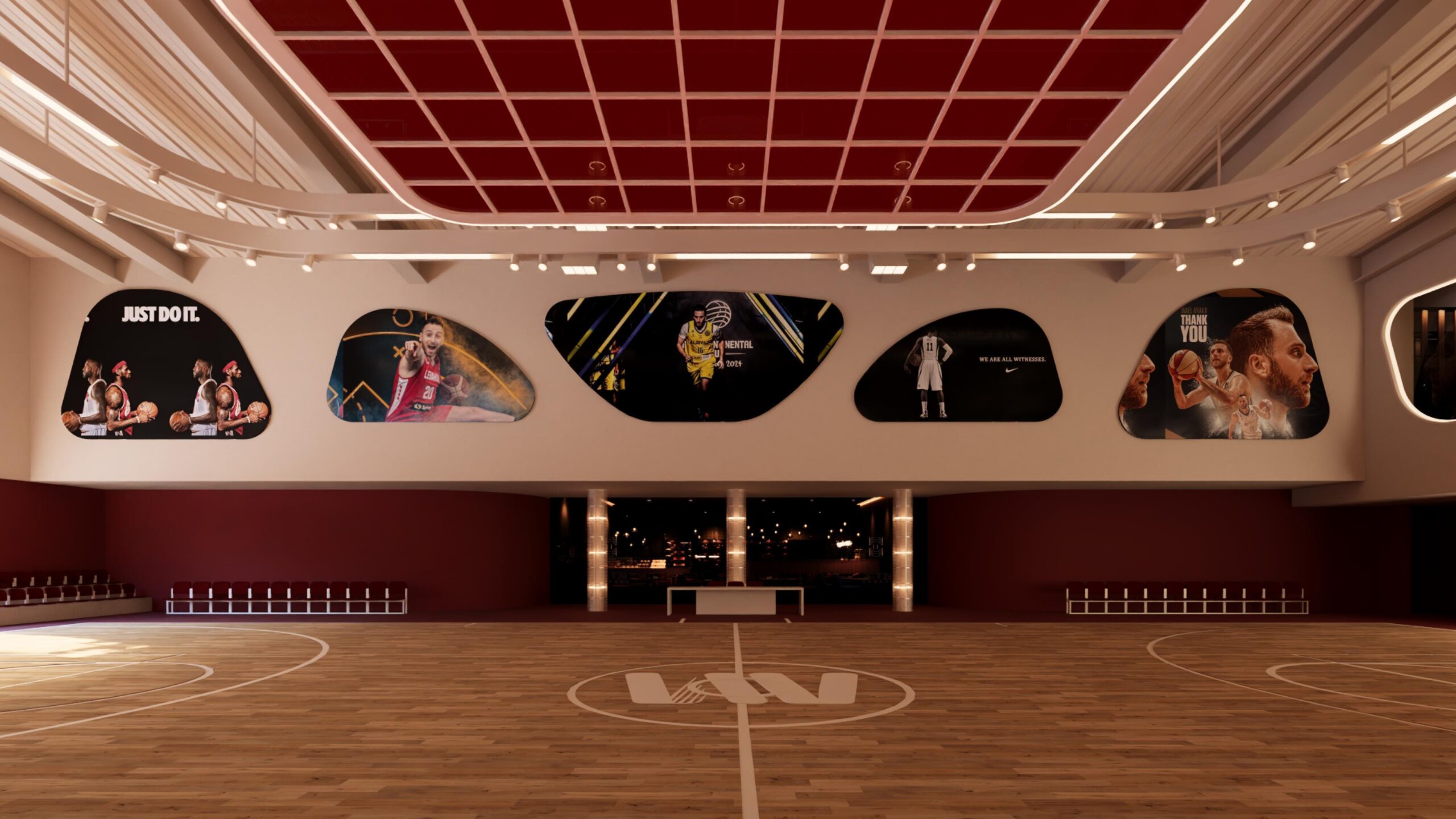
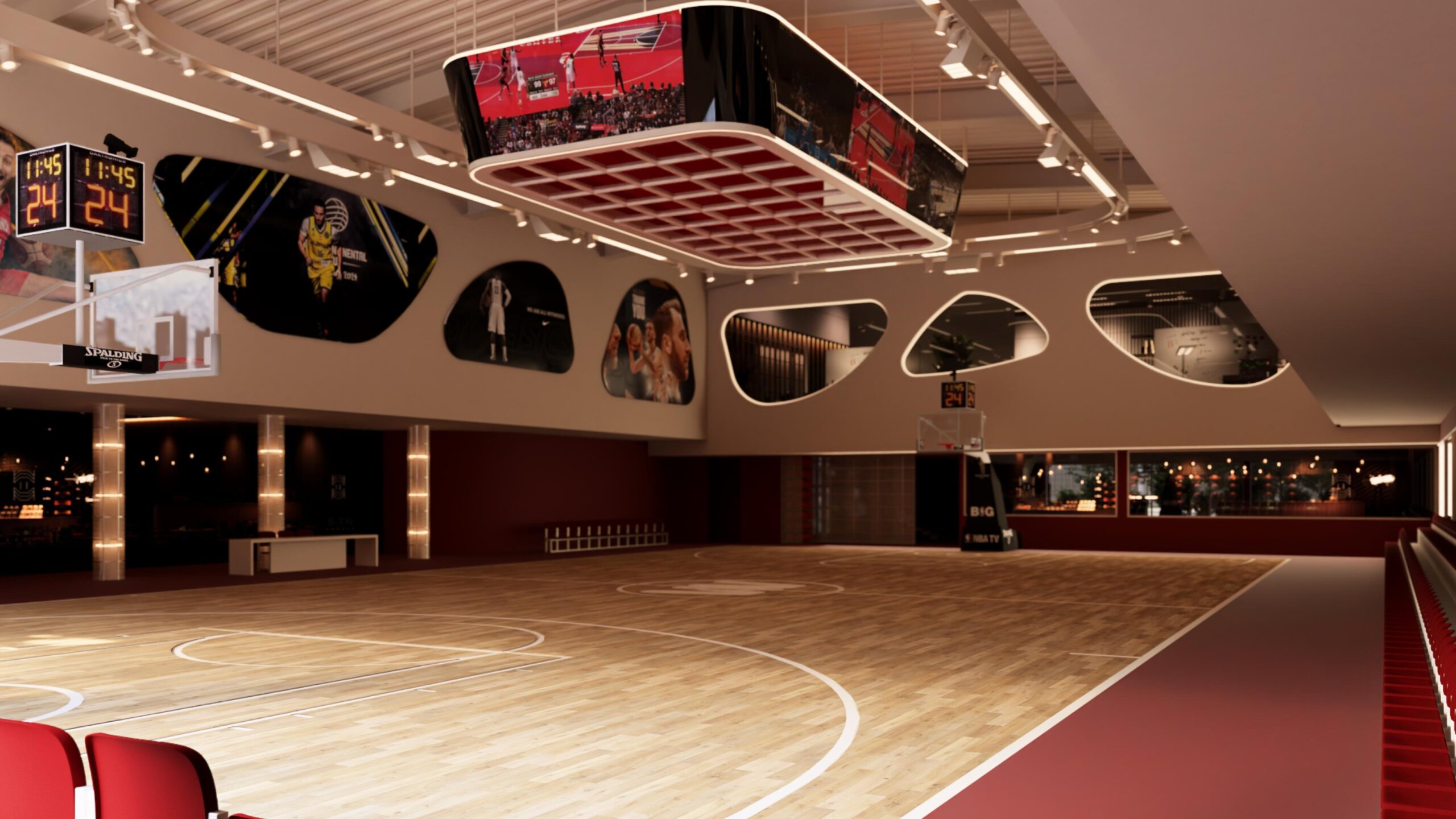
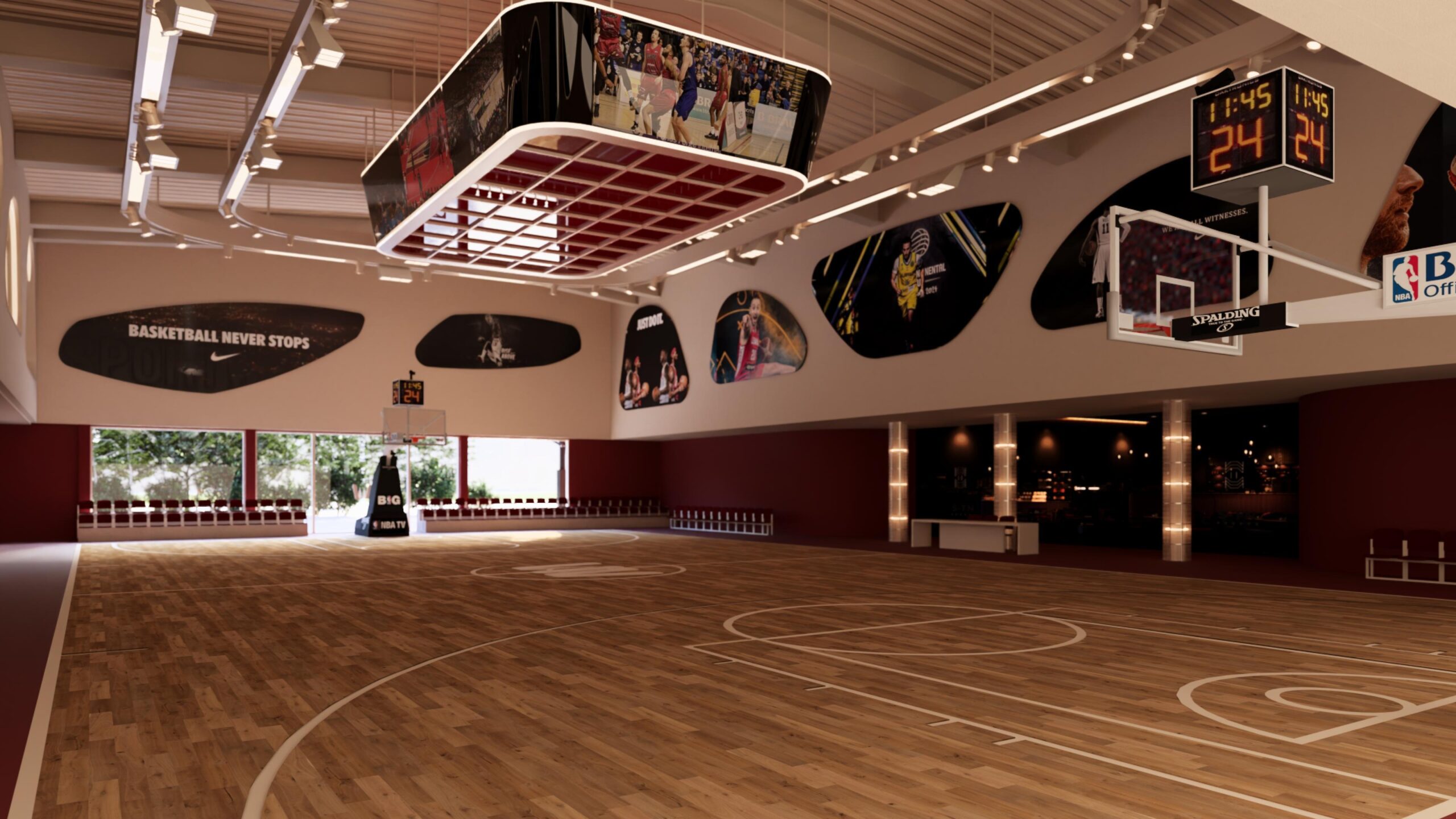
Outside, a second court sits under the open sky, with city views and a hedge wall that shuts out the street.
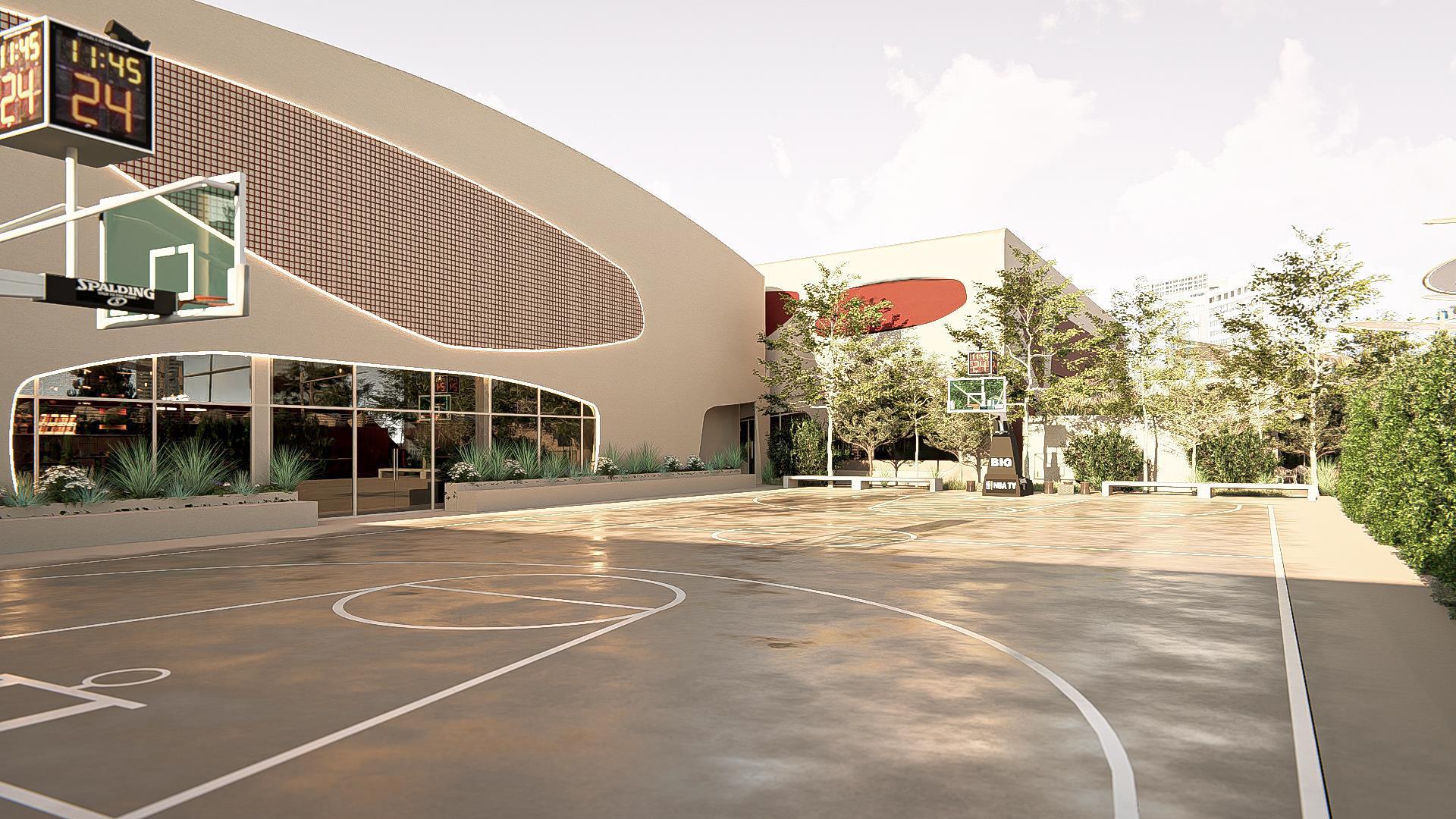
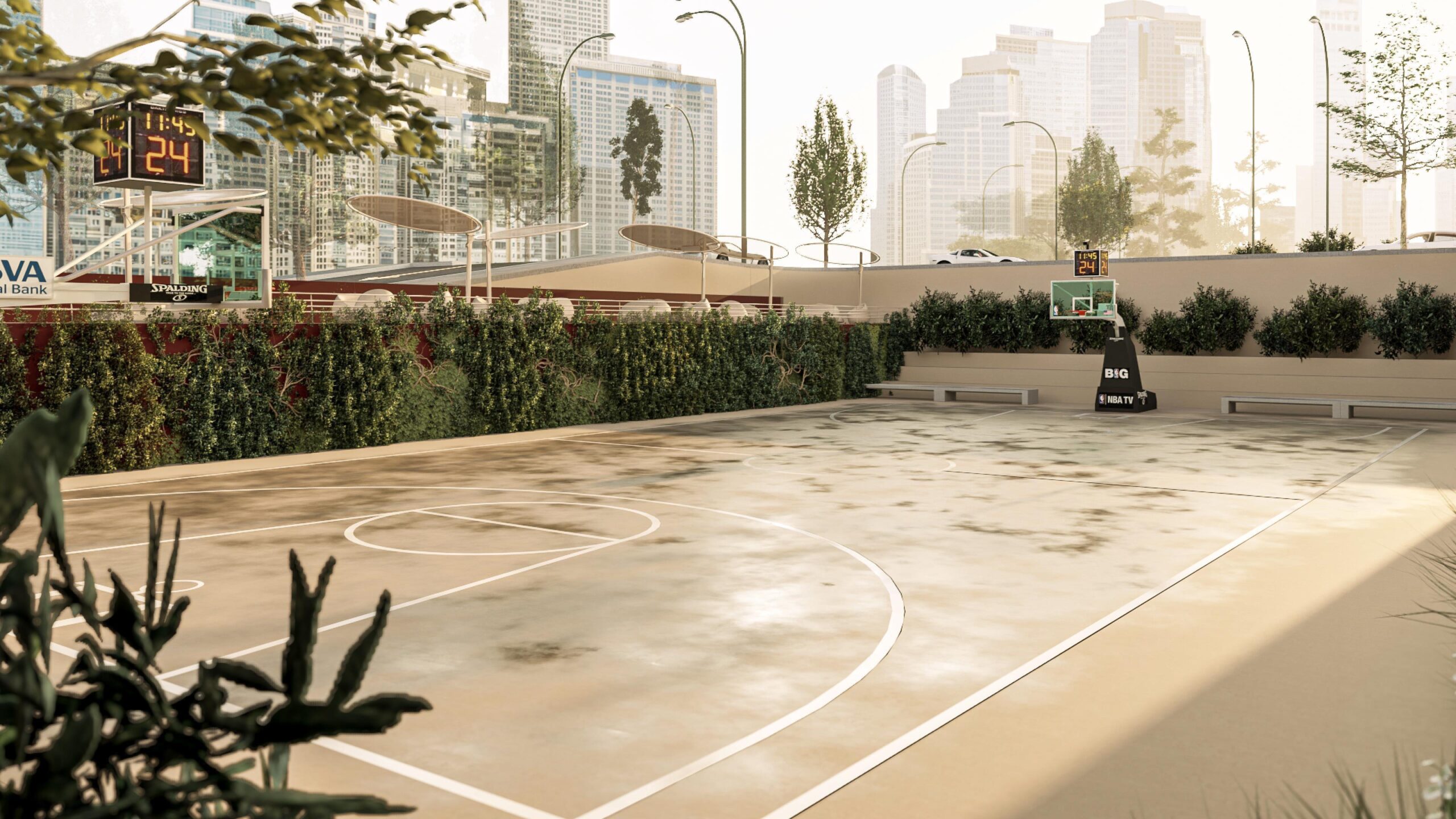
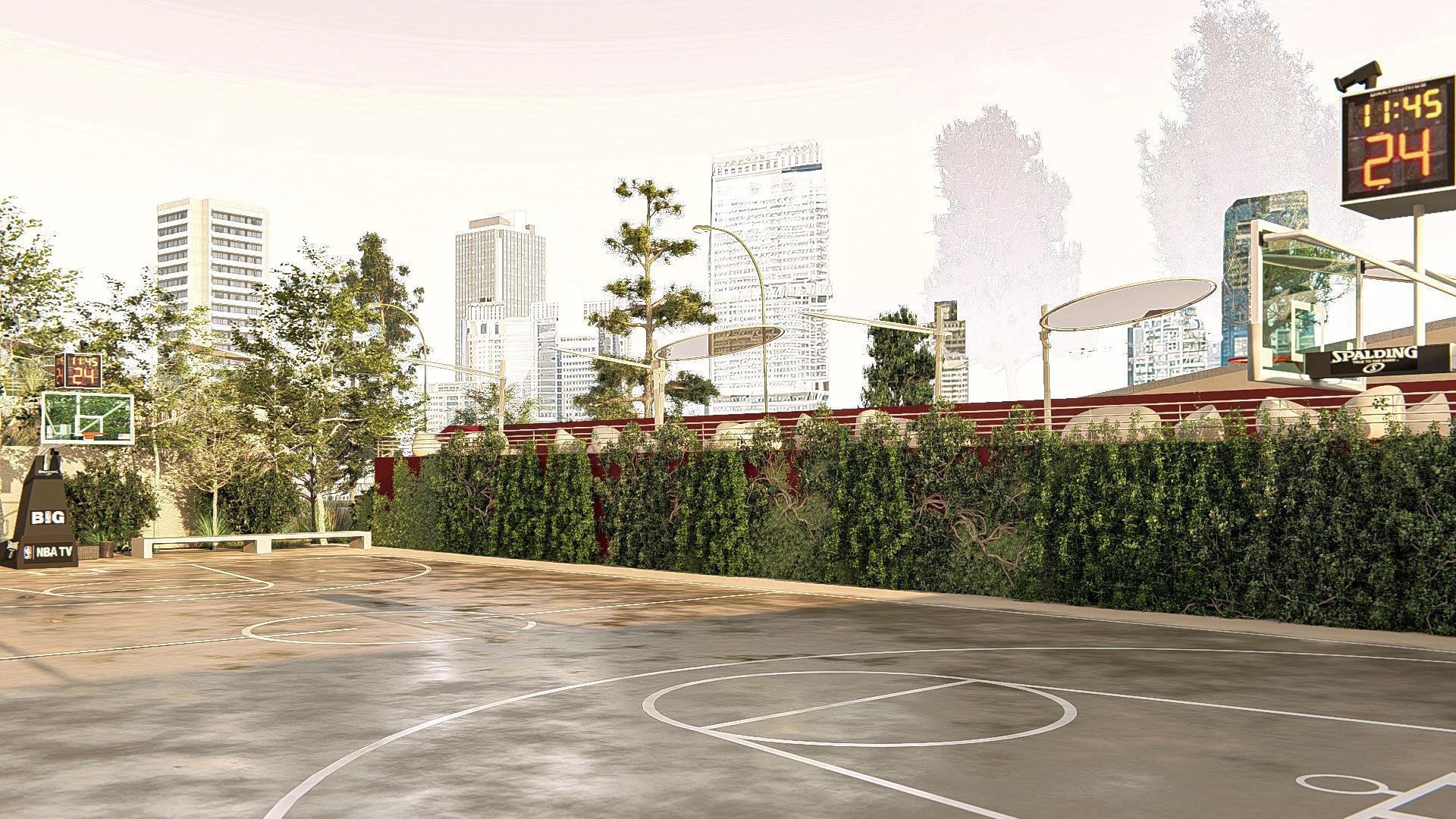
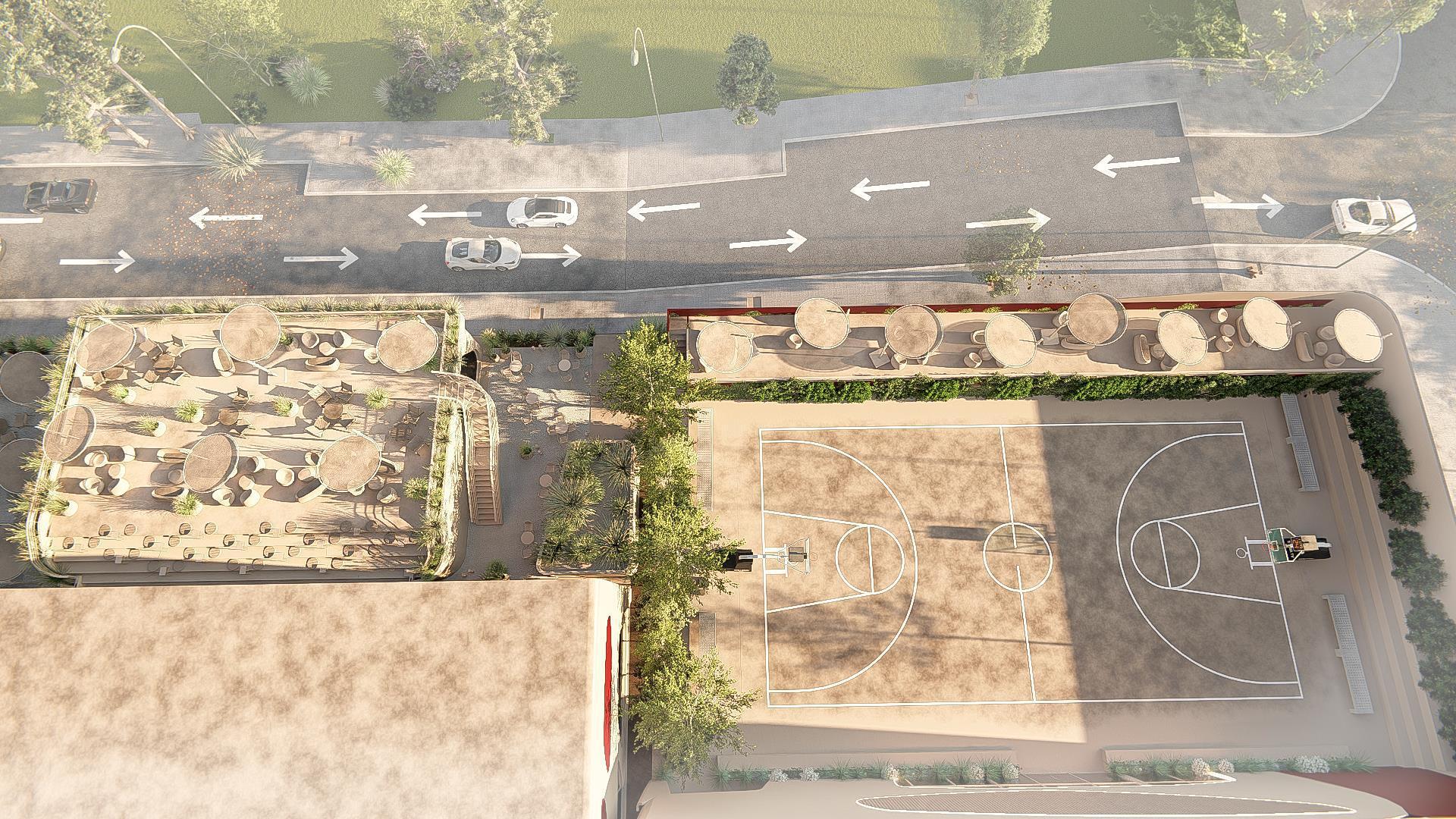
For The Revive Club, the court wasn’t an add-on to a fitness club. It was the reason the club exists, and everything else was designed around it.
Pilates and Yoga Studios
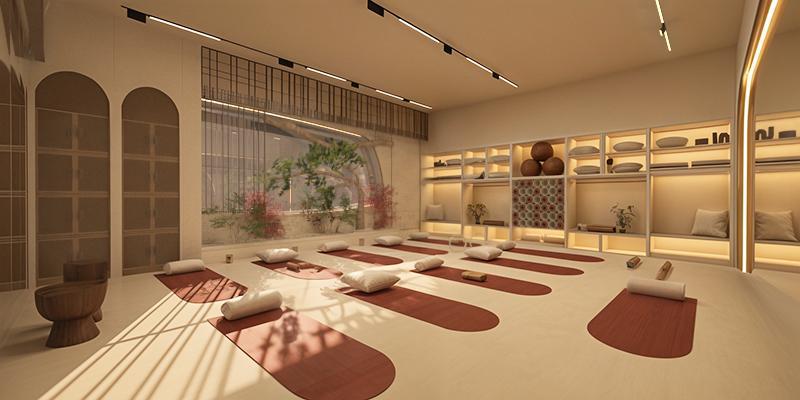
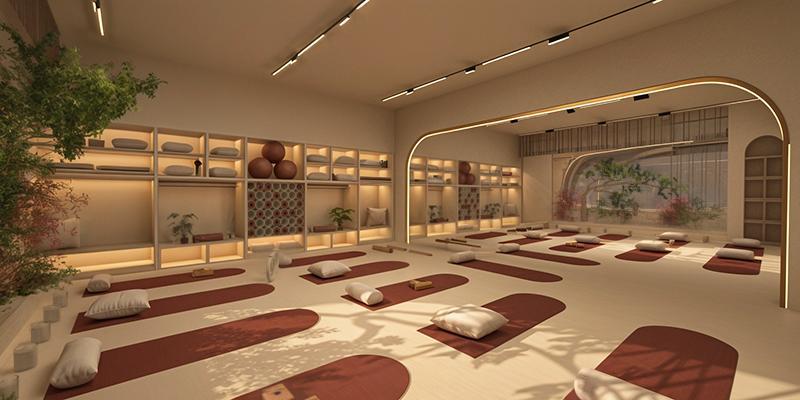
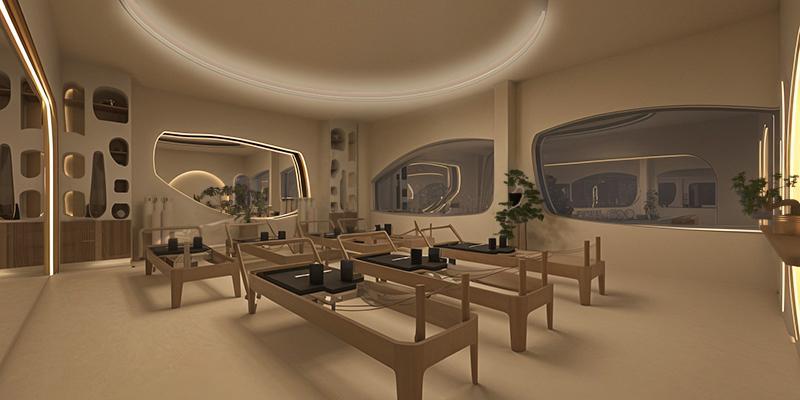
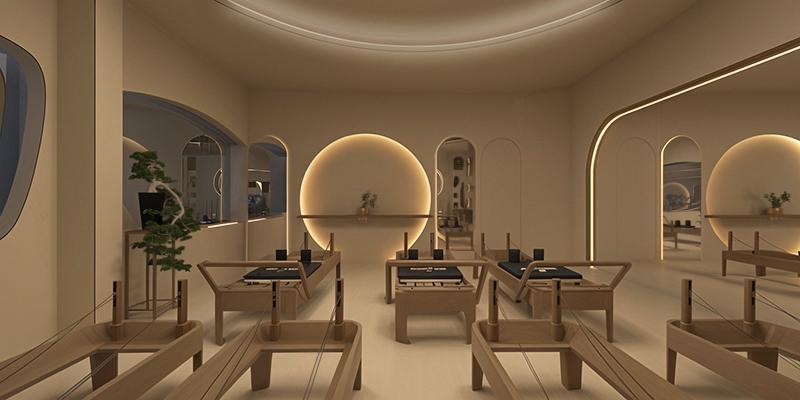
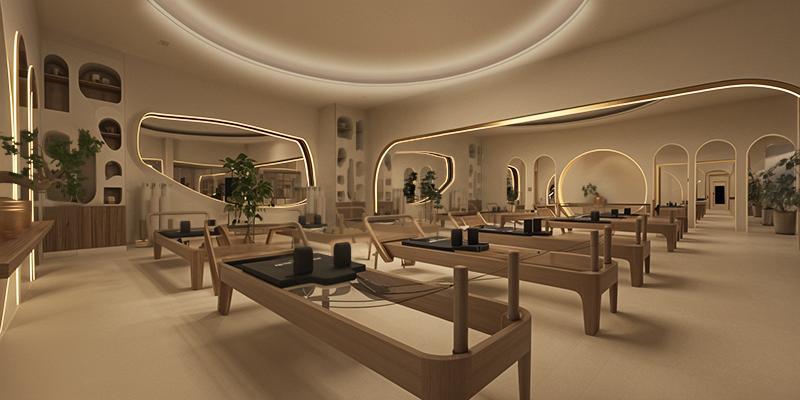
The pilates and yoga studios use a completely different palette: warm, quiet and organic. The training floors are built for intensity; these rooms are built for stillness. That’s two design languages in one building, both deliberate.
The Lounge
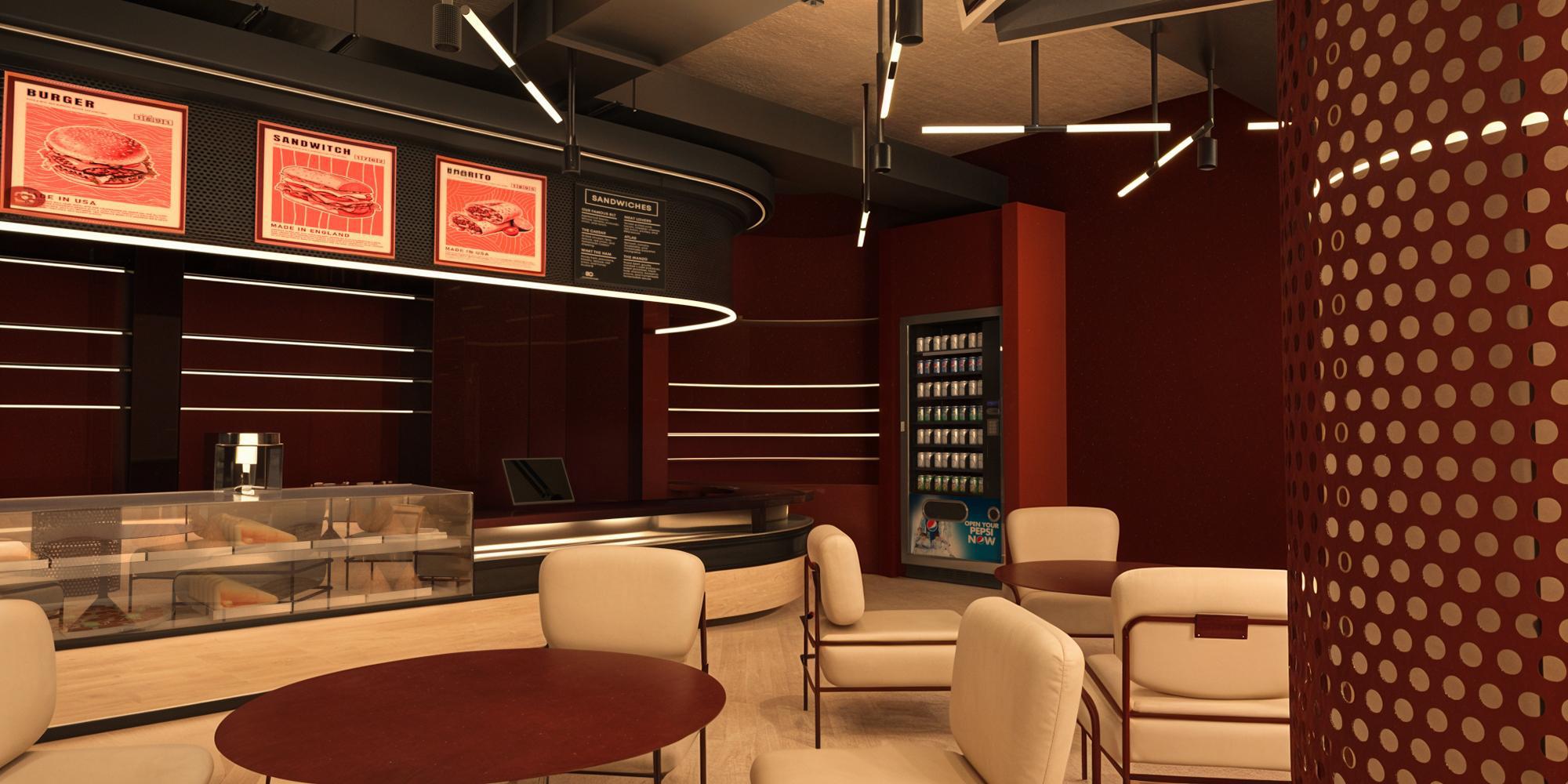
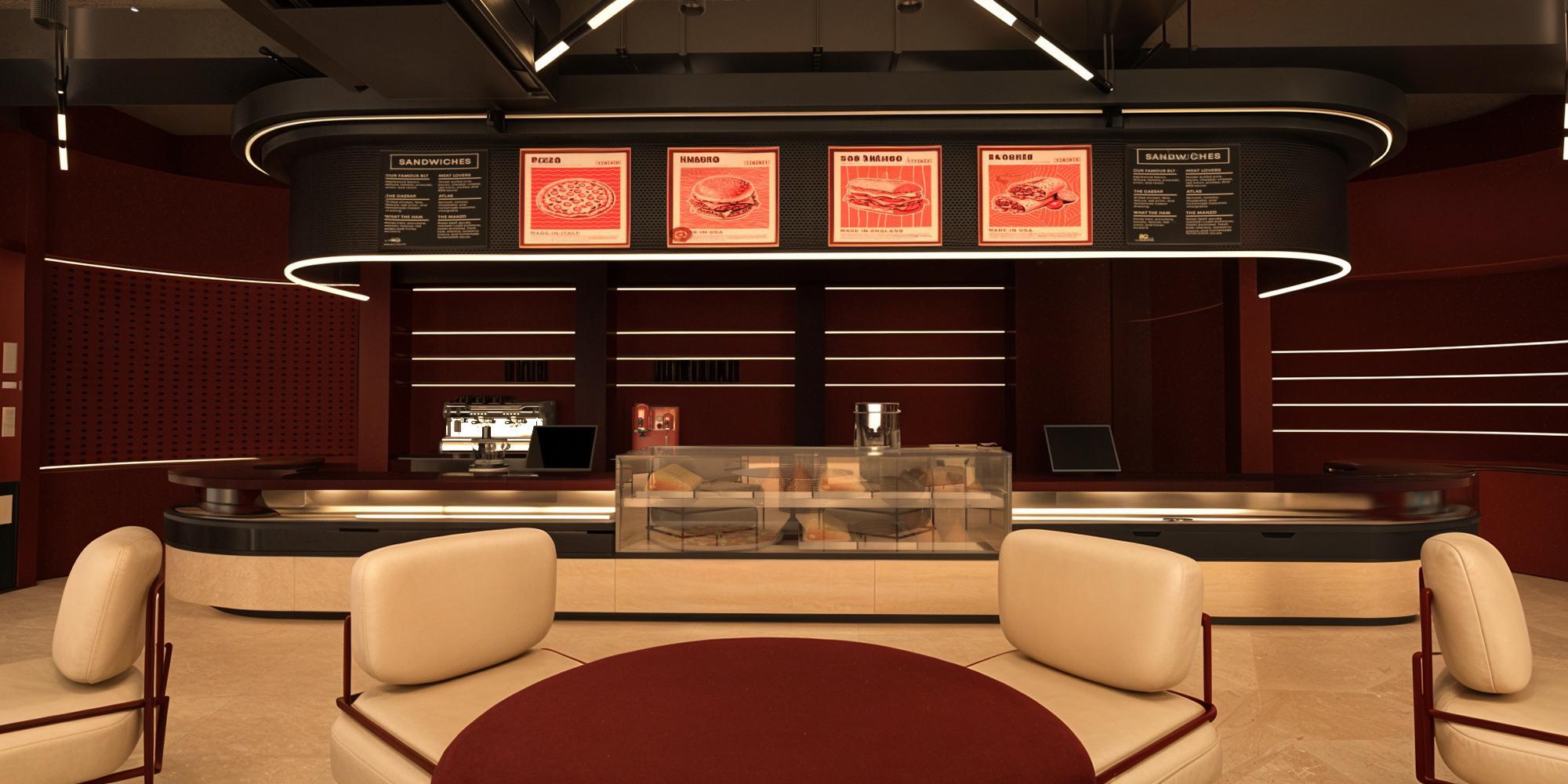
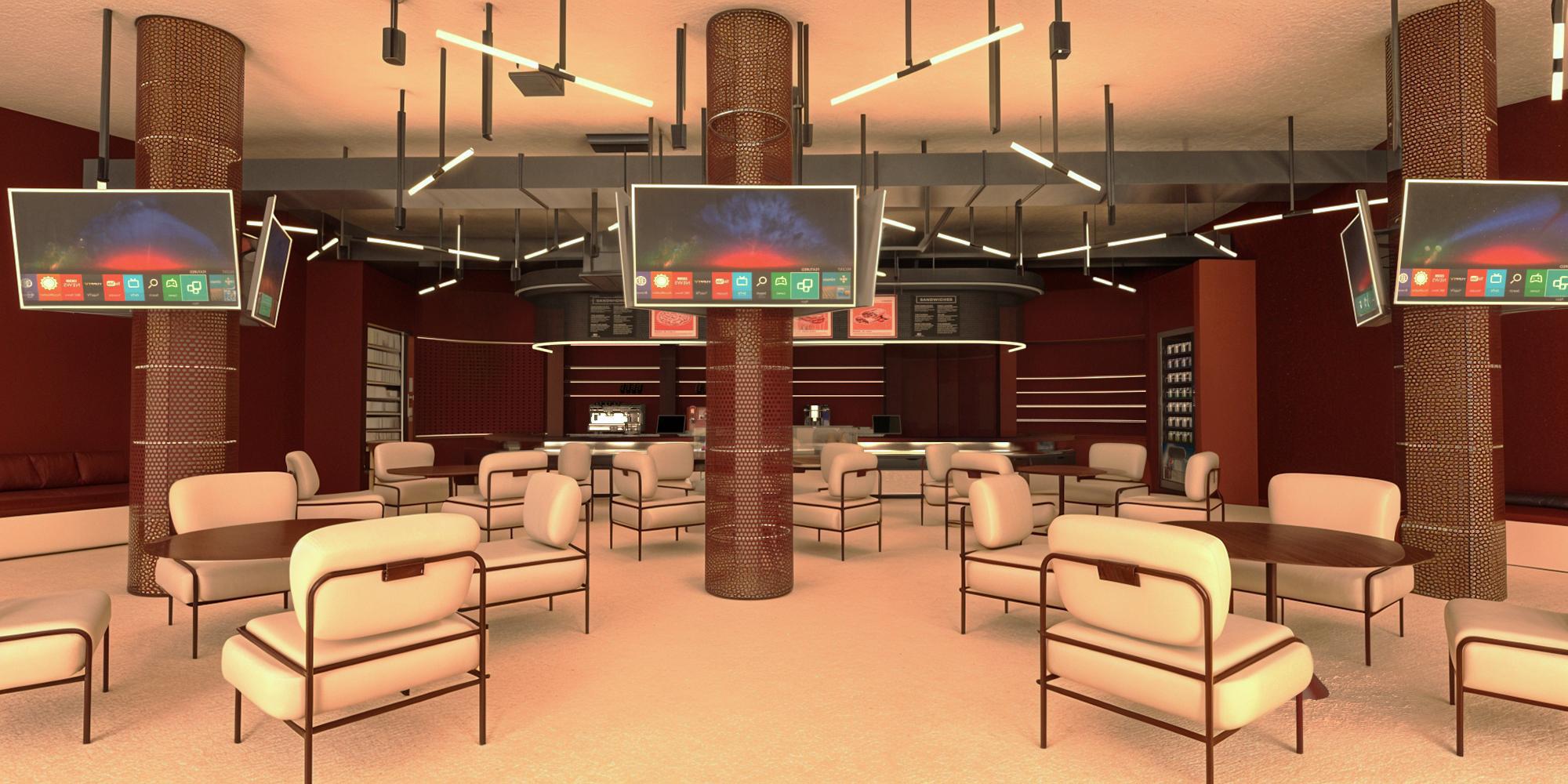
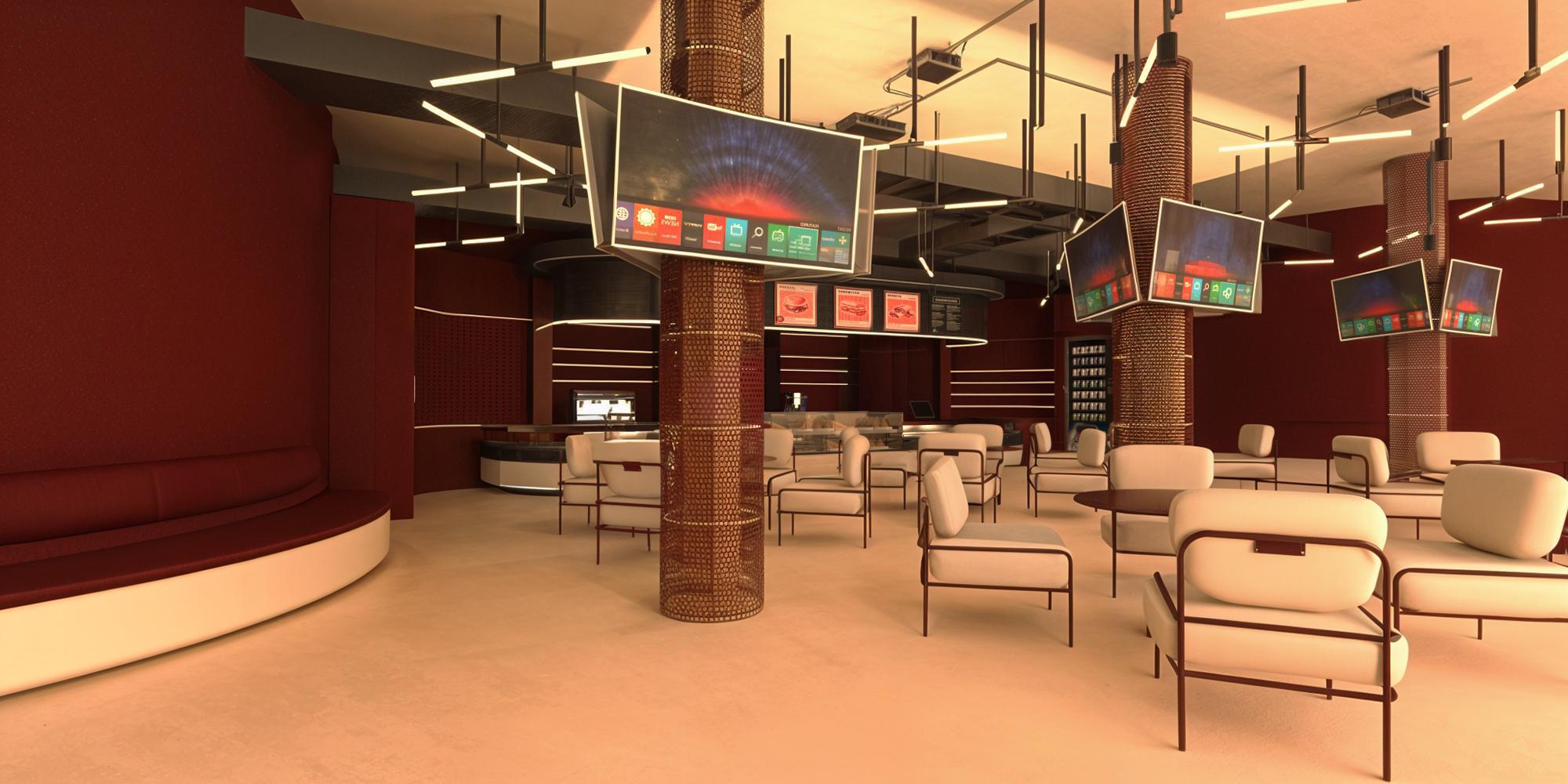
The lounge is for the time between sessions, between workouts and between people. It’s the social heart of The Revive Club, with perforated bronze columns, tilted screens, and cream seating in easy clusters around a curved bar counter.
You could come here without working out and not feel out of place, and that’s the point. The Revive Club isn’t only somewhere you go to train. It’s somewhere you go because you want to be there, and training is one of the things you might do while you’re there.
Designing for Welcome, Not Pressure
Most fitness spaces assume people need to be pushed. The Revive Club assumes people already know what they love, and that the space’s job is to make it easier to do.
That’s a harder brief than it sounds. Pressure is easy to design for because it has a clear visual language: hard edges, aggressive type, and mirrors that tell you exactly where you stand. Welcome is harder. It asks the architecture to hold back, to give space, and to make everyone who walks in feel the building was expecting them.
Every decision at The Revive Club, from the curve of the entrance to the warmth of the locker room, serves that feeling.
Planning a gym, fitness club or sports facility? Start the conversation with us.