
How We Designed WTFun — and What It Taught Us About Designing for the Most Underestimated Audience in Entertainment
There is a design problem that almost nobody talks about. Not because it is difficult. Because most designers don’t take it seriously enough to ask the question.
How do you design for teenagers?
Not children. Not adults. The in-between generation — the ones who have outgrown the soft corners and primary colors of a kids’ space, but who are not yet welcome in the world of bars, lounges, and adult entertainment venues. The ones who are, spatially speaking, homeless.
WTFun is our answer to that problem. It is a teenager’s playground and hangout space in Backyard Hazmieh, Lebanon — and it is the most complex brief we have executed in terms of sheer audience intelligence required. Every decision in the space came from one question: what does this generation actually need from a space? Not what their parents think they need. Not what is safe to build. What do teenagers — as an audience — demand from a space that wants to earn their loyalty?
Why Most Spaces Designed for Teenagers Fail
Most entertainment spaces aimed at teenagers are built around one flawed assumption: that teenagers want a bigger version of what they had as children.
They don’t.
A teenager who walks into a space with foam padding, rounded edges, bright cartoon graphics, and “safe” everything will not come back. Not because the space is physically uncomfortable. Because the space communicates something unforgivable: we don’t think you’re grown up enough for something real.
The three mistakes designers make when designing for this age group are consistent:
- They design down, not across. They take a children’s concept and scale it up. The result is a space that feels patronizing. Teenagers have a precise instinct for when they’re being condescended to.
- They design for the parents, not the teenagers. Safe materials, soft furniture, visible sightlines. The space is comfortable for the adult who is dropping the teenager off. The teenager feels surveilled, not welcomed.
- They design a single experience. One zone, one activity type, one mood. Teenagers do not stay in one zone. They move, they shift, they want to be active and then hang out and then compete and then eat and then hang out again. A space that cannot hold all of those modes will lose them.
The Concept: A World, Not a Venue
The WTFun brief did not come to us as a fully formed vision. It came as a genuine question, worked on collaboratively between client and studio: what does a space for Lebanese teenagers in 2026 actually look like? What does it ask of them? What does it give back?
The concept sentence that drove every decision was this: teenagers don’t need a playground. They need a world that takes them seriously.
That one sentence changes everything. It means the architecture cannot be friendly and rounded and safe-feeling. It means the visual language has to be bold enough to earn respect. It means every zone has to have its own identity — its own energy, its own mood, its own design argument. It means the space has to feel like something that was built for them, not for their parents’ peace of mind.
Everything that followed came from that.
The Visual Language: Bold by Design
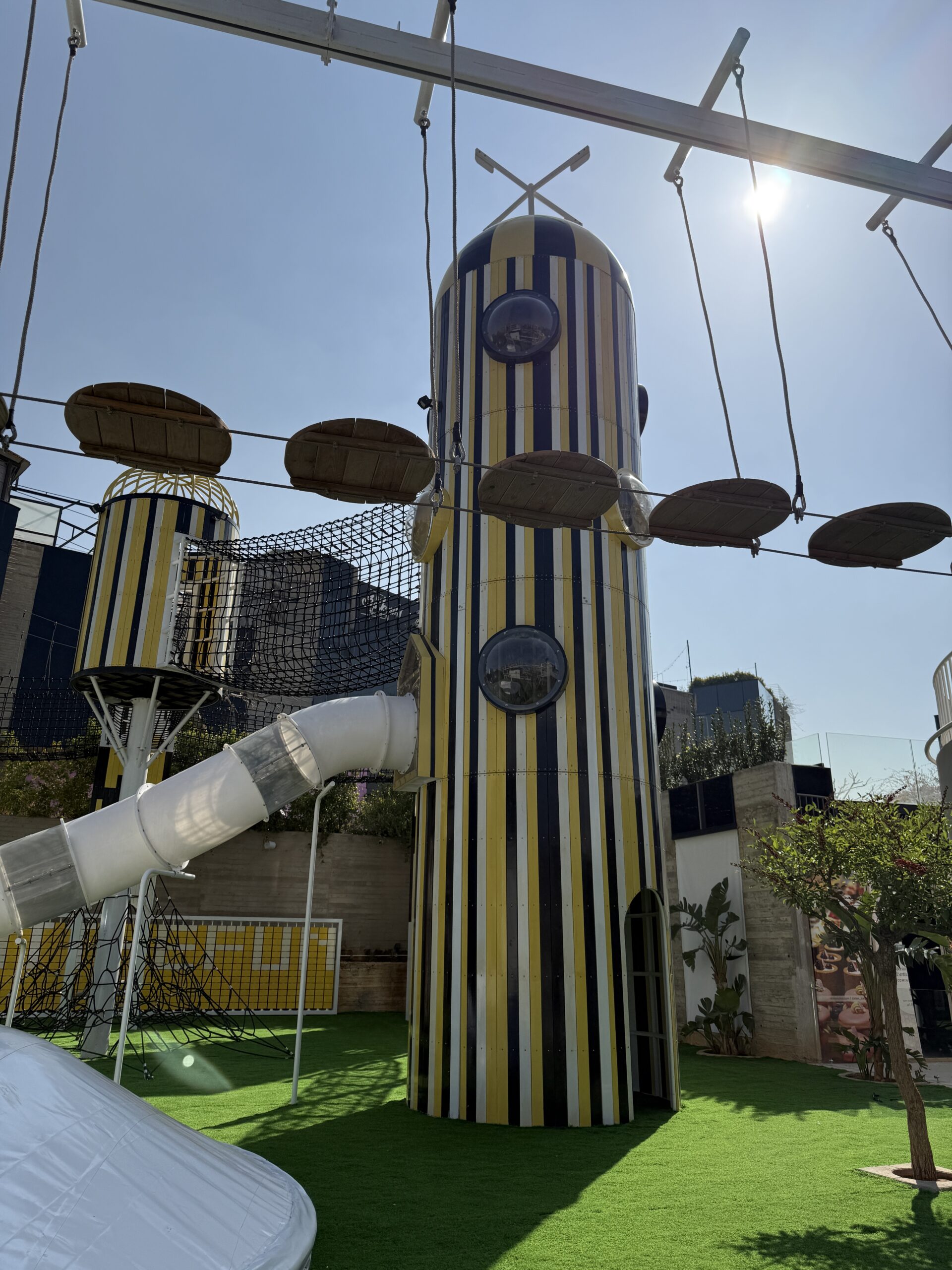
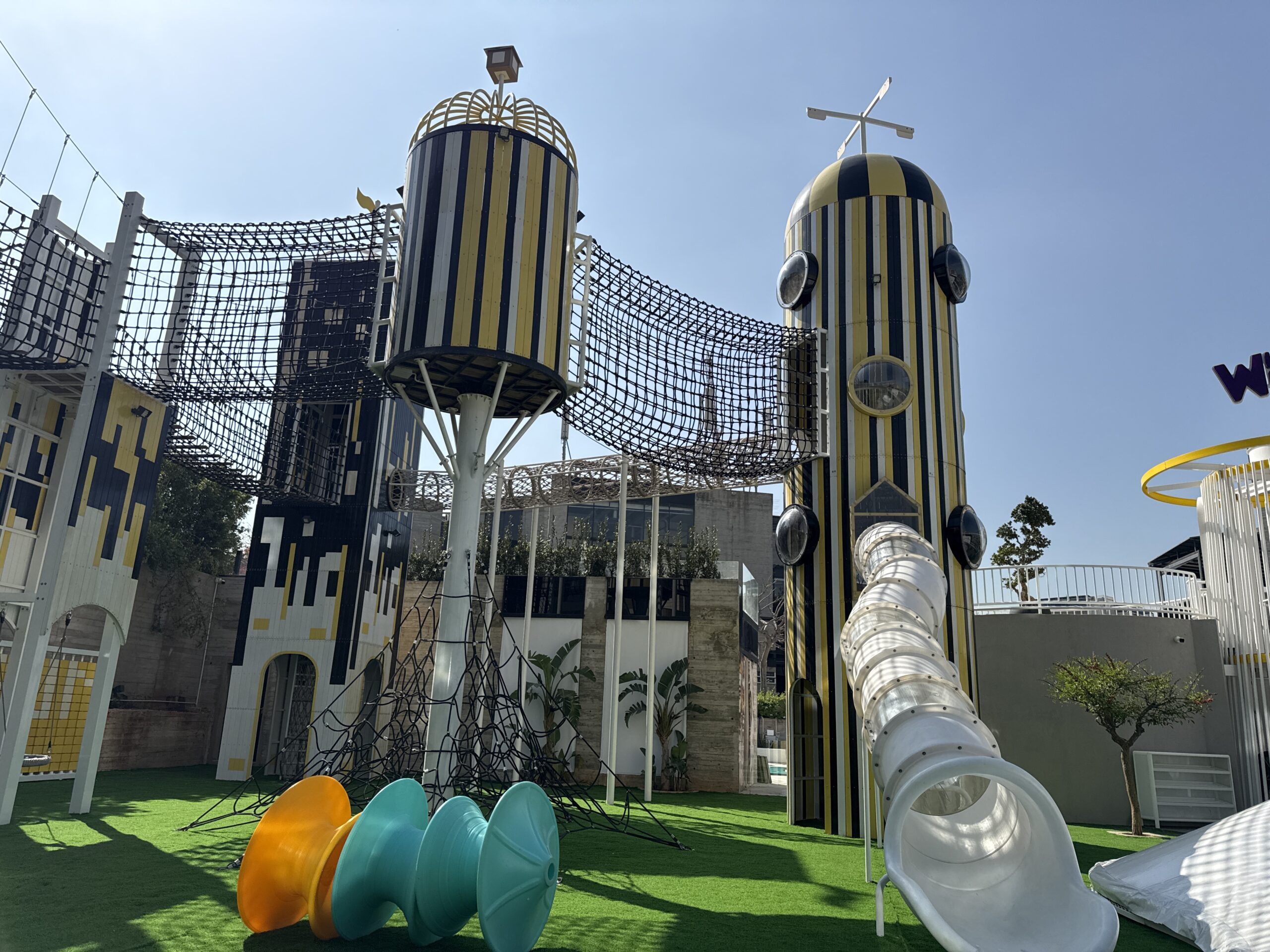
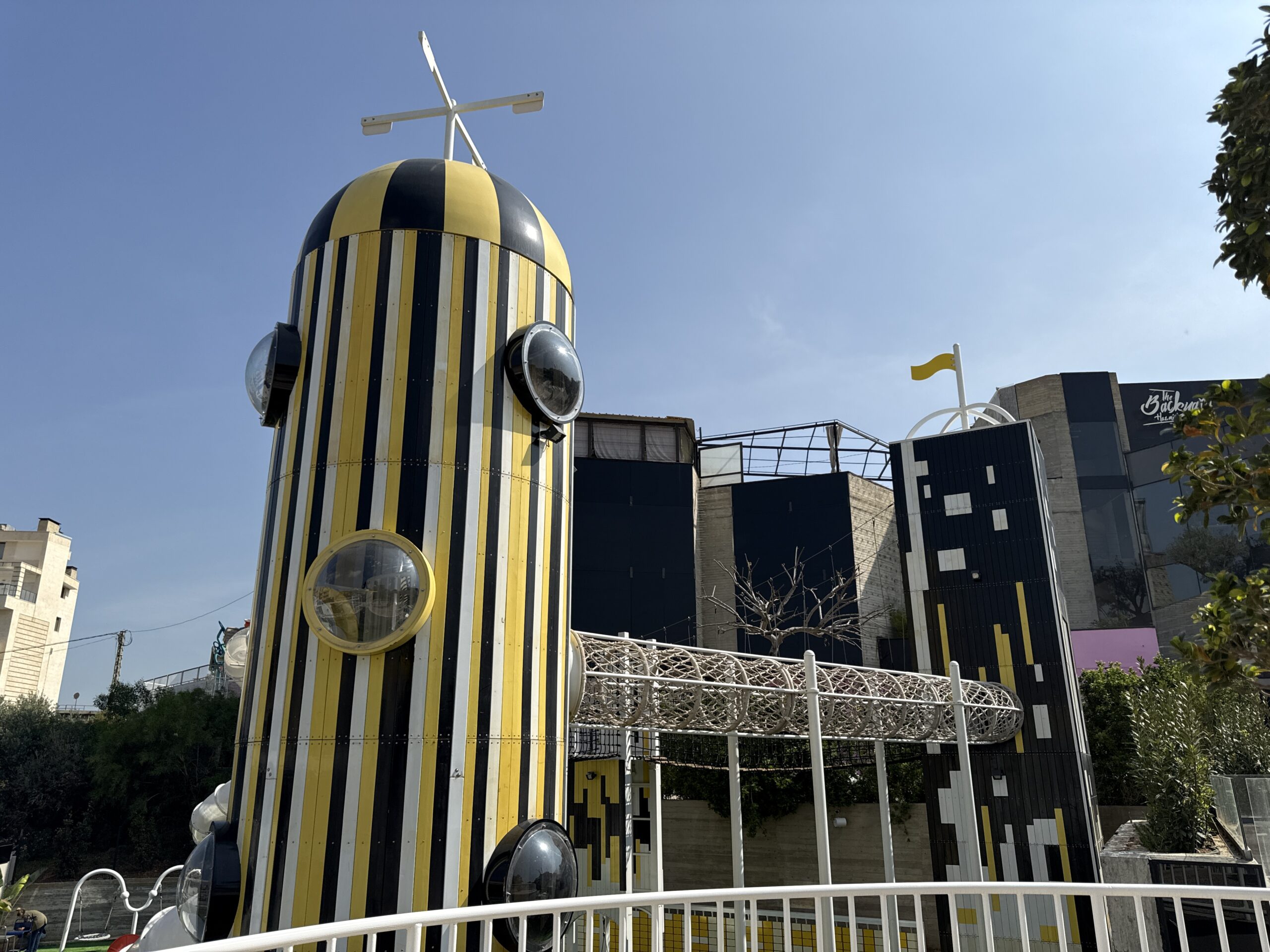
The dominant palette at WTFun is black and yellow. Not because those are fun colors. Because they are commanding ones. Black and yellow is the palette of warning signs, of construction, of things that demand attention. On the towers and structures of WTFun, it reads as authority — these are not playground elements, they are architectural statements.
Zone by Zone: How Each Space Was Designed
The Adventure Zone
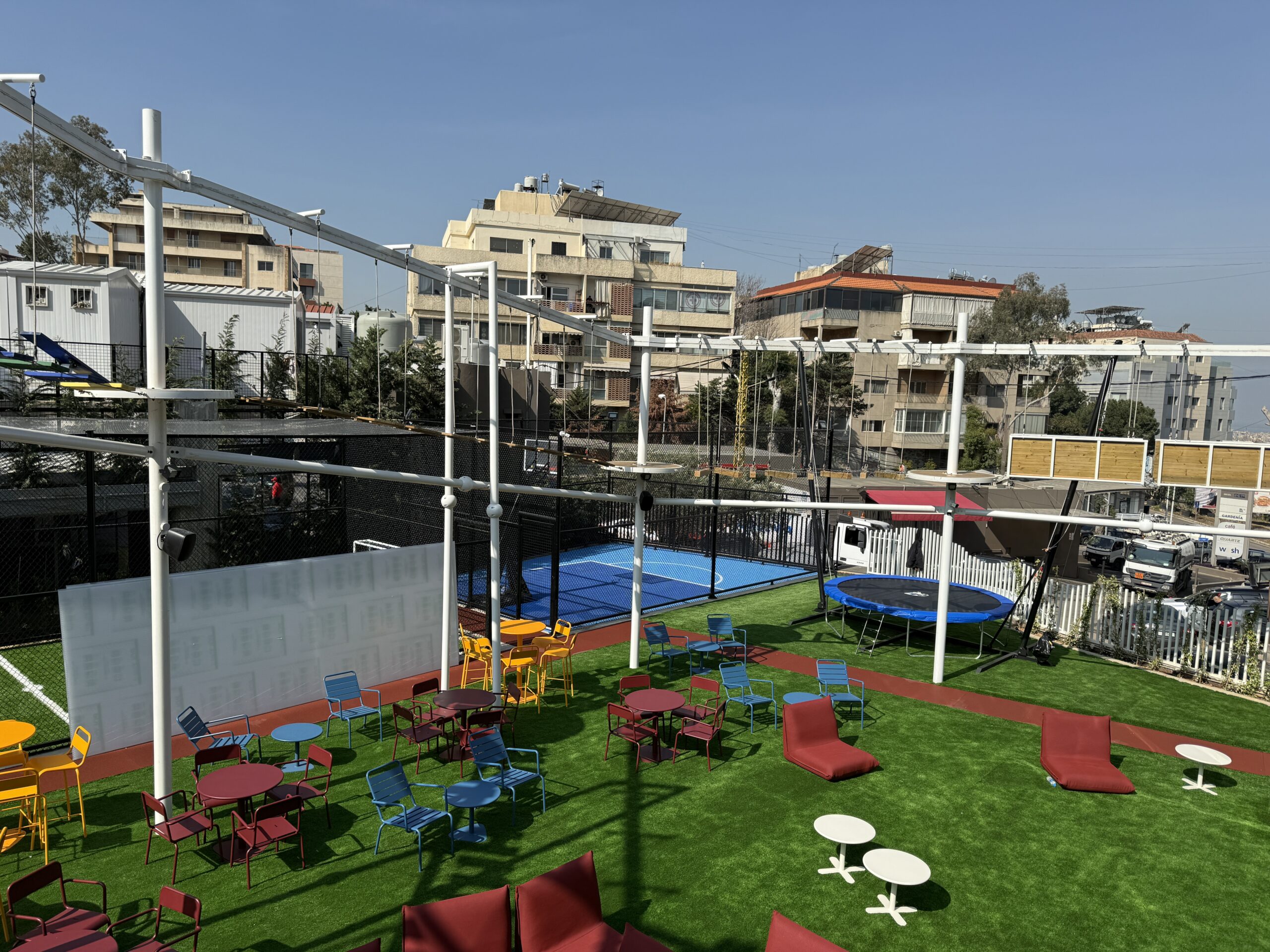
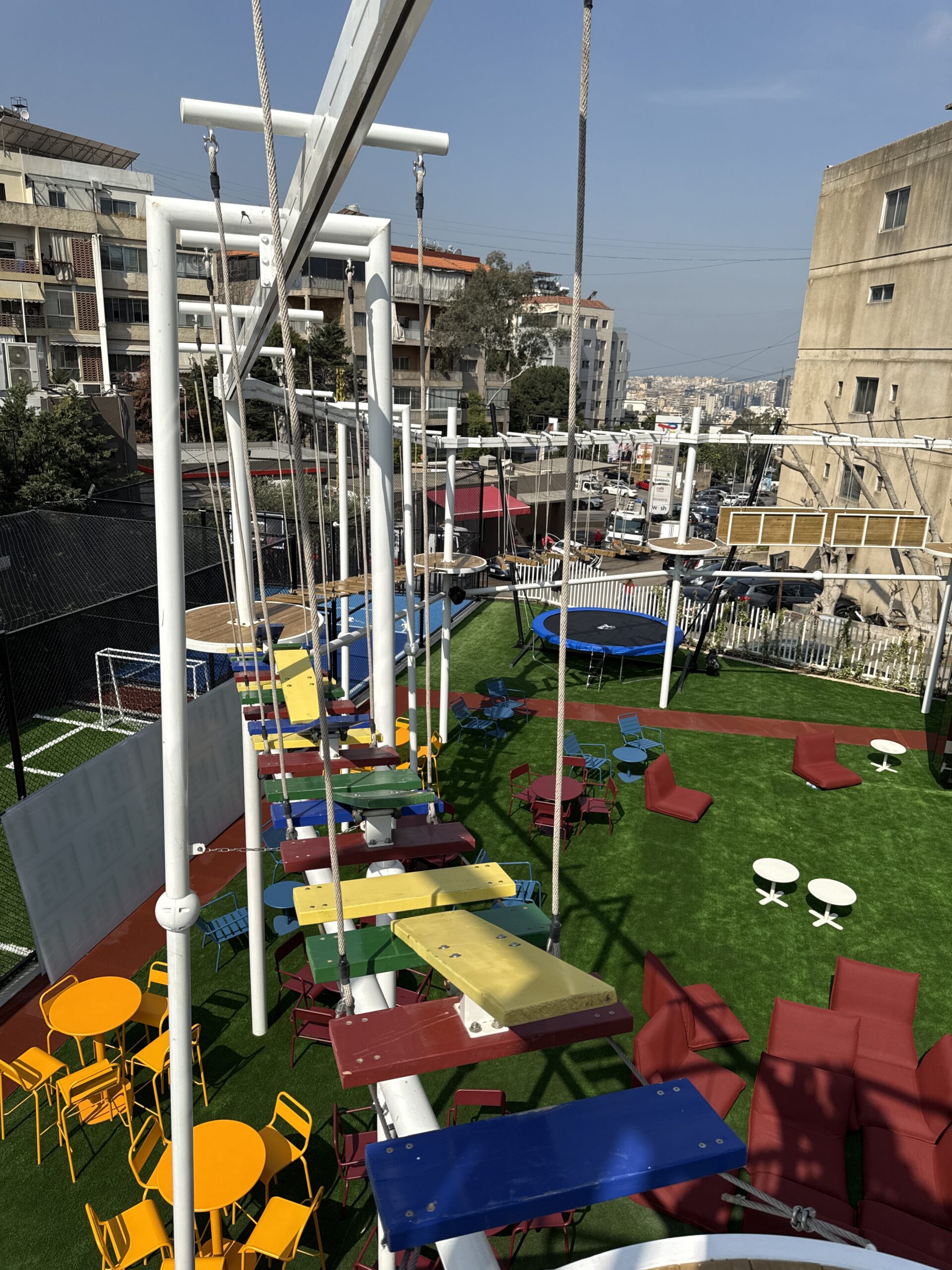
The outdoor adventure structures — towers, rope bridges, suspension platforms, climbing nets, tube slides — were designed as architecture first and activity equipment second. Every surface is treated. Every structure has a graphic identity. The towers communicate scale, confidence, and controlled risk. The suspension bridge between structures is an experience in itself — elevated, exposed, requiring commitment. This is intentional. Teenagers need to feel that a space respects their physical capability.
The Dome
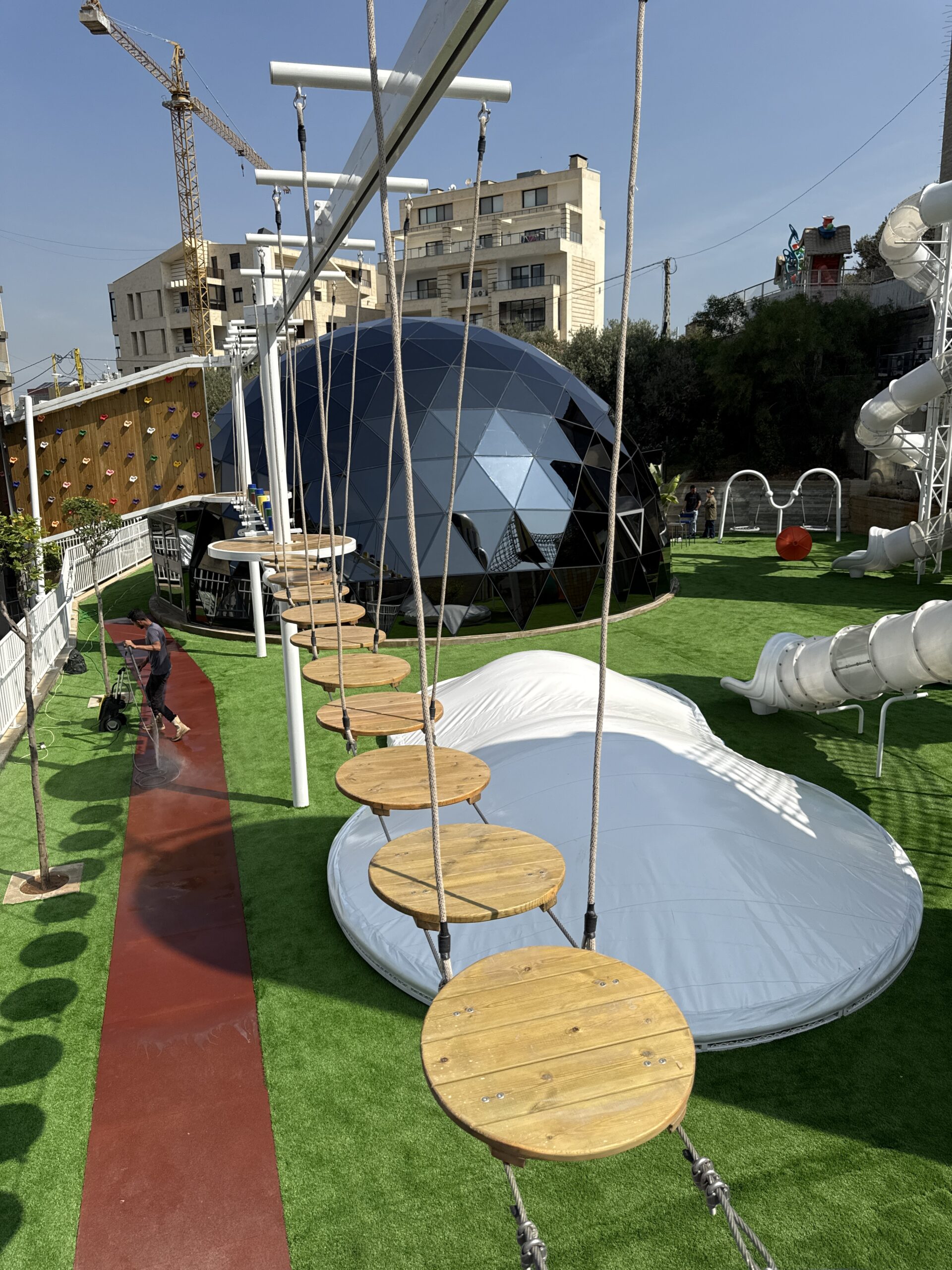
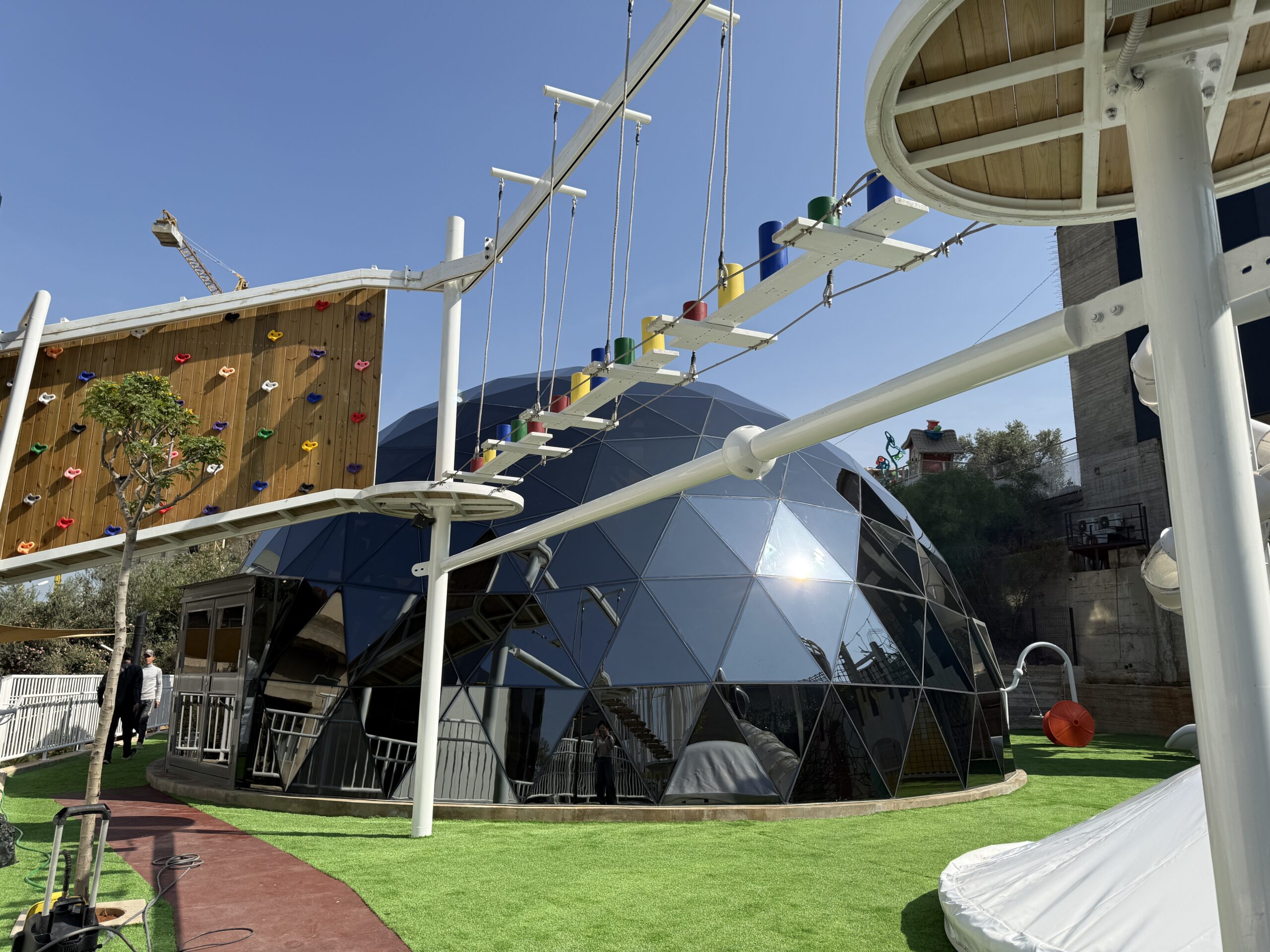
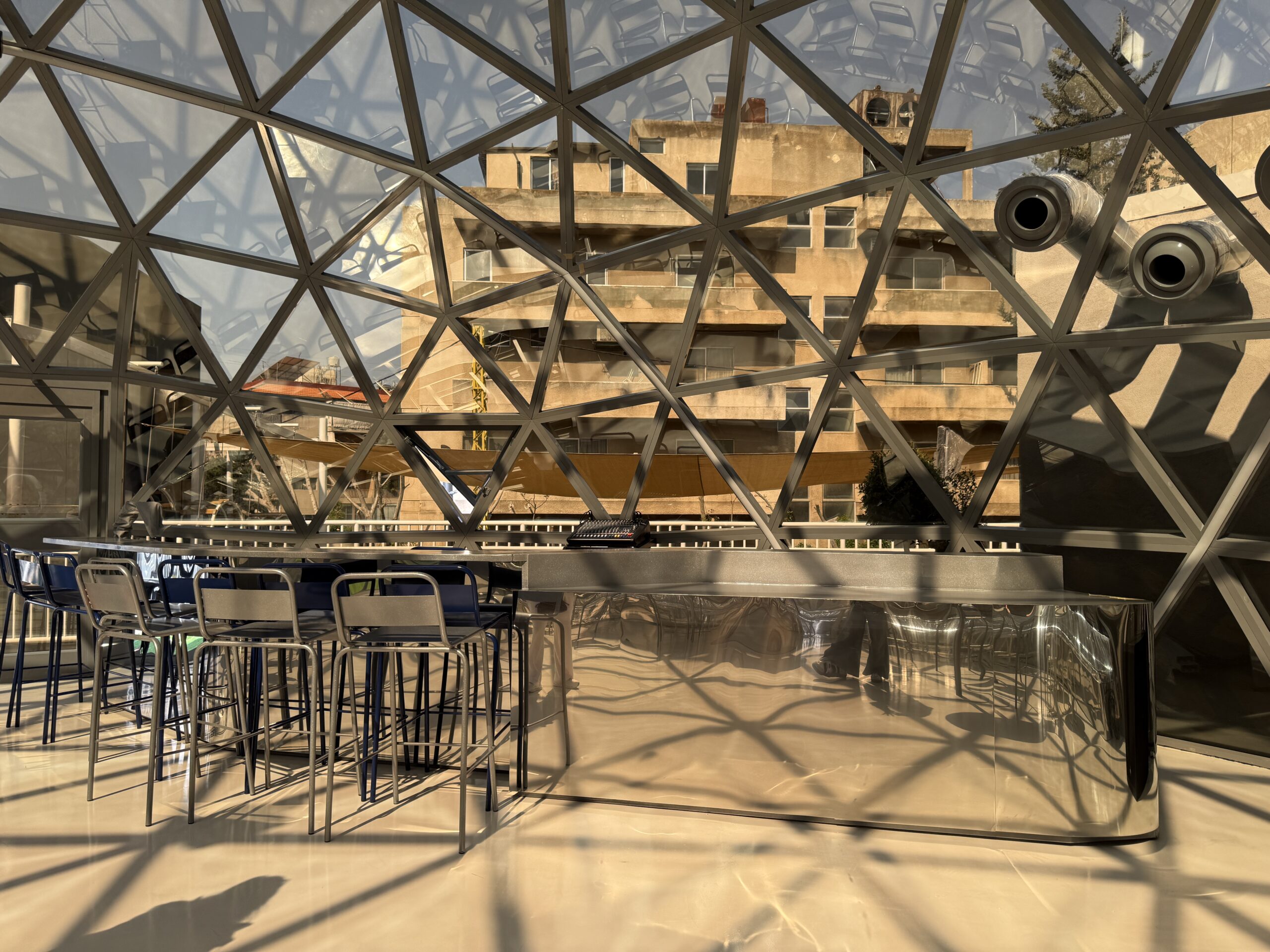
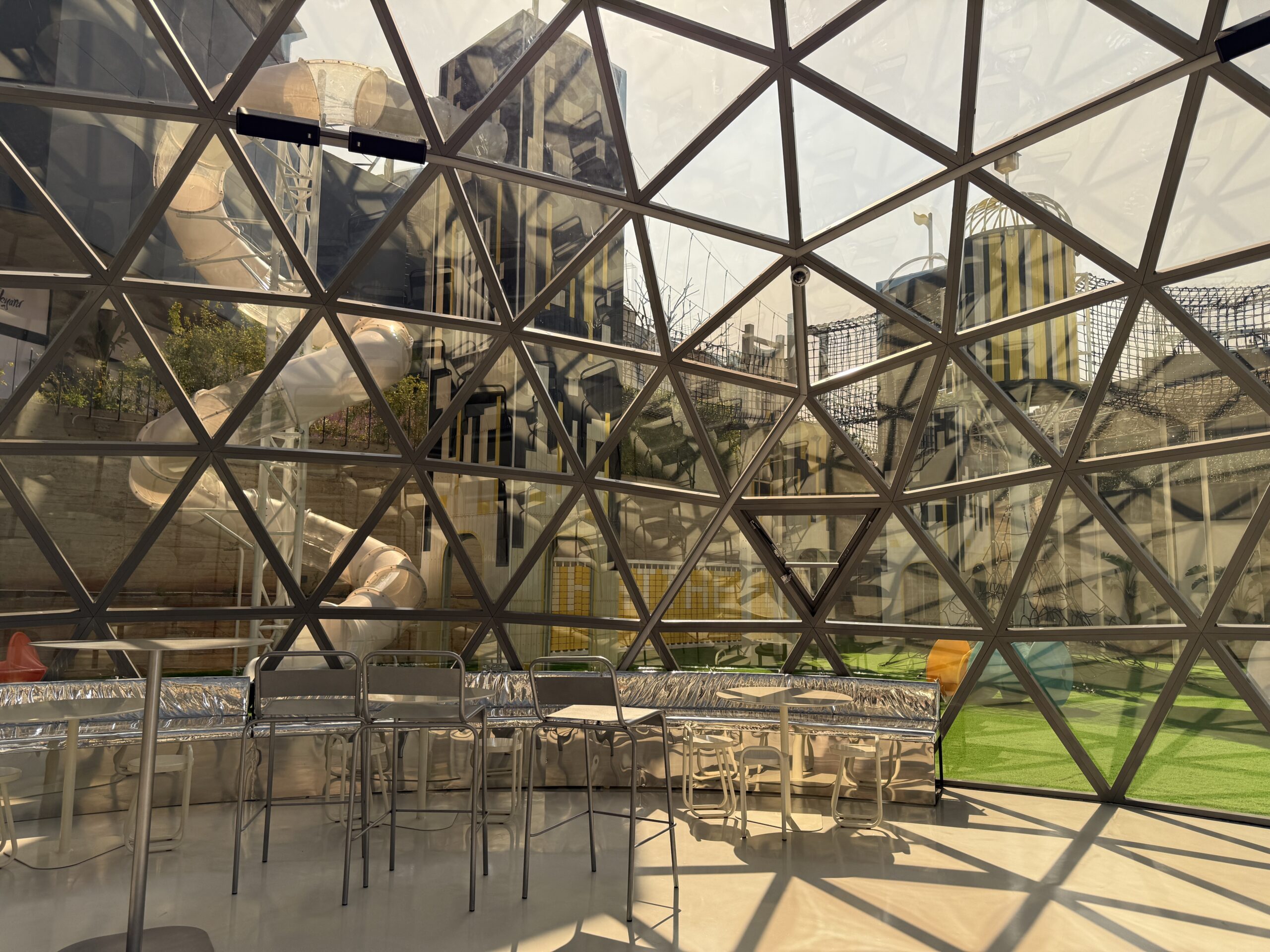
The geodesic dome is the most architecturally refined element of WTFun. Mirror-finish panels on its exterior reflect the entire space back at itself — the towers, the grass, the sky. It reads as futuristic without trying to be. Inside, the dome holds the birthday and celebration zone, with a polished chrome bar and metal furniture that continues the high-design language throughout. The geometric shadow patterns cast by the triangulated structure at golden hour turn the interior into something that could be a gallery installation. The dome earns attention because it deserves it.
The Sports Courts
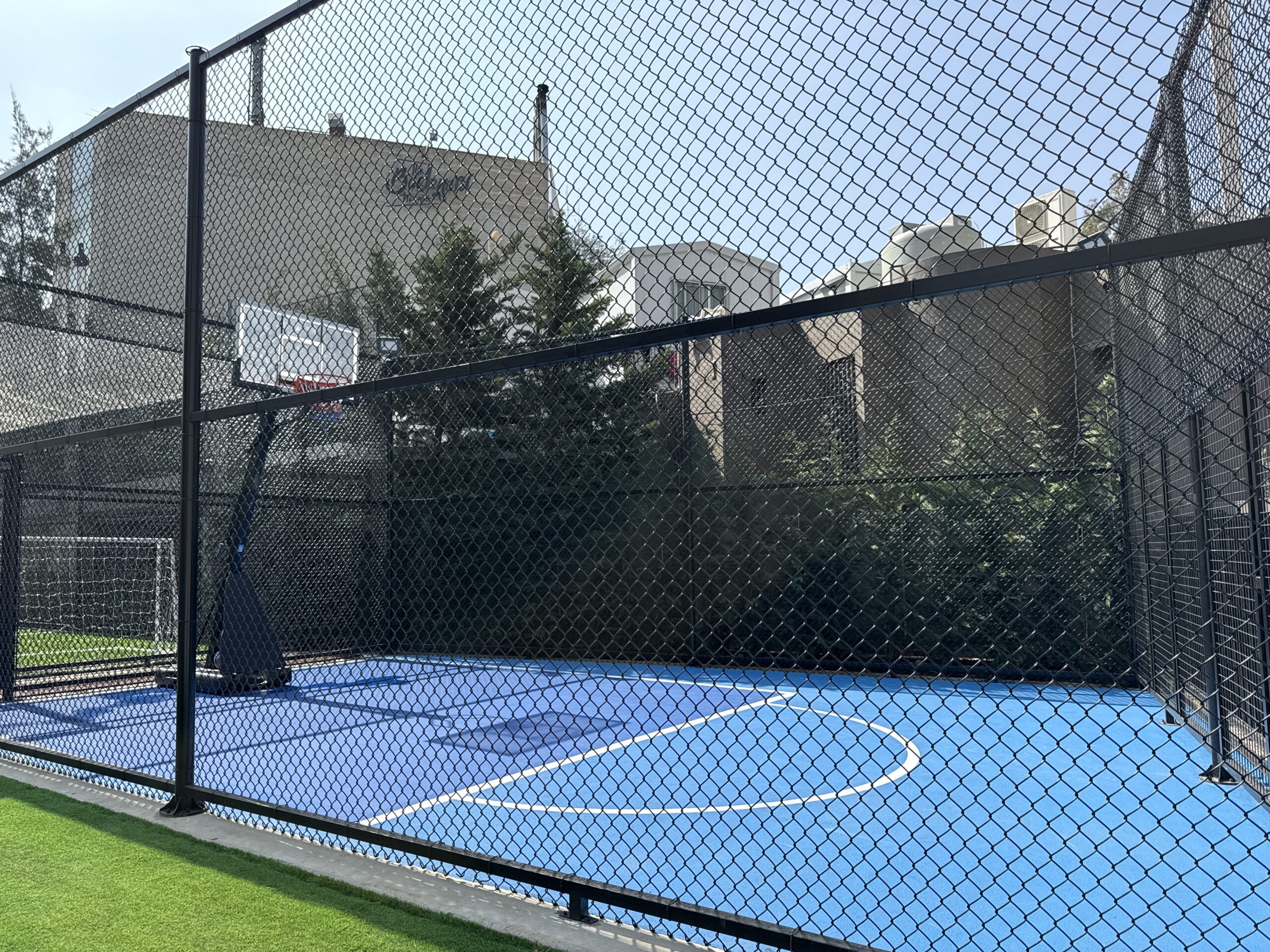
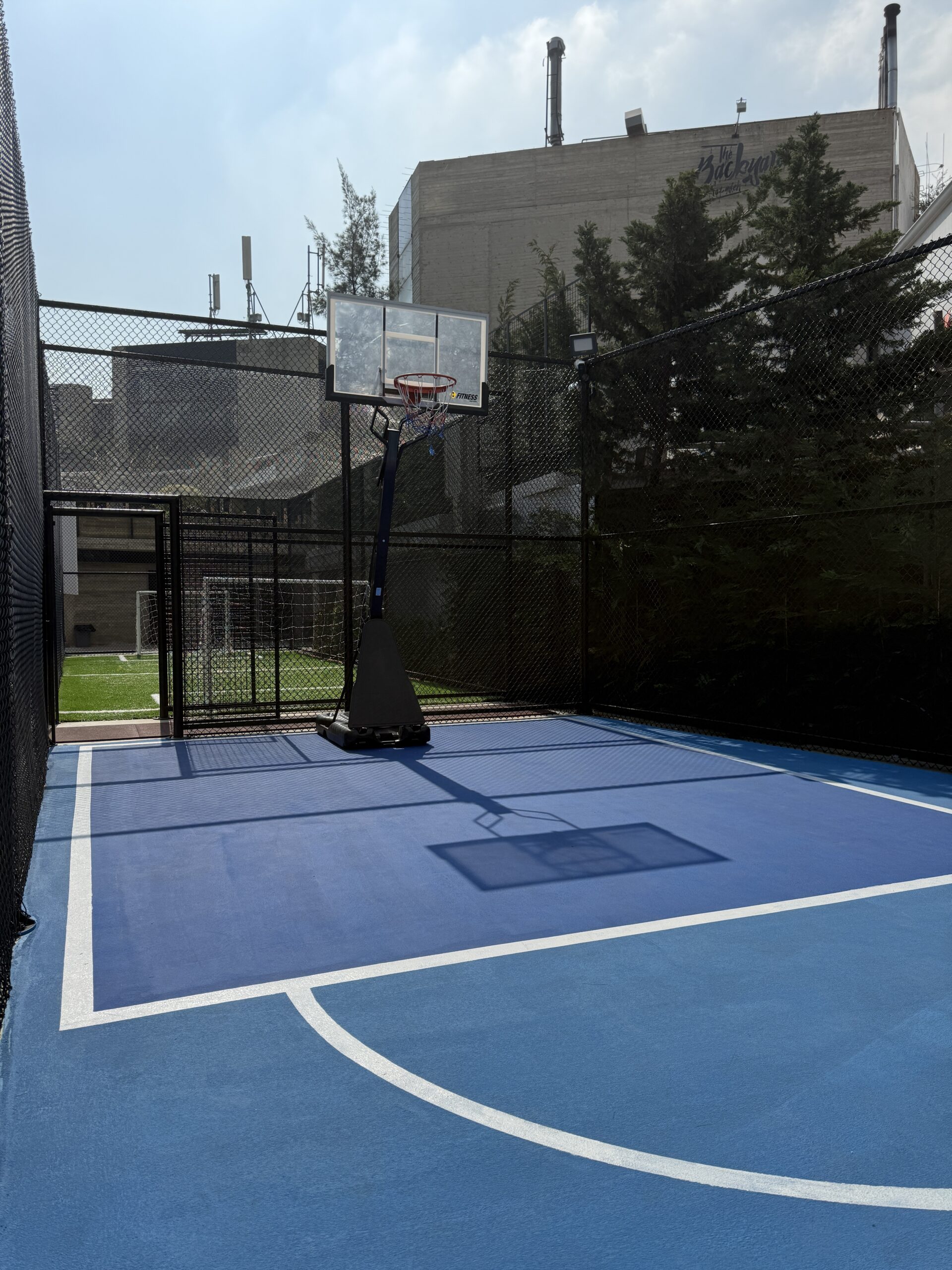
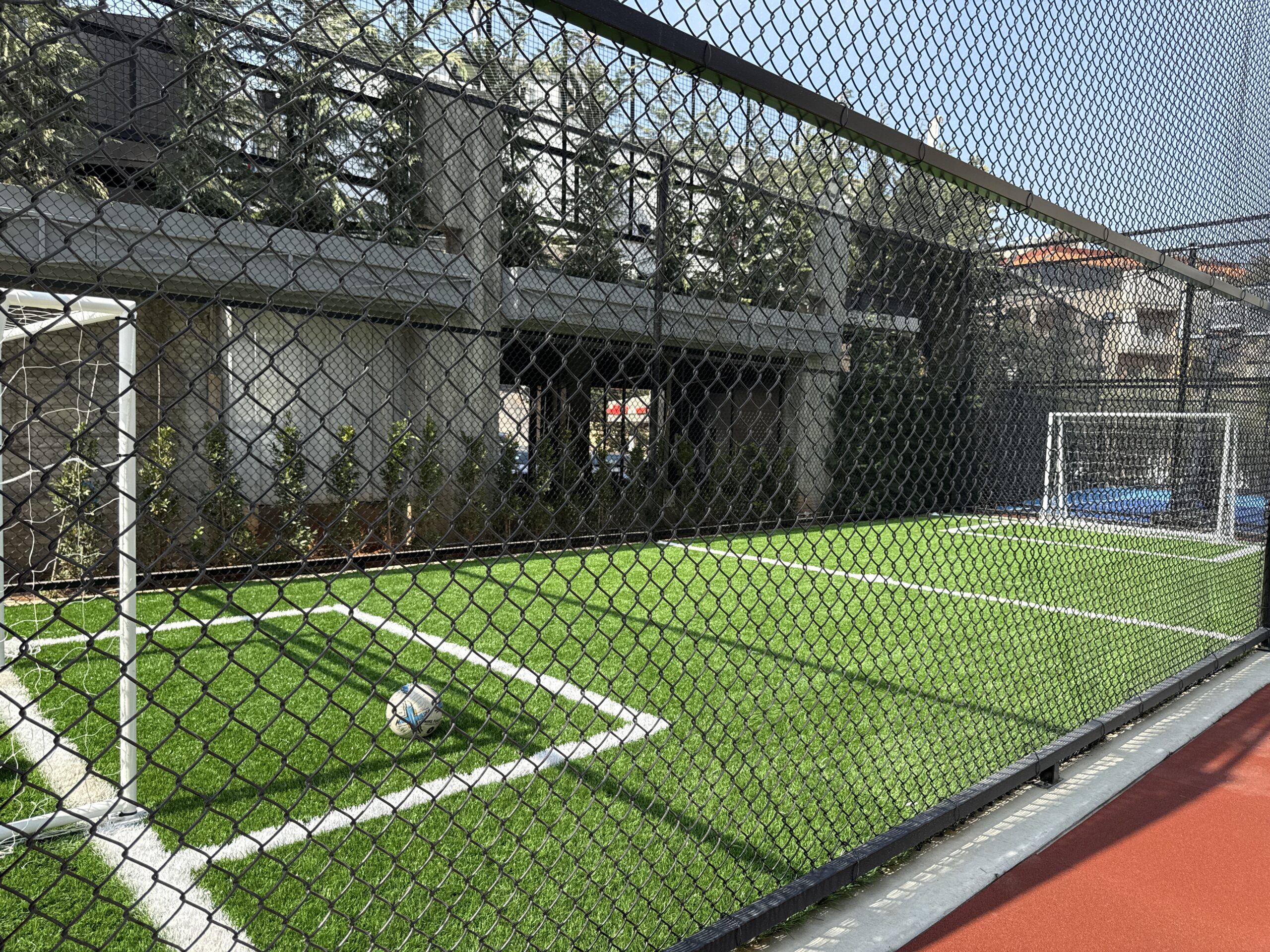
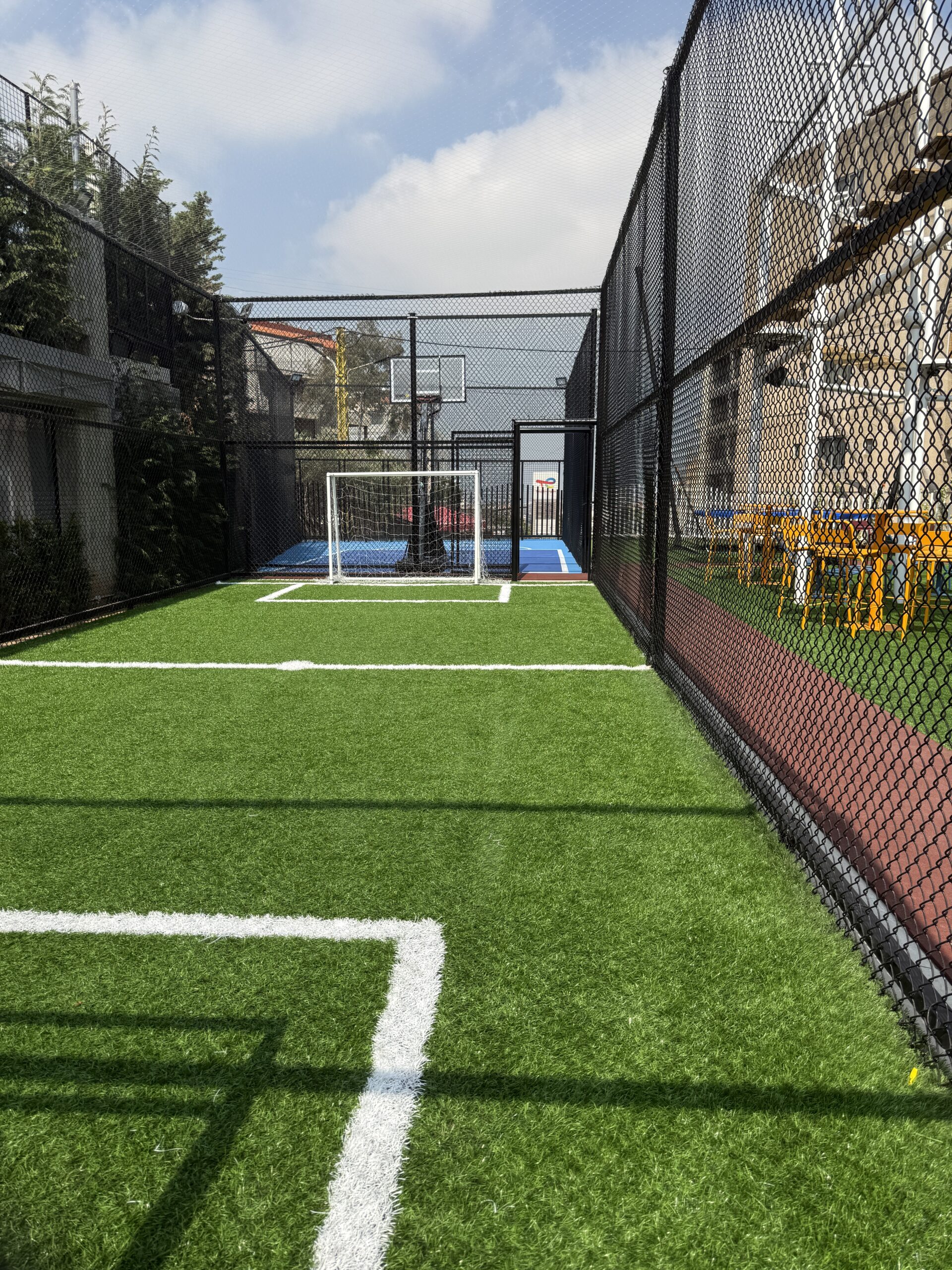
The basketball court is cobalt blue. The soccer pitch is vivid green with clean white markings. These are not afterthoughts. The color decisions on the courts are as deliberate as any interior finish decision — they create distinct zones within the outdoor space and give each sport its own visual territory. Teenagers who play here know exactly where they are.
Player One — The VR Room
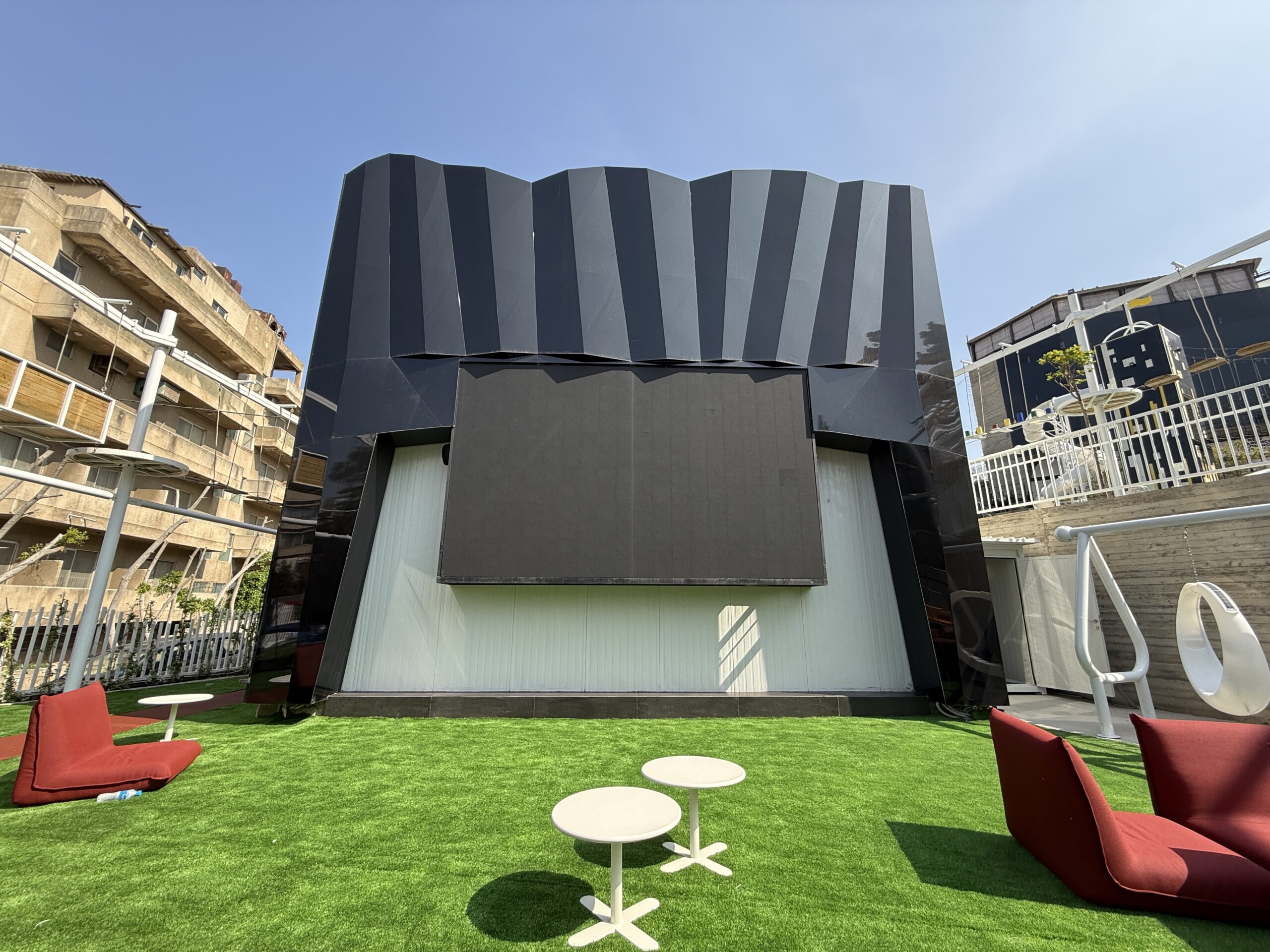
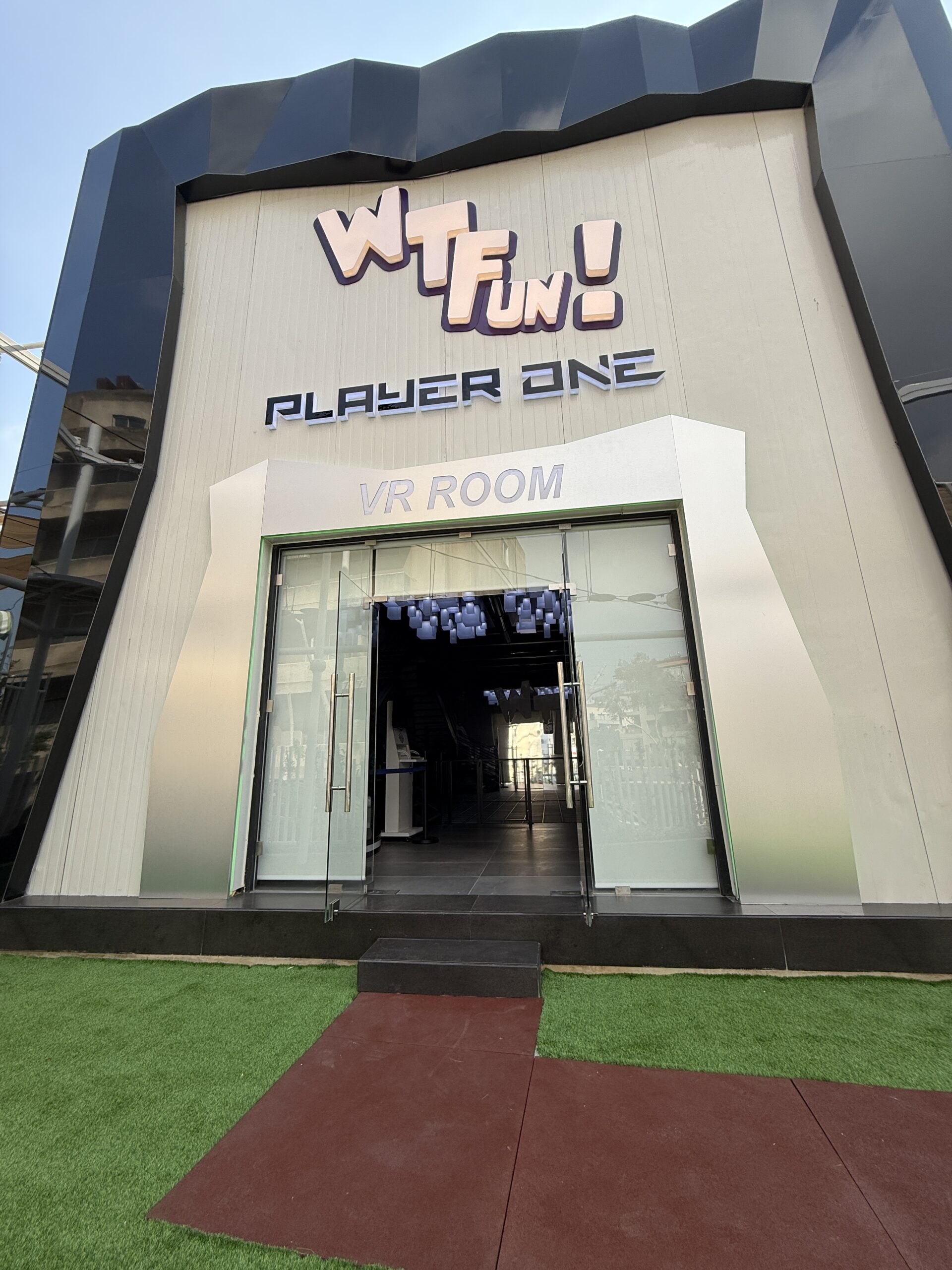
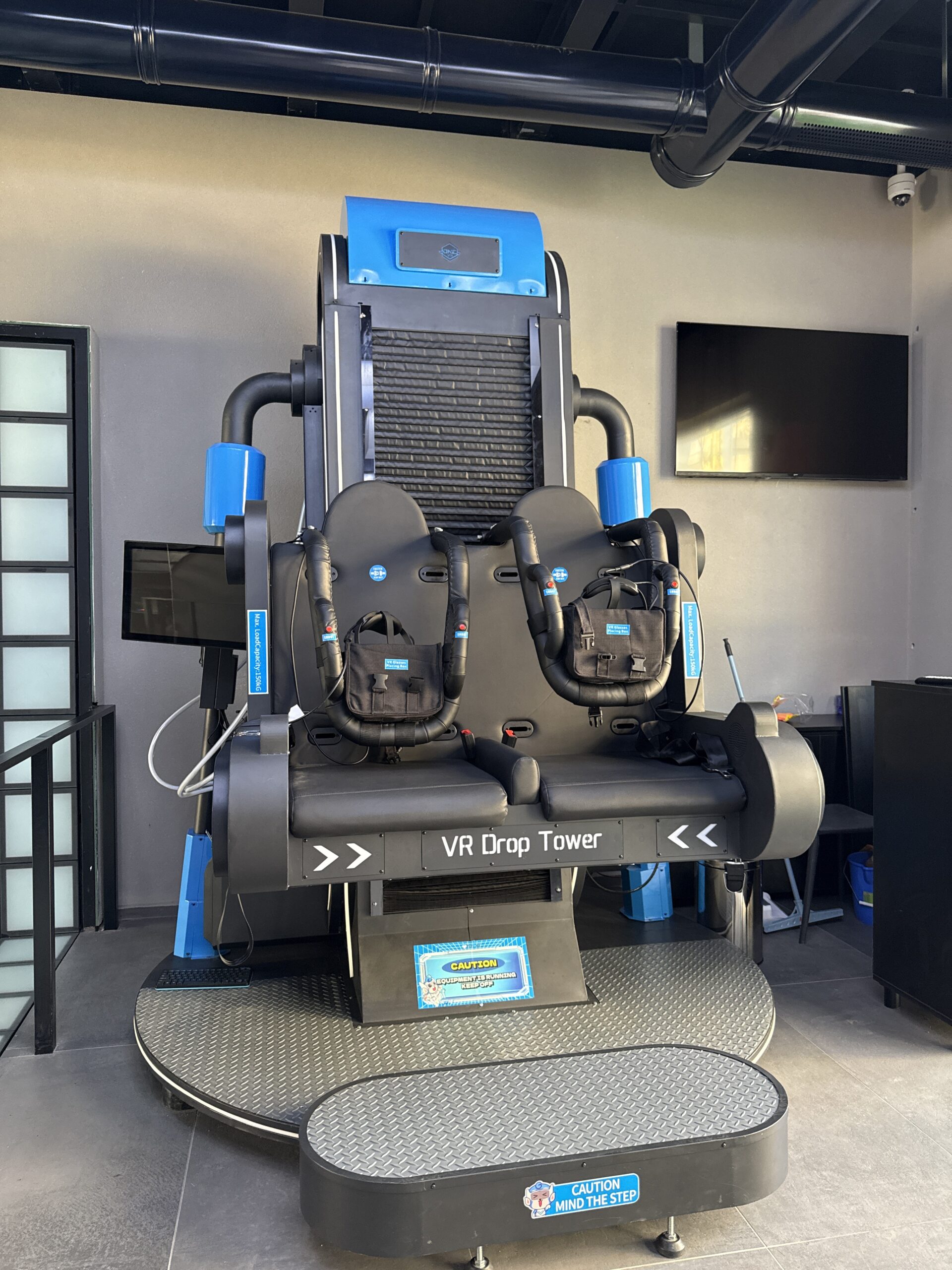
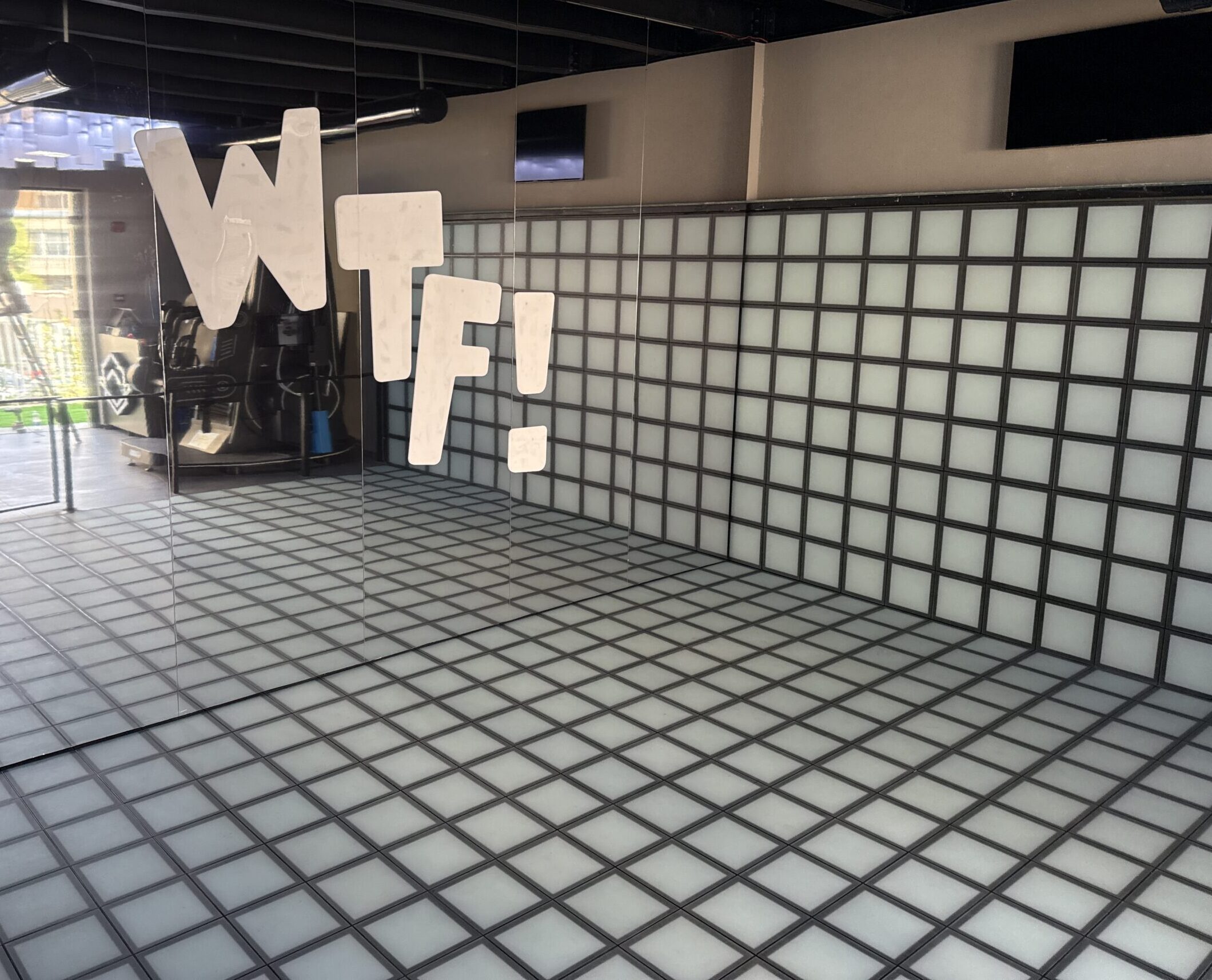
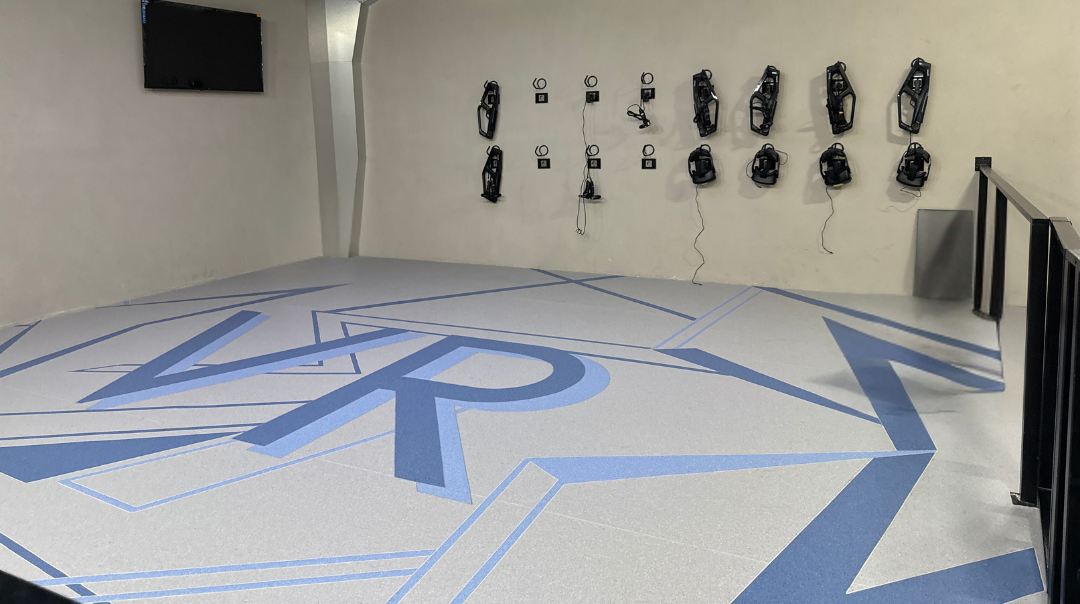
The VR building has its own name and its own identity: Player One. The facade — a sculpted black form with dramatic folded geometry — makes the entrance feel like a portal. Inside, the VR room has the brand typographed into the floor in large geometric lettering. VR headsets are displayed on the walls like objects in a tech showroom. The VR Drop Tower sits at the center of the room as a sculptural machine. The design communicates that what happens here is serious, immersive, and not available anywhere else.
The Outdoor Seating Zones
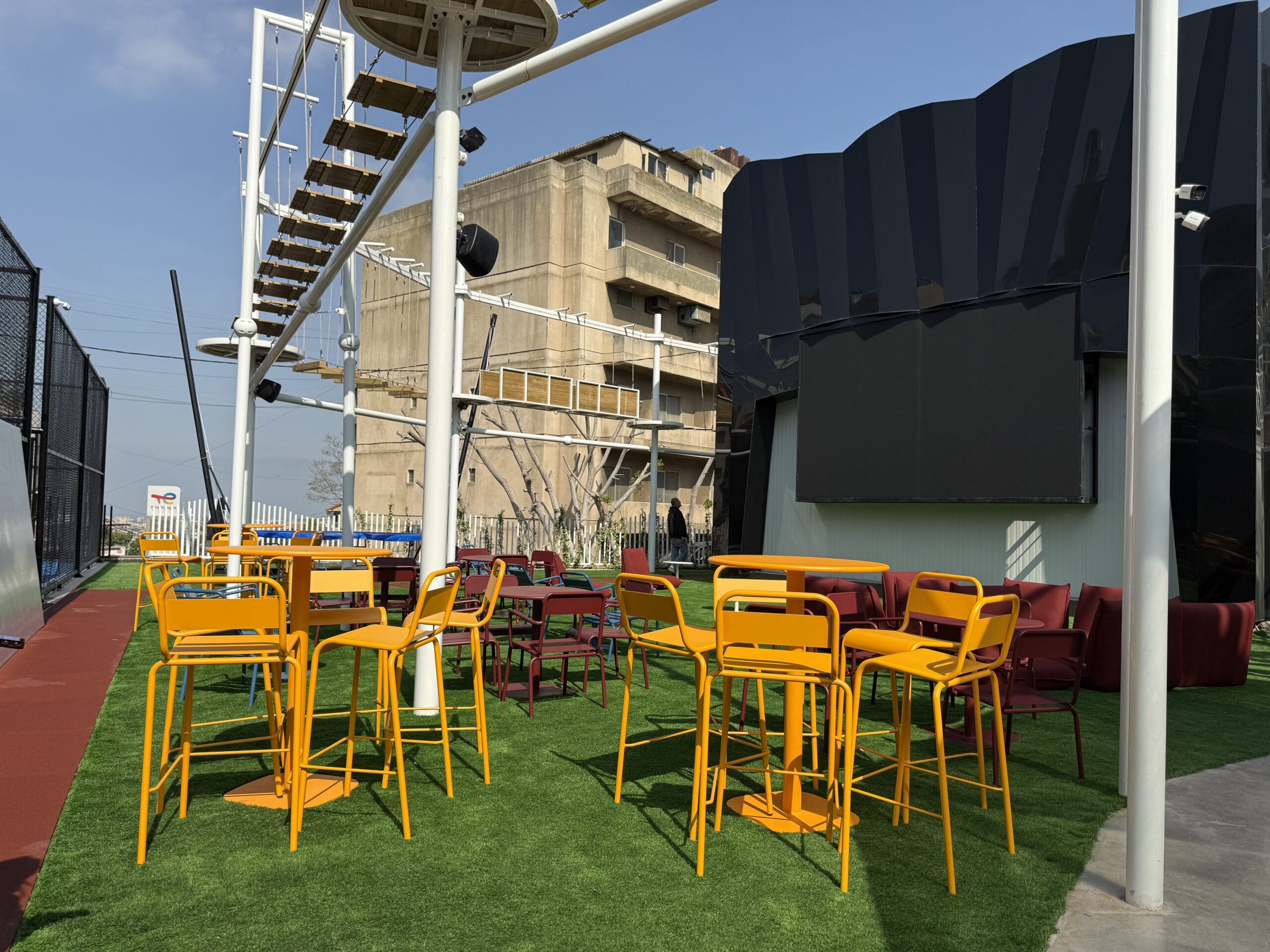
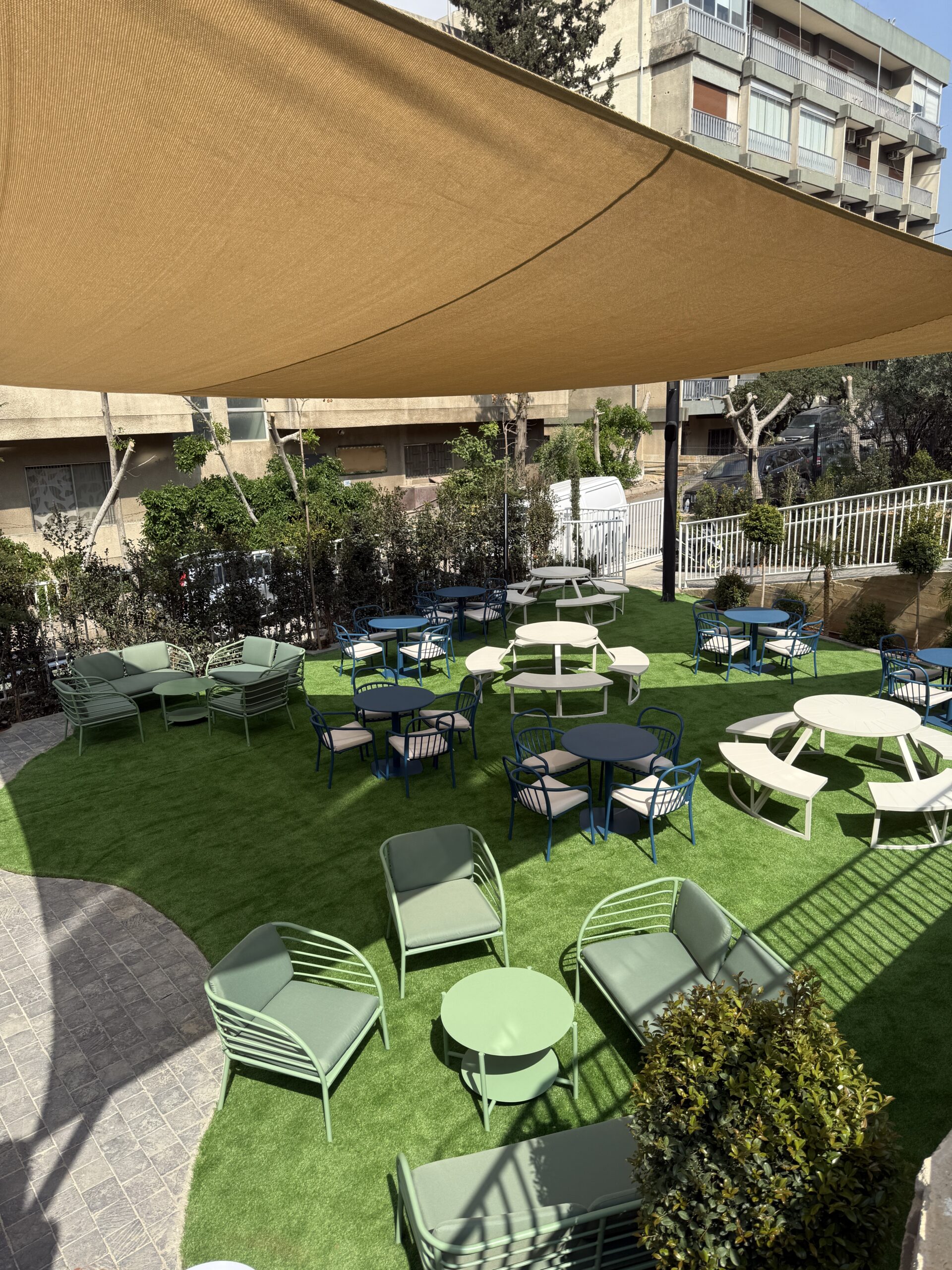
This is where WTFun makes a decision that most teen venues get wrong: it designs for multiple types of social behavior simultaneously. There are high yellow bar stools for groups who want energy and visibility. There are burgundy floor cushions and low lounge chairs for the group that wants to sprawl and talk. There are colored metal chairs scattered around the activity zones for those who want to watch. The outdoor space accommodates the active teenager, the social teenager, and the observer — without any of them feeling out of place.
The Entry and Reception
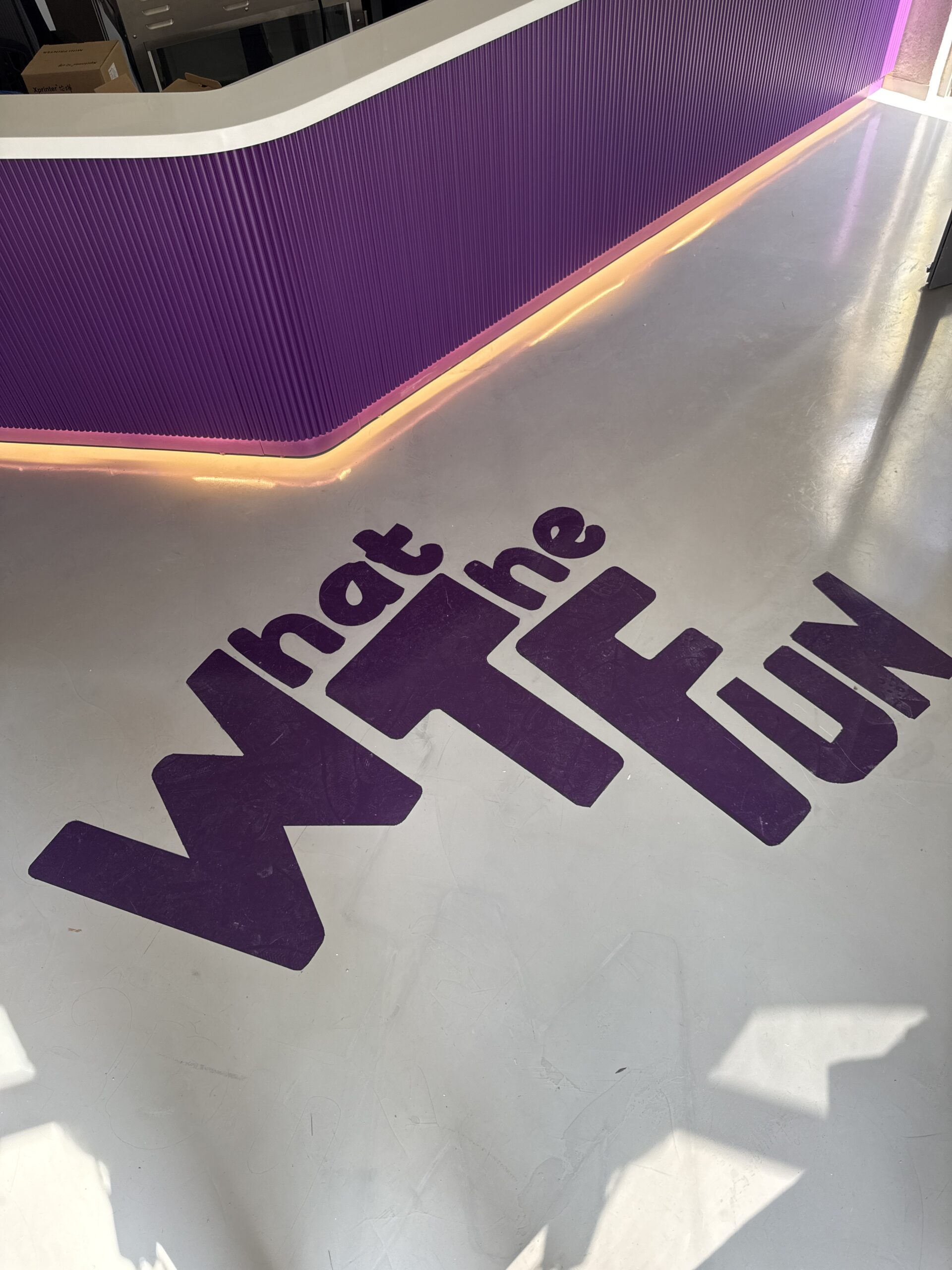
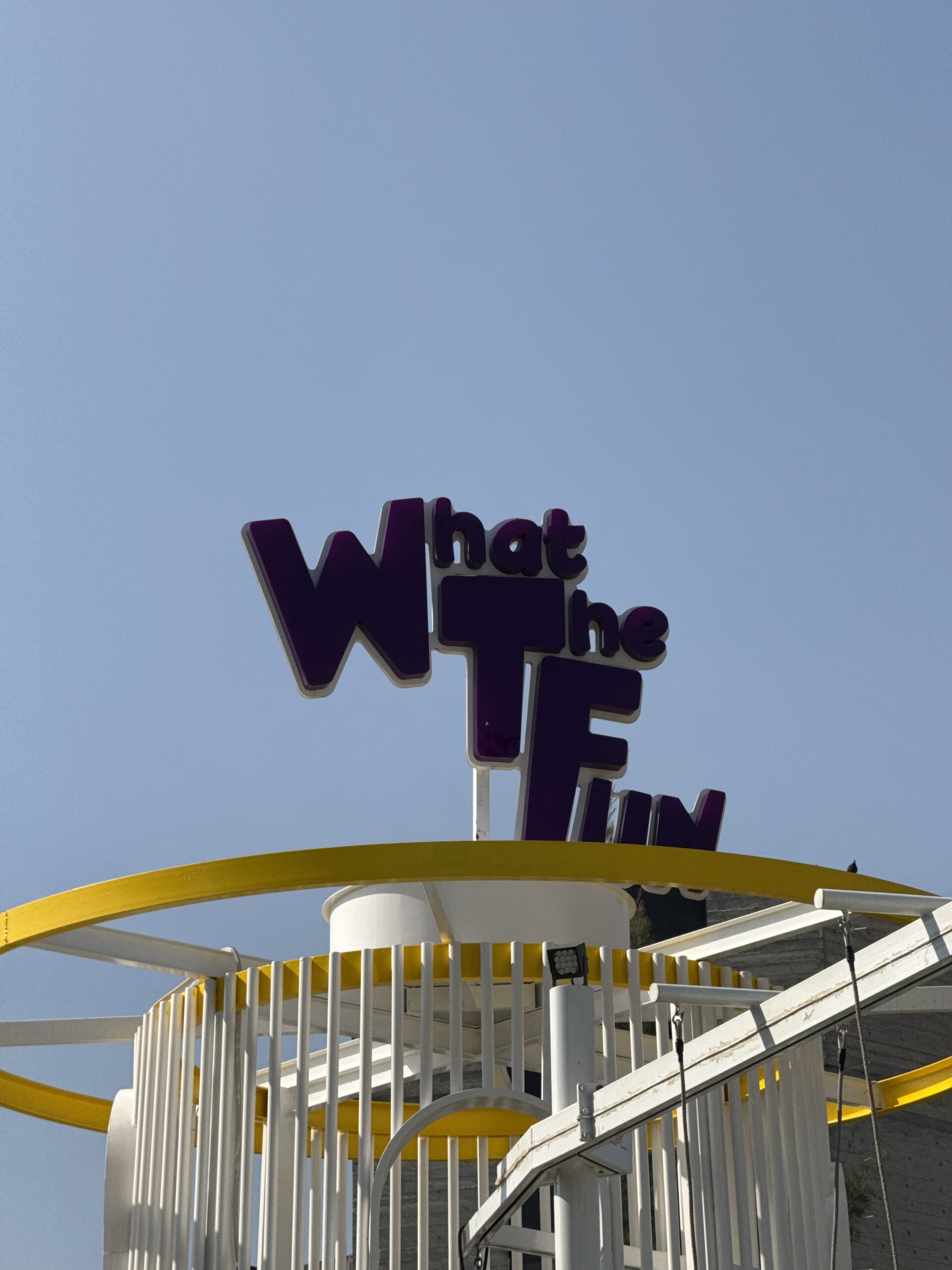
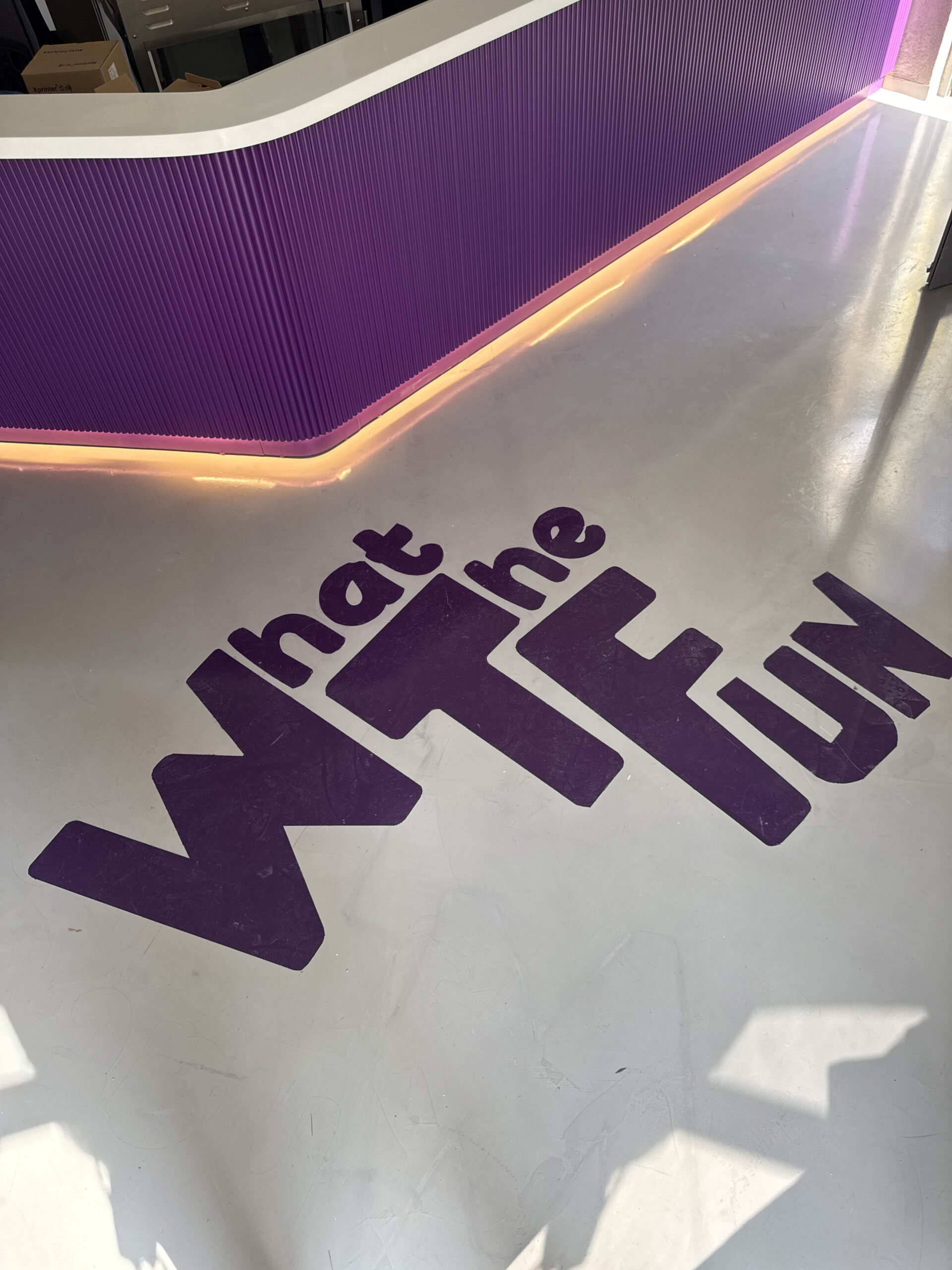
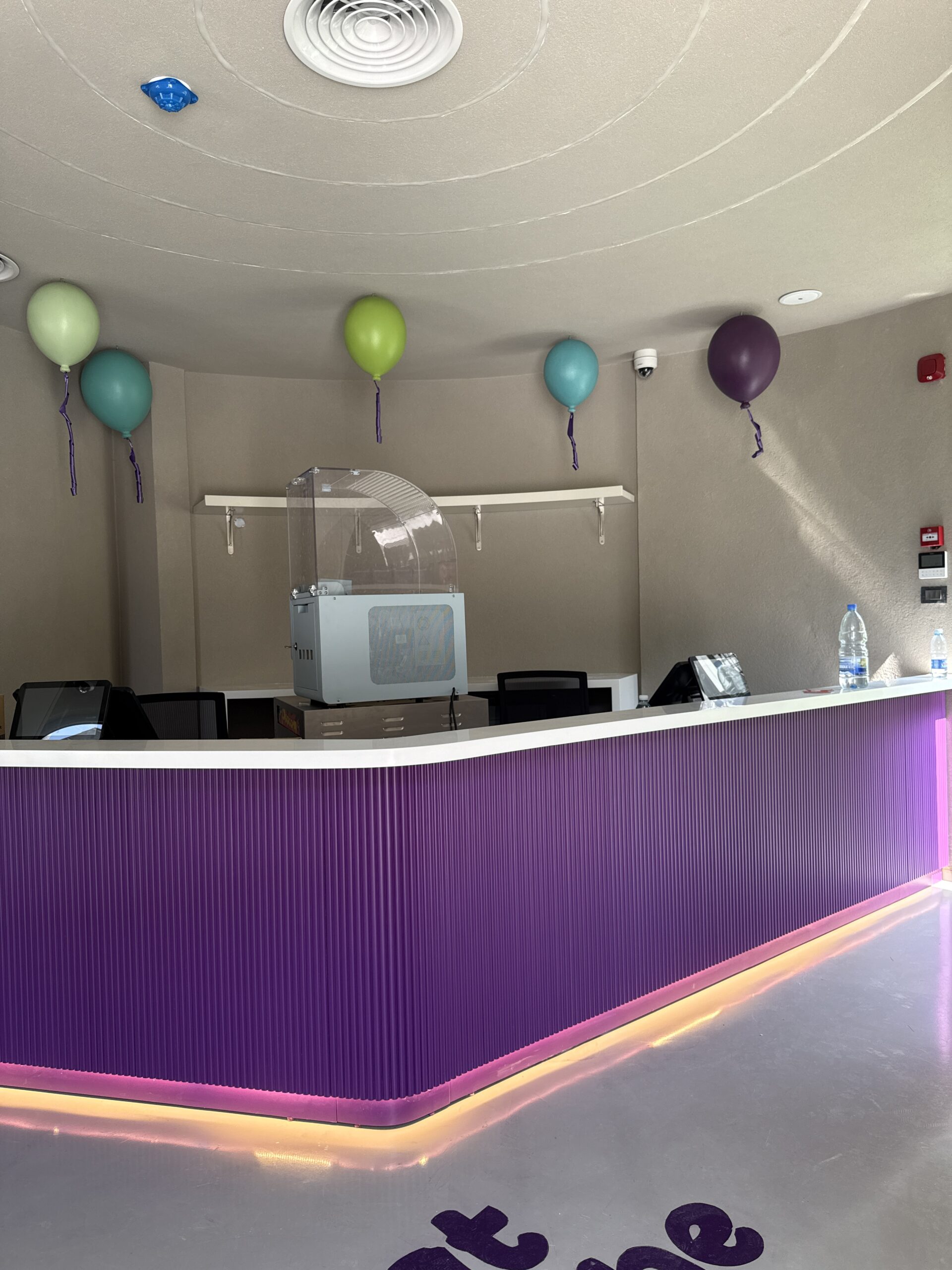
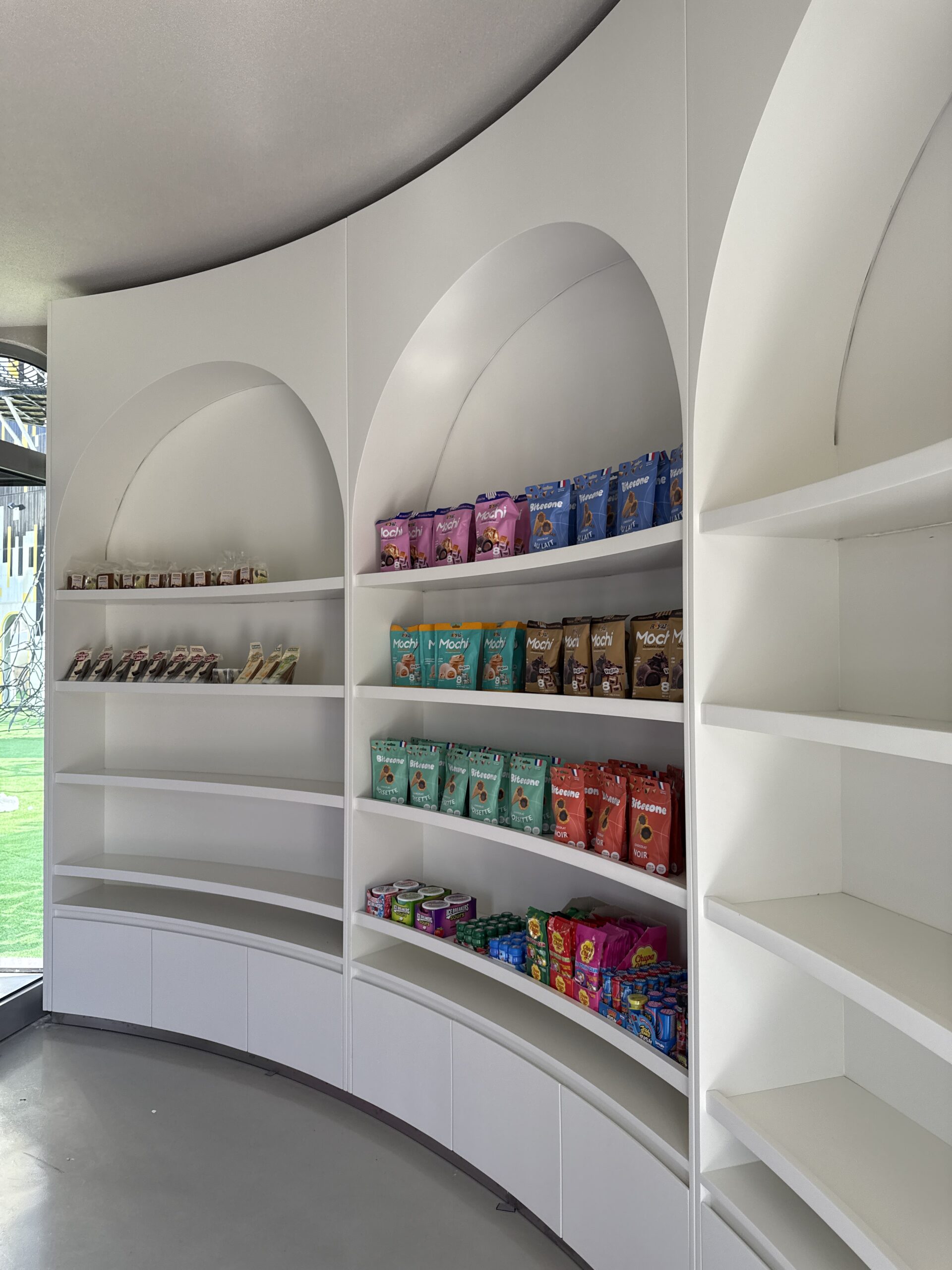
The reception desk is a curved purple fluted form with concealed LED lighting at the base. The brand name — What The Fun — is typographed directly into the polished concrete floor in oversized purple lettering. The message is immediate: this space knows what it is. The candy shop adjacent to reception features floor-to-ceiling curved arch shelving in all white — a deliberate soft contrast to the boldness of everything outside.
What the Details Tell You About the Design Philosophy
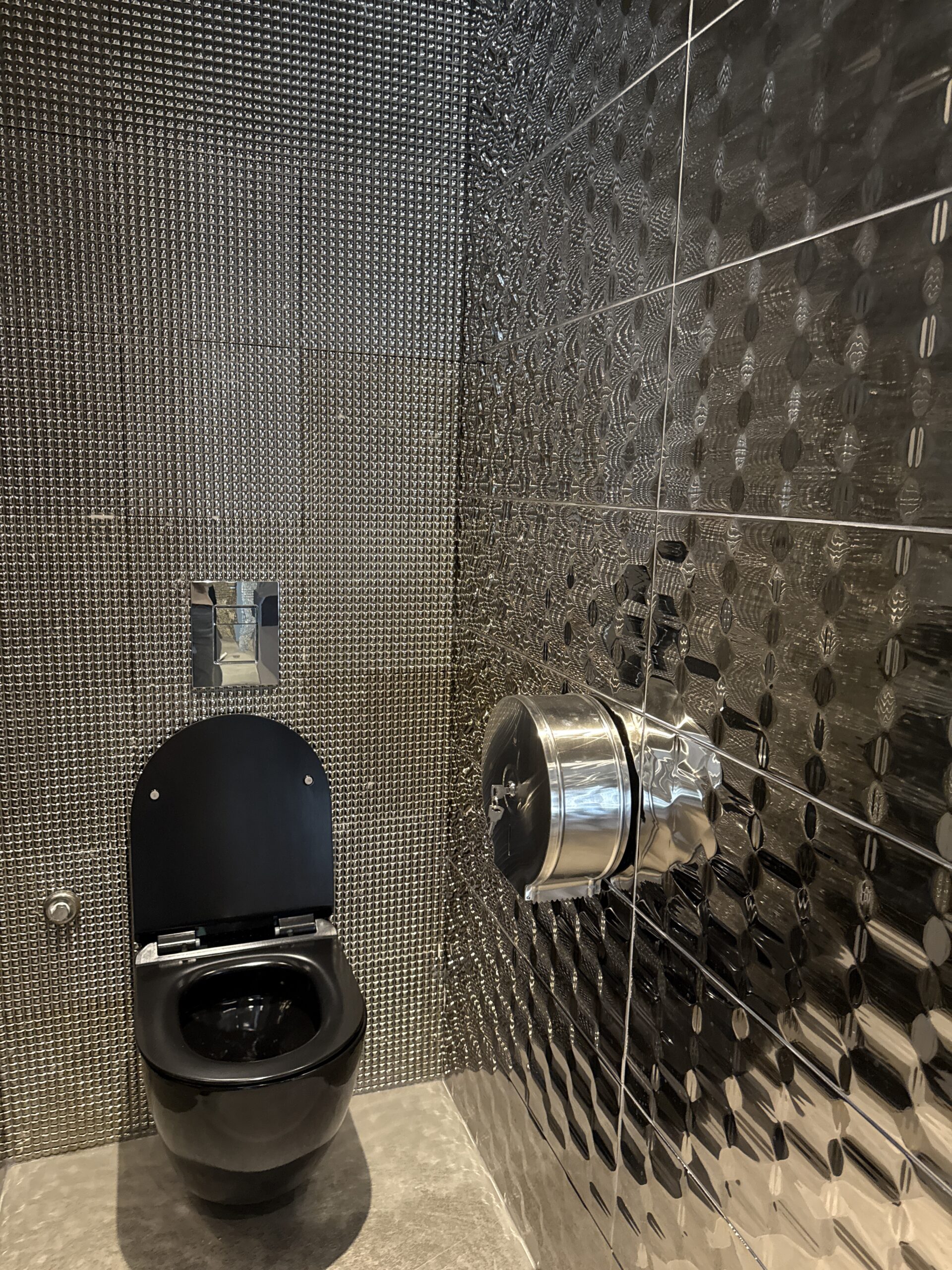
The bathrooms at WTFun are all black. Black wall-mounted toilets. Black micro-mosaic tile on one wall. Embossed black ceramic tile on the other. Chrome fixtures. This is not a children’s bathroom. This is a bathroom that a teenager can post on social media without irony. It signals that every square meter of this space was considered.
The suspension bridge stepping discs are wooden — warm, natural, deliberately contrasting with the graphic boldness of the towers they connect. The trampoline is blue. The climbing wall uses heart-shaped holds in primary colors. These moments of softness and warmth are not accidents. They are the concept breathing — ensuring the space has range, not just volume.
Every zone has a signature. Every zone has a reason. Nothing in WTFun is decoration. The concept drove the decisions from the entry floor to the top of the tallest tower.
What WTFun Teaches Us About Designing for Teenagers
After completing WTFun, here is what we know about designing for this audience:
Respect is the brief. Every design decision communicates whether or not you take the audience seriously. Teenagers read this faster than any other demographic. The architecture has to meet them at their level, not talk down to them.
Activity variety is not enough. You can have ten activities and still have a boring space. What matters is whether each activity zone has its own complete design identity. If everything looks the same, the variety disappears.
The social in-between is the real product. Teenagers come for the activity but stay for the social time between activities. The seating, the lounge zones, the food areas — these are not supporting elements. They are the core of the experience. Design them as carefully as the hero structures.
Design both audiences. The parent who brings the teenager is an audience too. Ignore them and the teenager stops being allowed to come. The food market zone at WTFun is the answer to this problem — a calm, adult-comfortable space that does not interfere with the energy of the main zones.
Boldness is not noise. A bold design that has no concept is just visual chaos. WTFun is bold because every decision is grounded in the concept — not because someone wanted it to look exciting.
The Space Teenagers Deserve
WTFun is not a children’s venue with bigger slides. It is not an adult entertainment space made accessible to minors. It is something that has rarely been built: a space conceived from the beginning entirely around the specific, complex, underestimated needs of a teenager.
652 projects across 20 countries have taught us that every audience deserves a space that was designed specifically for them. Not adapted. Not compromised. Designed from scratch, from the right question outward.
The right question for WTFun was simple.
What does this generation need from a space that wants to earn their loyalty?
Everything you see at WTFun is the answer to that question