It is not the design. It is not the budget. It is the absence of a concept.

Every year, hundreds of F&B spaces open. Most of them close within three years. Some within twelve months. The operators blame the economy. They blame the location. They blame the timing.

They are almost never right about what actually went wrong.

The failure happened earlier. Before the contractor was hired. Before the first tile was chosen. Before anyone stood inside the space and pointed at a wall.

It happened at the moment someone decided to skip the concept and move straight to the design.

The mistake everyone makes

Ask most F&B operators what their concept is and they will describe an aesthetic. Dark walls. Industrial lighting. Open kitchen. Warm wood. Greenery.

That is not a concept. That is a finish schedule.

A concept is not what a space looks like. A concept is the commercial argument for why a space should exist — expressed through every design decision, from the entrance sequence to the last centimetre of counter detail.

Without that argument, the space is just a room. And rooms do not build loyalty. Rooms do not travel. Rooms do not survive when the neighbourhood changes or the competition moves in next door.

The three mistakes we see most often

We have worked on 623 projects across 16 countries. The F&B failures we have seen — and been called in to rescue — almost always trace back to one of three moments:

  1. Starting with the finish, not the feeling. The client opens a Pinterest board. The designer matches the mood. Everyone agrees the renders look beautiful. Nobody has asked what the guest is supposed to feel — and whether that feeling will make them return.
  2. Designing for photos, not for people. A space that photographs well and functions badly is a liability, not an asset. Guests arrive once for the visual. They return — or they do not — based on how the space made them feel from the moment they walked in.
  3. Confusing brand identity with spatial concept. A logo is not a concept. Brand colours are not a concept. Many F&B spaces are launched with a complete visual identity and no spatial narrative — which means every design decision is made in a vacuum, and the result feels incoherent no matter how polished the individual elements are.

What it looks like when it works: Handow, Beirut

Handow is an Asian fusion restaurant in Beirut. When the brief came to us, the operator had a cuisine, a location, and a strong instinct for quality. What they did not have was a spatial argument — a reason for the space to exist beyond the food it would serve.

That is where the concept work started.


The concept we built for Handow came from a single tension: the precision of Japanese craft culture set against the warmth and noise of a Beirut dining room. Not one or the other. Both, simultaneously, in the same space.

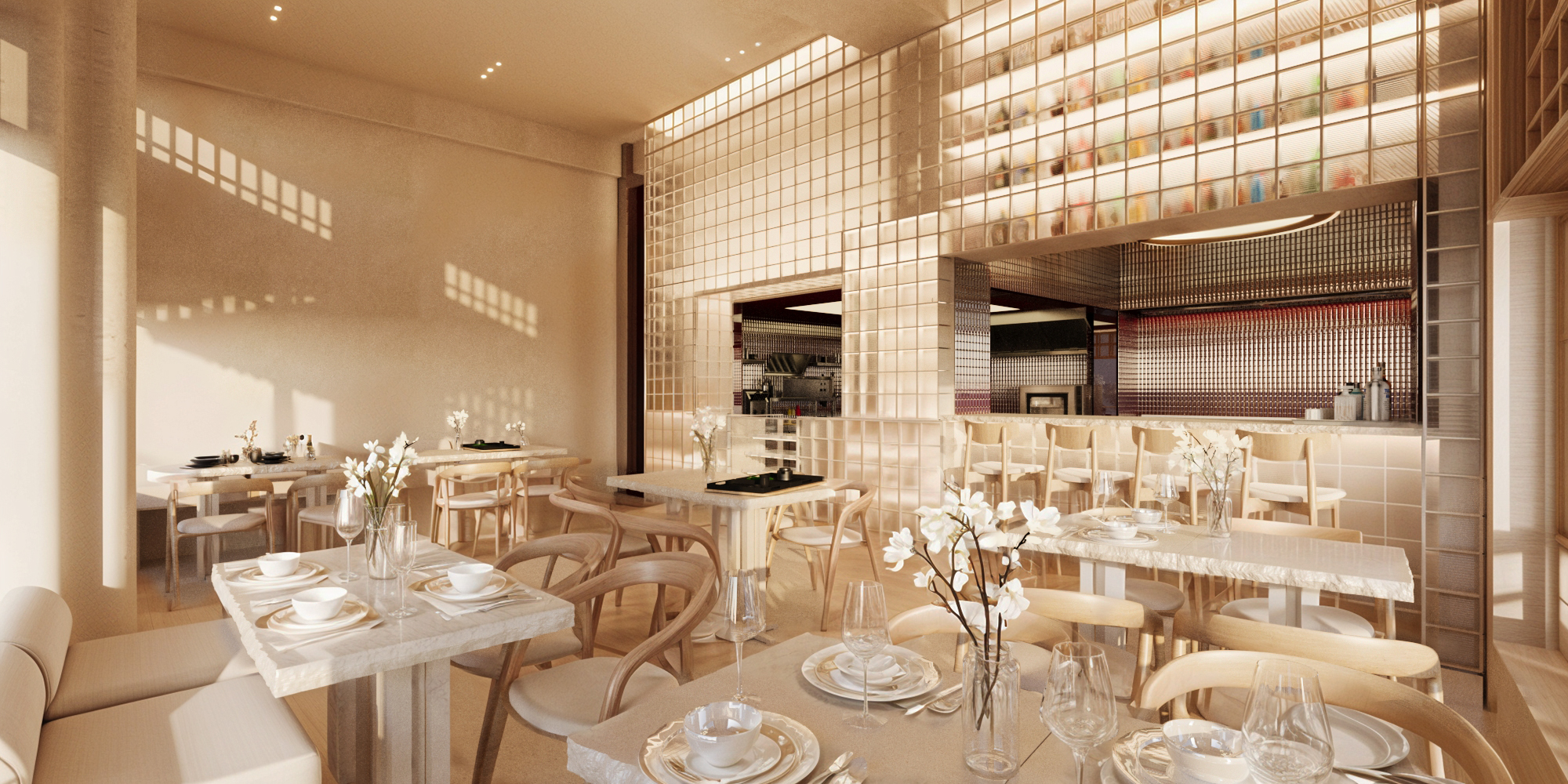
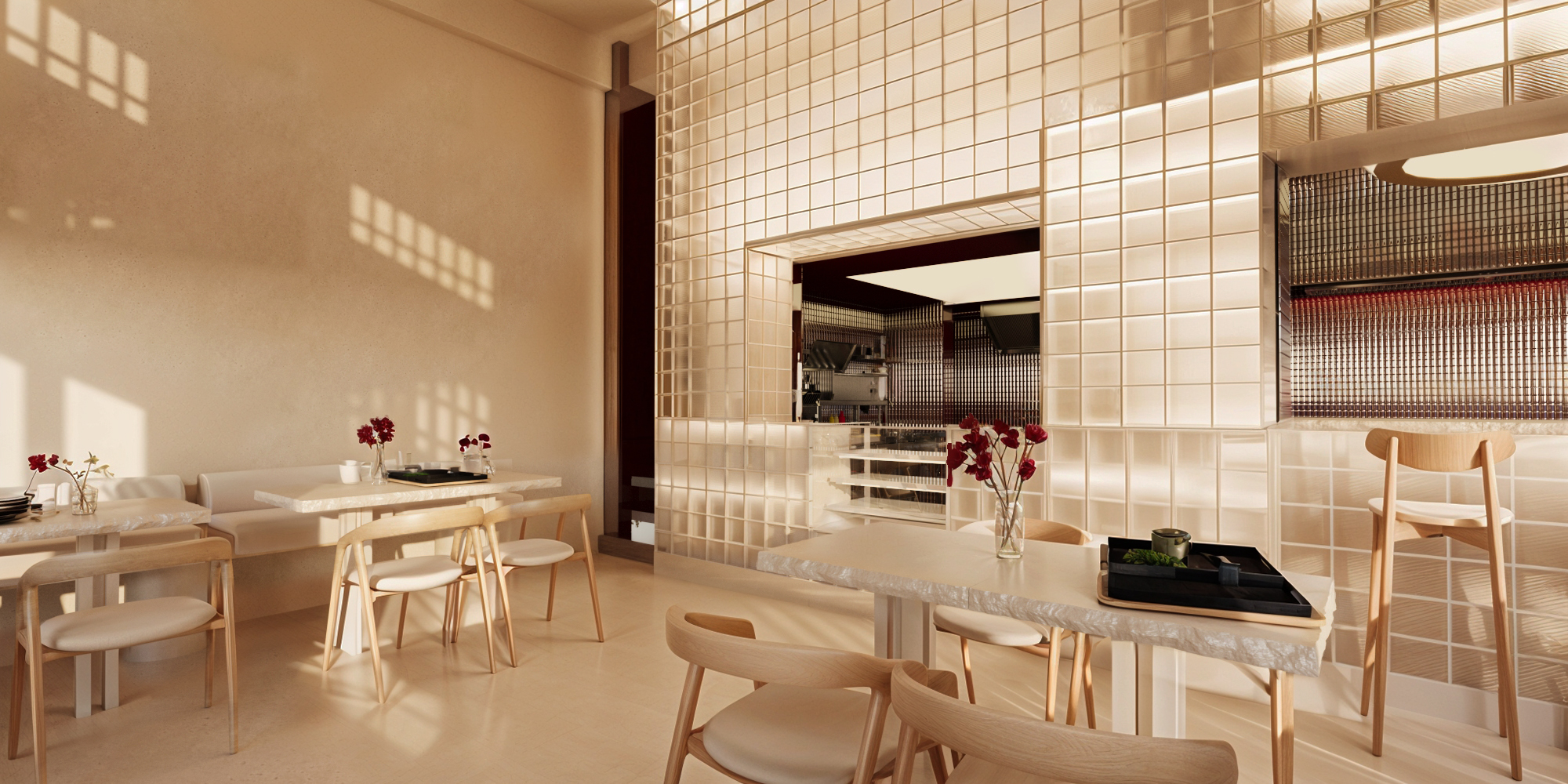
Every material decision, every spatial move was an answer to that tension. The glass block wall — the dominant element of the entire space — was chosen not for its visual effect but for what it does physically: it diffuses light. It softens the boundary between the open kitchen and the dining floor. It makes the kitchen visible without making it intrusive. The cooking becomes part of the experience without overwhelming it.
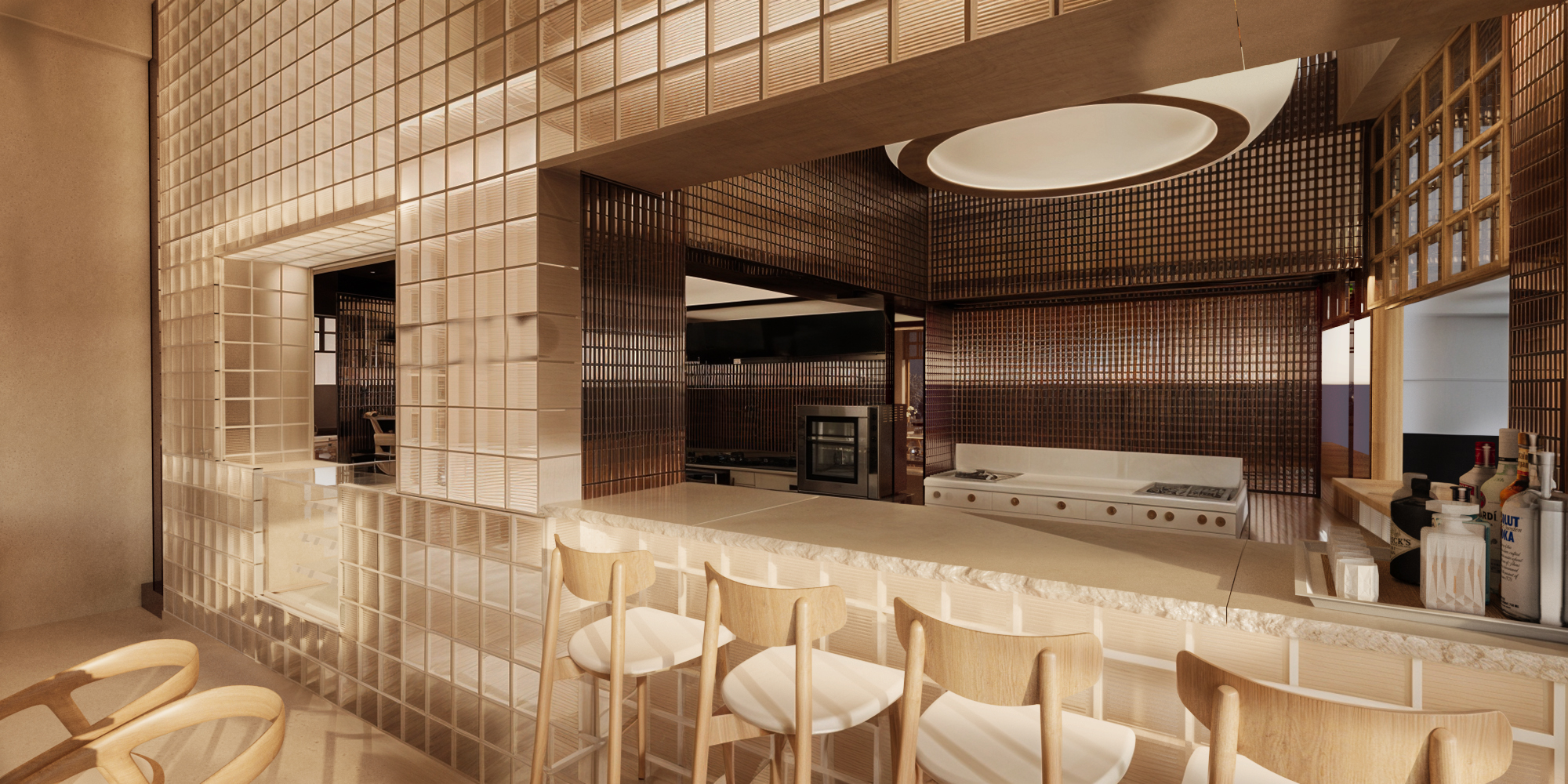
 

The open kitchen is not a trend adoption. It is a deliberate choice rooted in the concept: if precision is the argument, the guest should be able to witness it. The white marble counter, the clean geometry of the kitchen equipment, the bronze mesh that lines the walls behind the pass — all of it is designed to be seen. To be read as evidence of the standard the food will meet.

The concept for Handow came from one tension. Every material in the space is an answer to it.
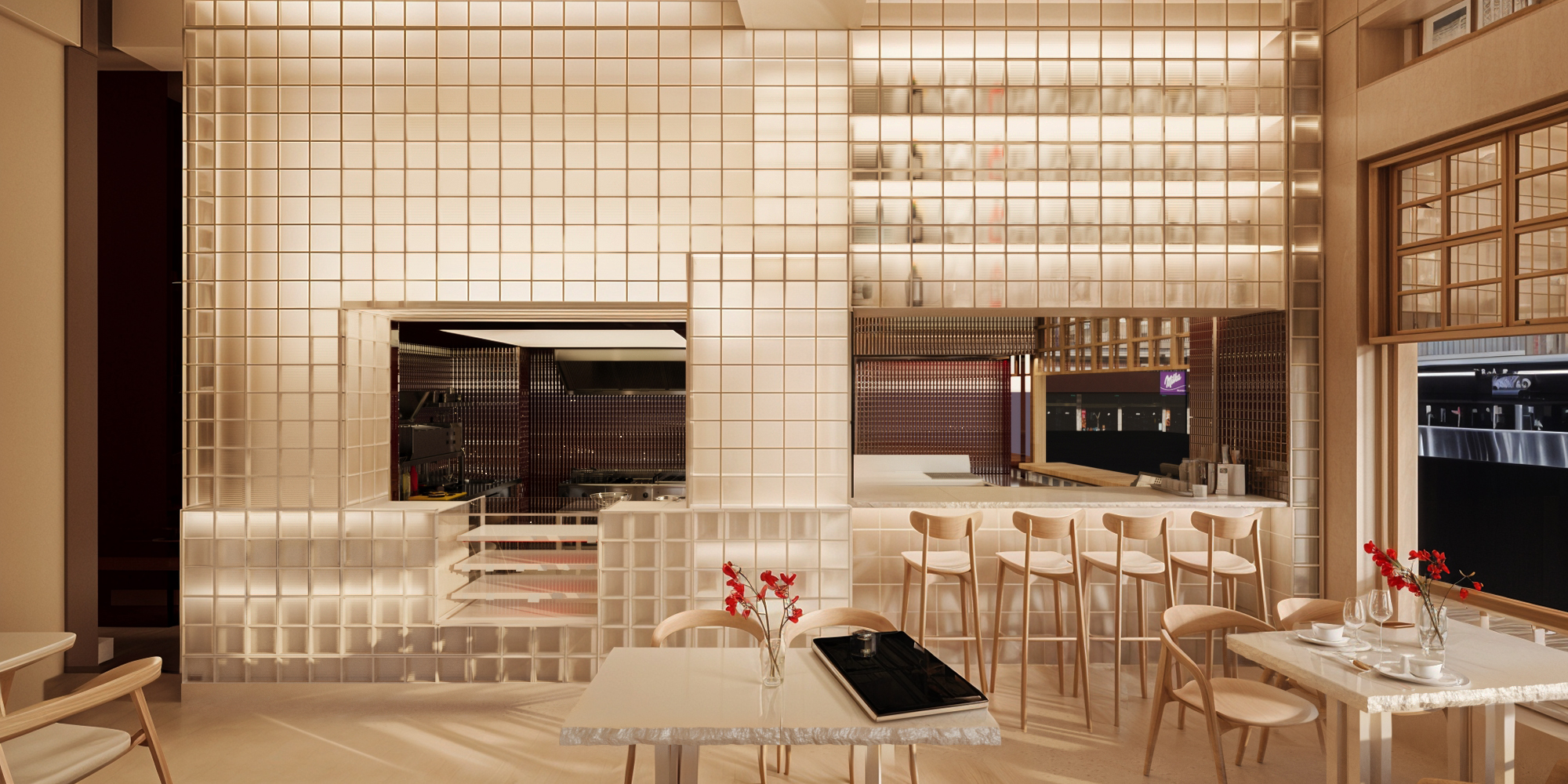
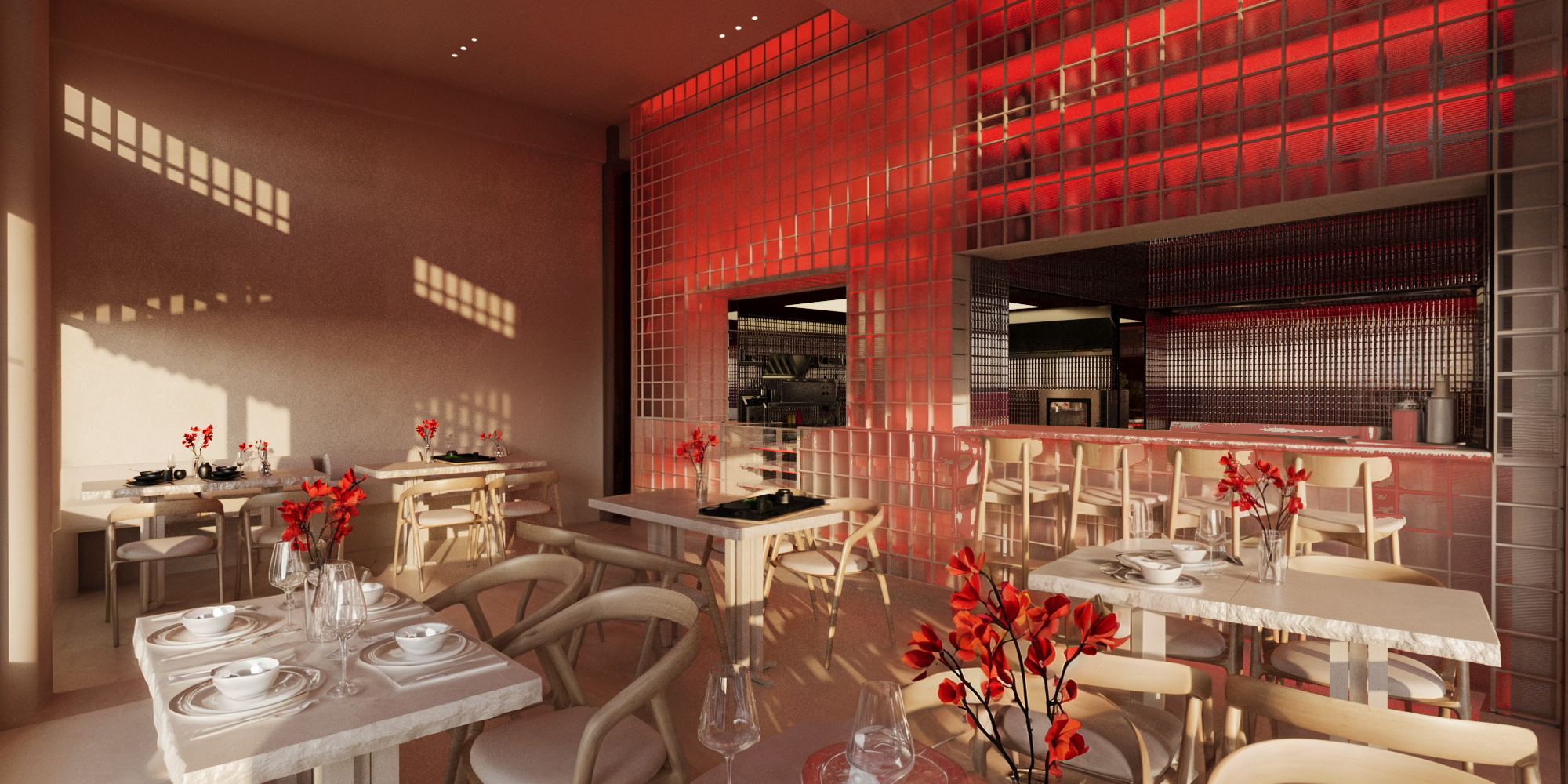
The dining room itself operates at two temperatures. The beige — the walls, the timber, the upholstery — grounds the space in warmth. The red flowers on every table are not decoration. They are a calibrated counterpoint: precise, deliberate, a note of tension in an otherwise calm room. They signal that this is not a neutral space. There is a point of view here.
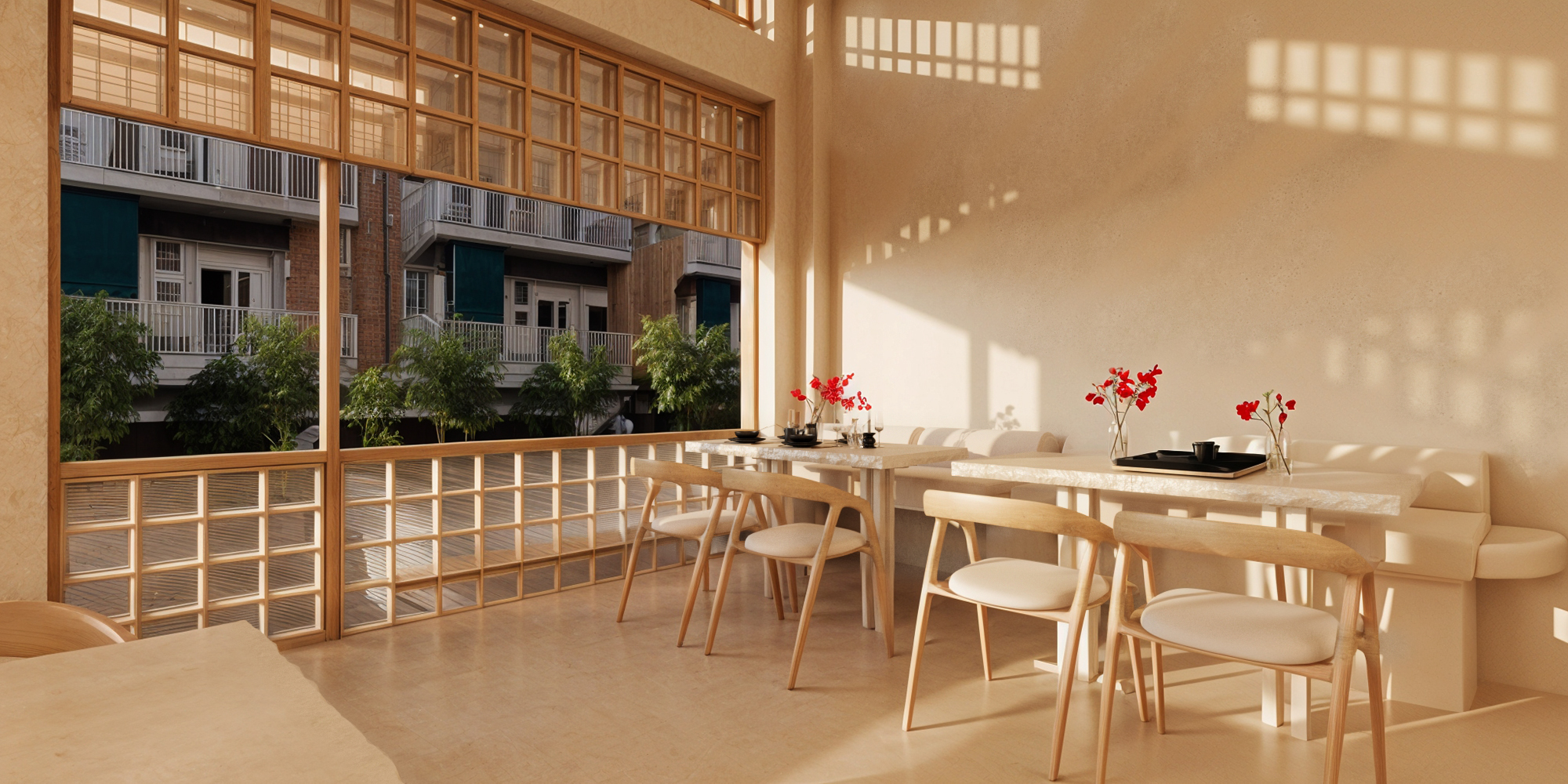
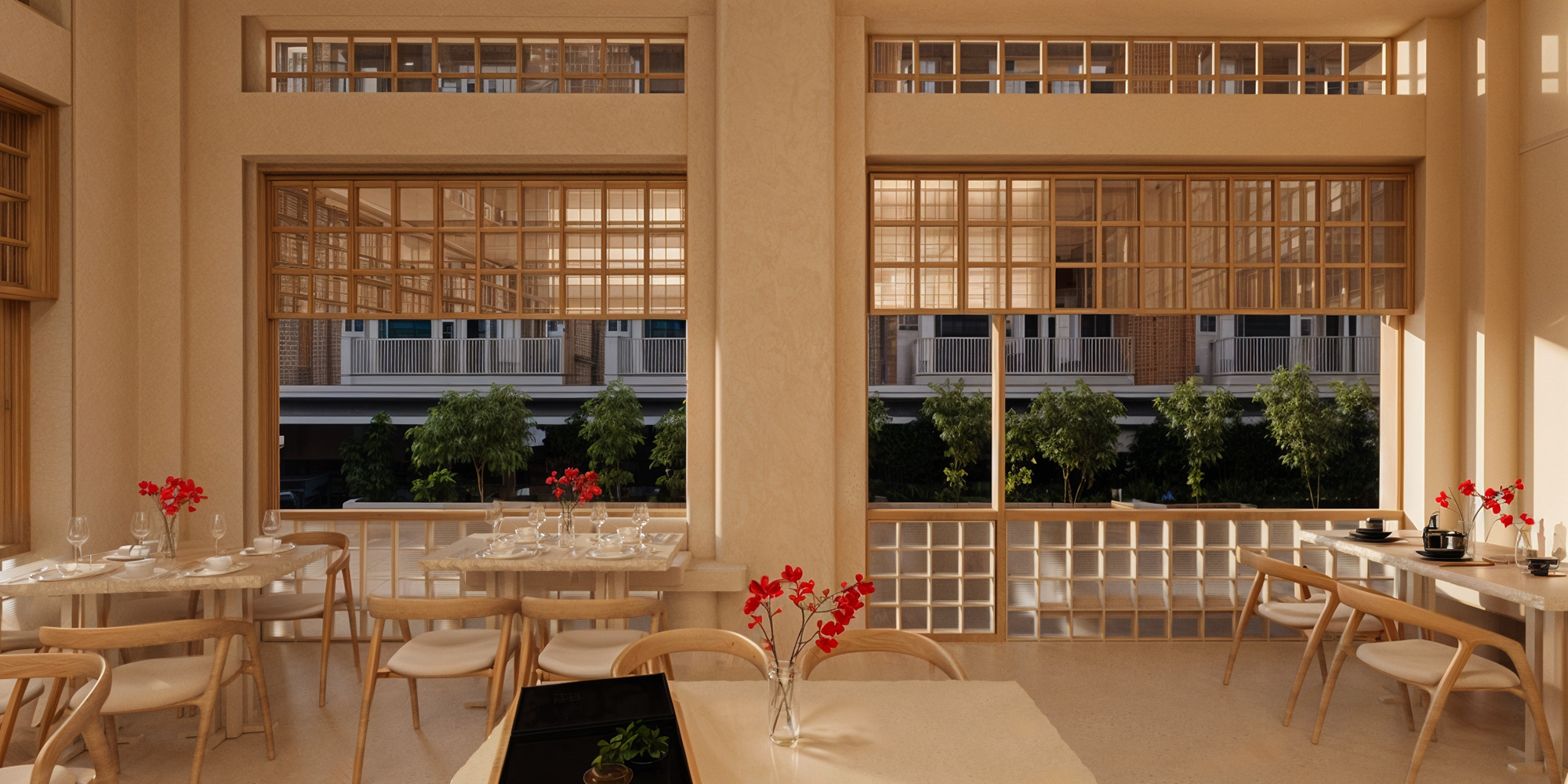
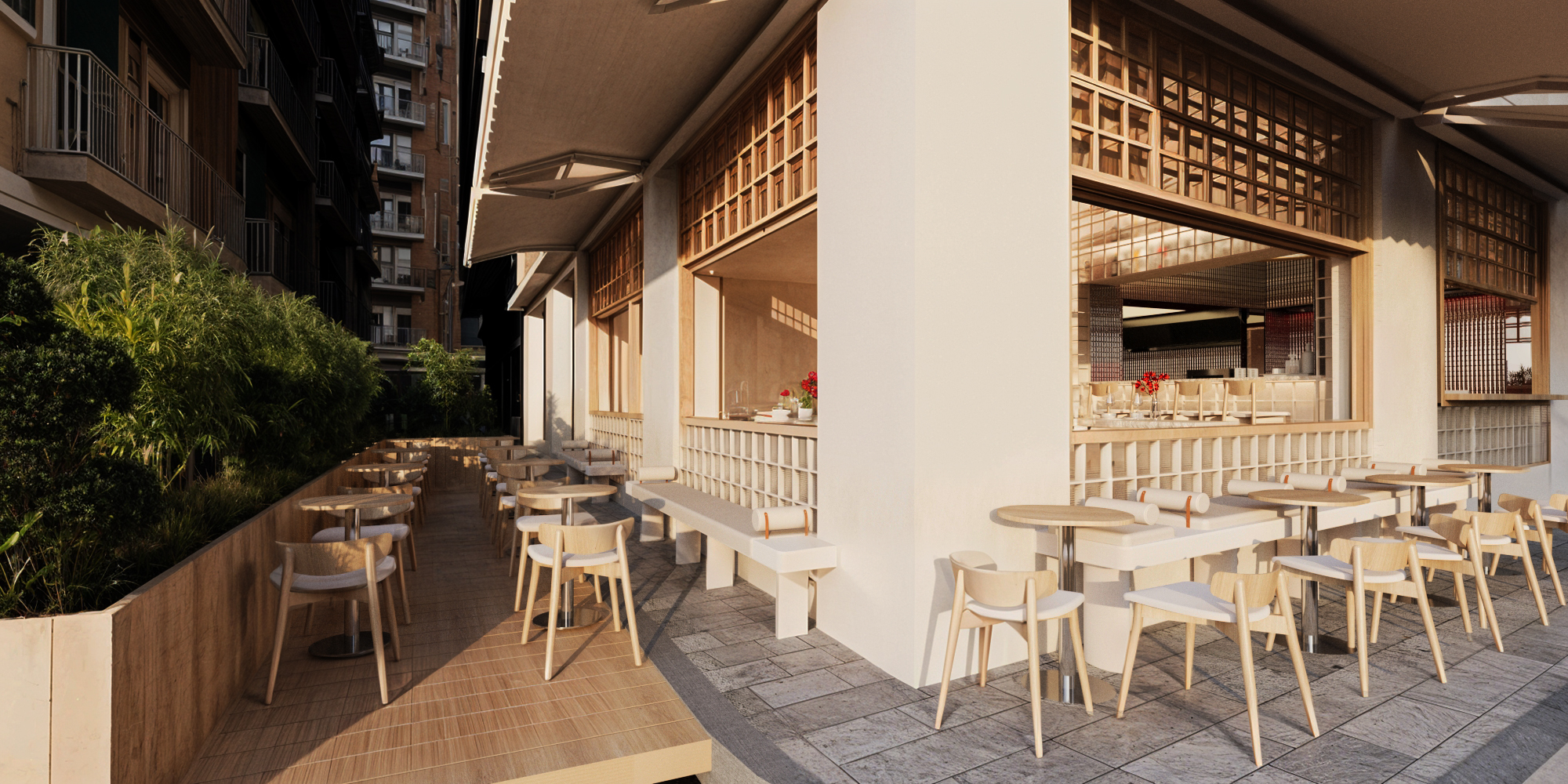
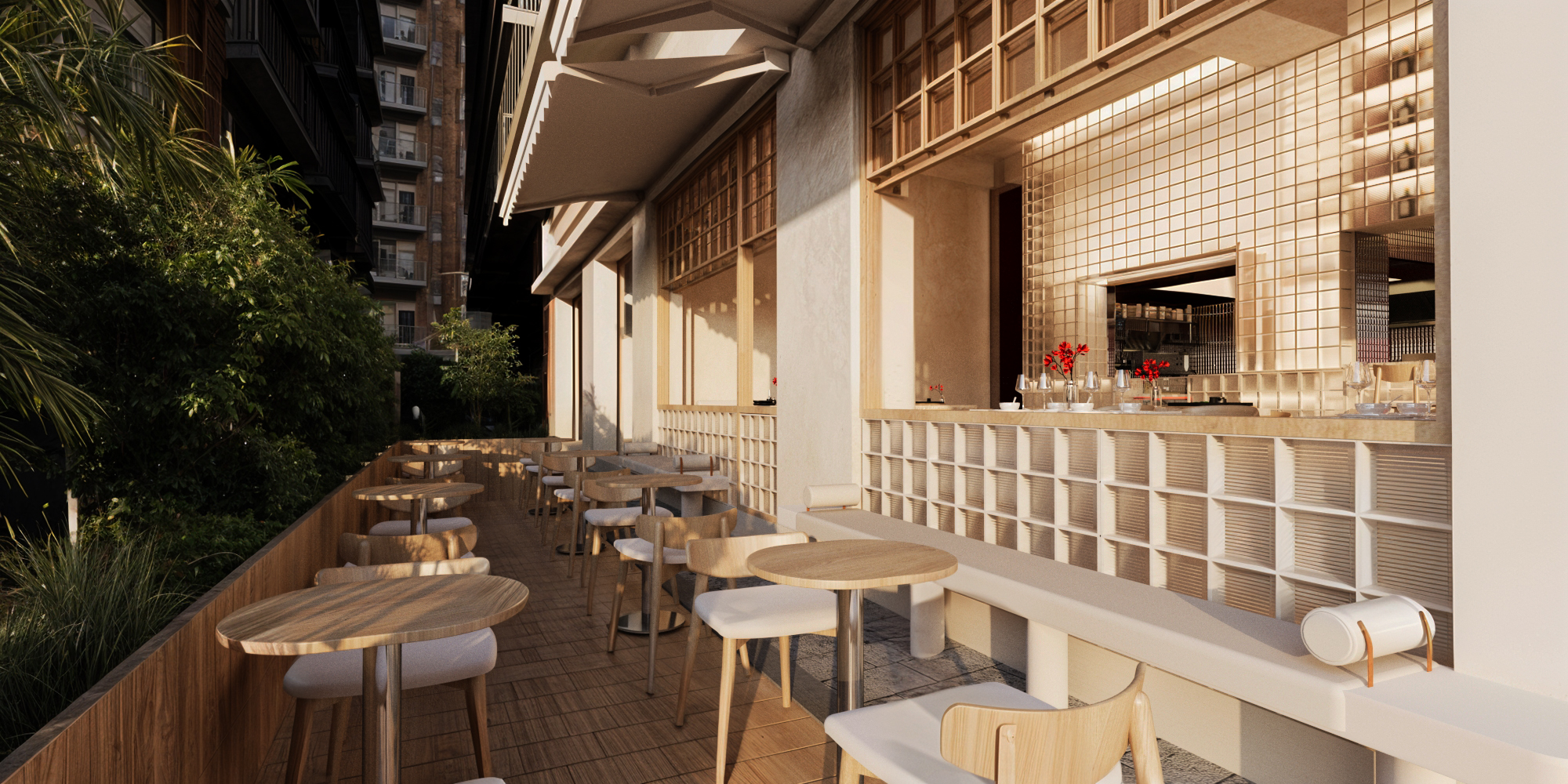
The window wall opens the space to the street while the grid detailing at the base maintains the interior language —the geometry does not stop at the glass. Outside and inside are in dialogue without dissolving into each other.
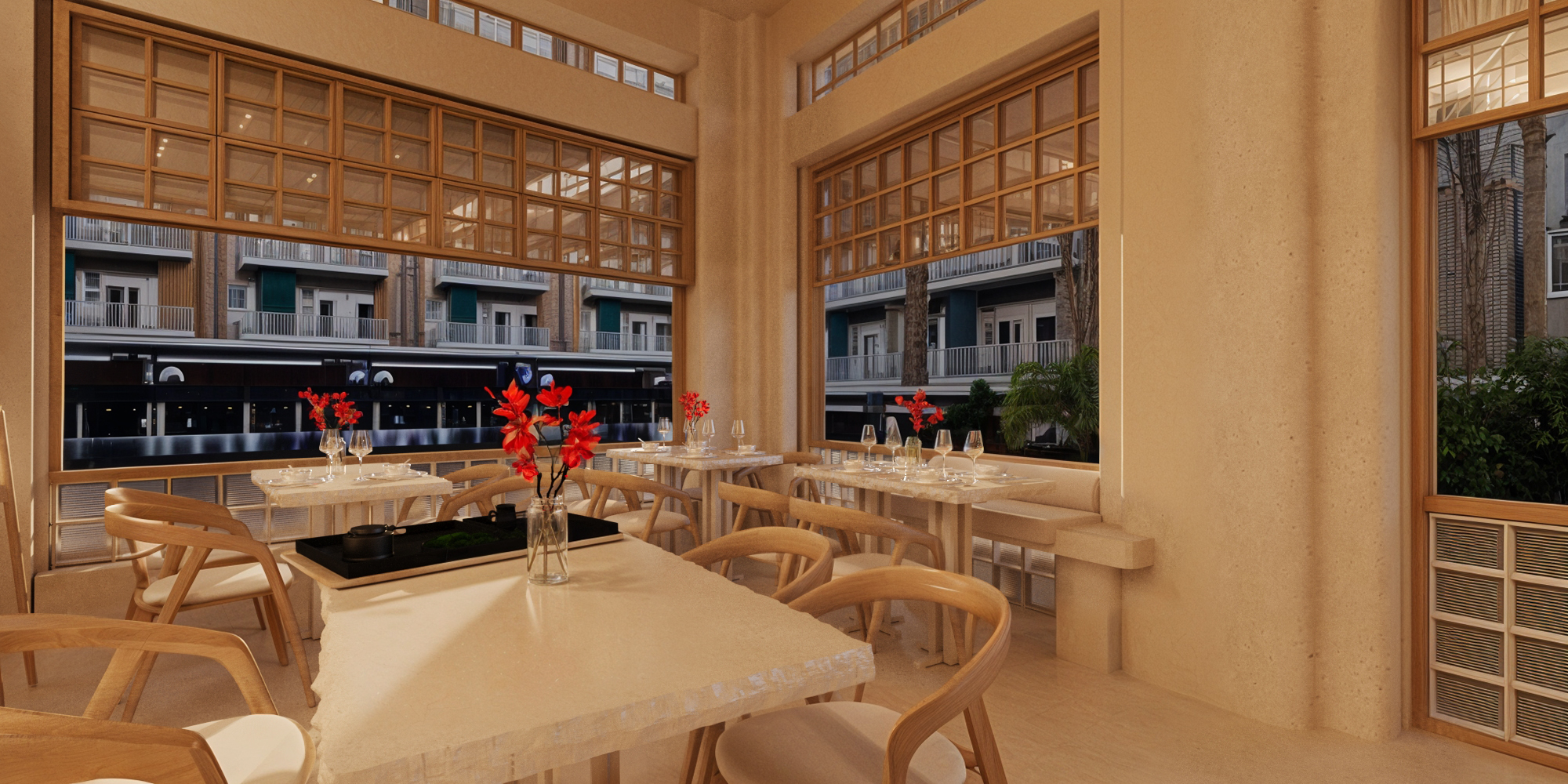
The exterior makes the same argument from the street: contained, warm, unmistakably intentional. The terrace does not sprawl. It extends the concept outward — same palette, same precision, same sense that someone thought carefully about where one space ends and another begins.
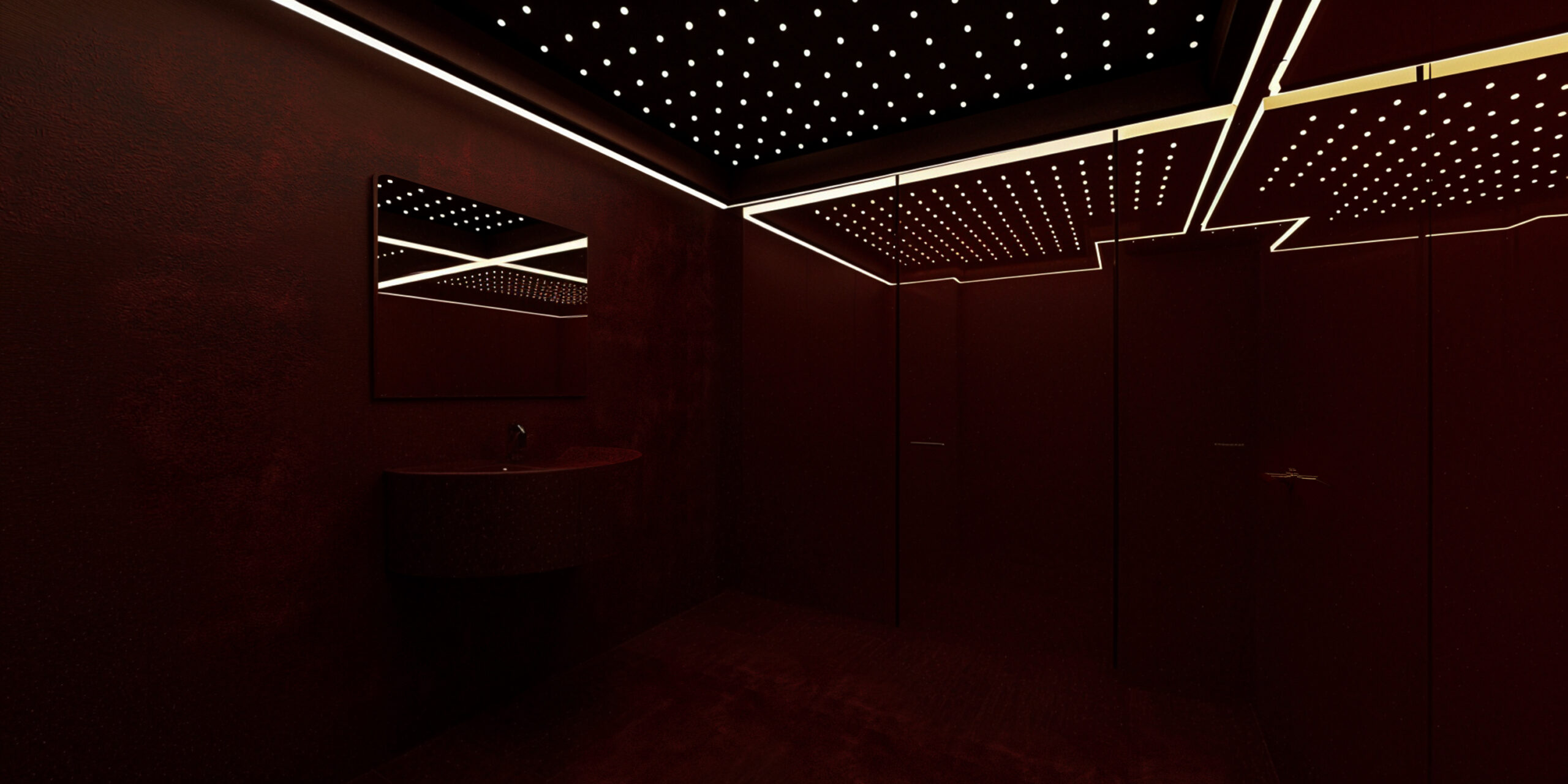
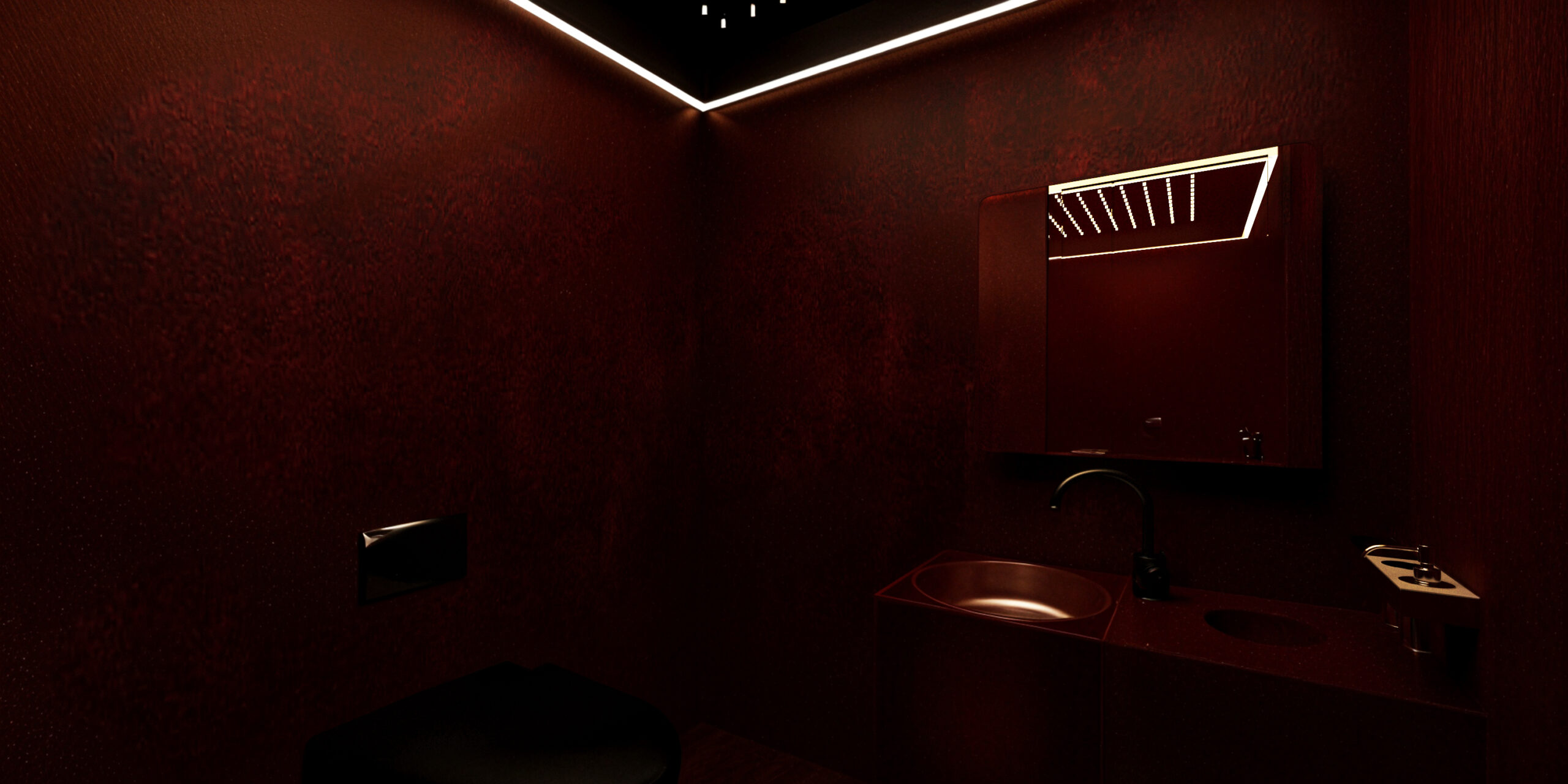
And then there is the bathroom. Deep crimson walls. A ceiling of pinpoint lights that reads as a night sky. A space that has no obligation to the rest of the restaurant in terms of palette — and yet makes complete sense within the concept. If the dining room is warm precision, the bathroom is theatrical intimacy. A guest who walks in and pauses is responding to a designed experience, not an afterthought.
And then there is something that no photograph can fully capture: the wall changes colour. Warm amber during the day. A cooler, harder blue as evening arrives. Red when the room is full and the kitchen is running at pace. The space was not designed for one mood. It was designed for the full arc of a dining day — and the concept holds across all of it.

That is what a concept does. It gives you permission to make bold decisions in every corner of a space — because every decision has a reason, and that reason connects back to something that was agreed before a single wall went up.

What a concept actually does

A concept is a single, precise argument for what this space is and what it is designed to do commercially. It answers one question before anything else is decided:

Why should this place exist — and why should someone choose it over every other option they have?

When that question is answered honestly and specifically, the design follows naturally. The material choices are obvious. The spatial flow makes sense. The lighting serves the experience, not the photograph.

More importantly: when that argument is strong, the space survives. It survives trend cycles. It survives economic downturns. It survives the competitor that opens six months later with a bigger budget.

We know this because we have watched it happen, repeatedly, across Lebanon — a market that has tested every business to its limits for the last fifteen years. The spaces that were built on a real concept kept going. The ones that were built on a mood board closed.

The question we ask before we draw anything

Before we open a CAD file, before we build a mood board, before we talk about materials, we ask the client one question:

If this place closes in three years, what will people say they miss about it?

If the answer is the food or the price — those are product answers, not spatial answers. We push further.

If the answer is something about how the space made them feel — the noise level, the light at a certain hour, the sense that they could stay — then we have something to build from.

That feeling is the concept. Everything else is in service of making sure the space reliably delivers it, on the first visit and the fiftieth.

With Handow, the answer was clear from early conversations: guests should feel like they have stepped out of Beirut without leaving it. A space that feels curated and calm — but alive. That sentence drove every decision that followed.

Why this matters more now than it ever did

The F&B market is more competitive than at any point in recent history. Guests have more choices. Attention spans are shorter. The cost of opening a space is higher and the margin for error is smaller.

In that environment, an aesthetic is not a differentiator. Everyone has access to the same materials, the same trends, the same reference points. What separates the spaces that build real businesses from the ones that close quietly is the quality of the thinking that happened before anything was designed.

We are a concept studio. That distinction is not marketing language. It is the description of what we actually do — and it is why we do not take on projects that start from a mood board.

623 projects. 16 countries. Every one of them started with one question answered correctly.

You are building something. So are we.

If you are an F&B operator who wants a concept that works — not a space that looks good in photos — start here.